
Before you rush out to buy cushions or seat covers, the best fix for an uncomfortable car seat might not cost you a single penny. It’s all about mastering the adjustments already built into your vehicle. Most people set their seat once and forget it, but taking five minutes to really dial in your position can make a world of difference, especially on those long hauls.
This is your foundation for a comfortable ride. The goal isn't just to feel less sore; it's to support your body's natural posture, reduce muscle strain, and fight off driver fatigue.
Your No-Cost Fix for Car Seat Discomfort
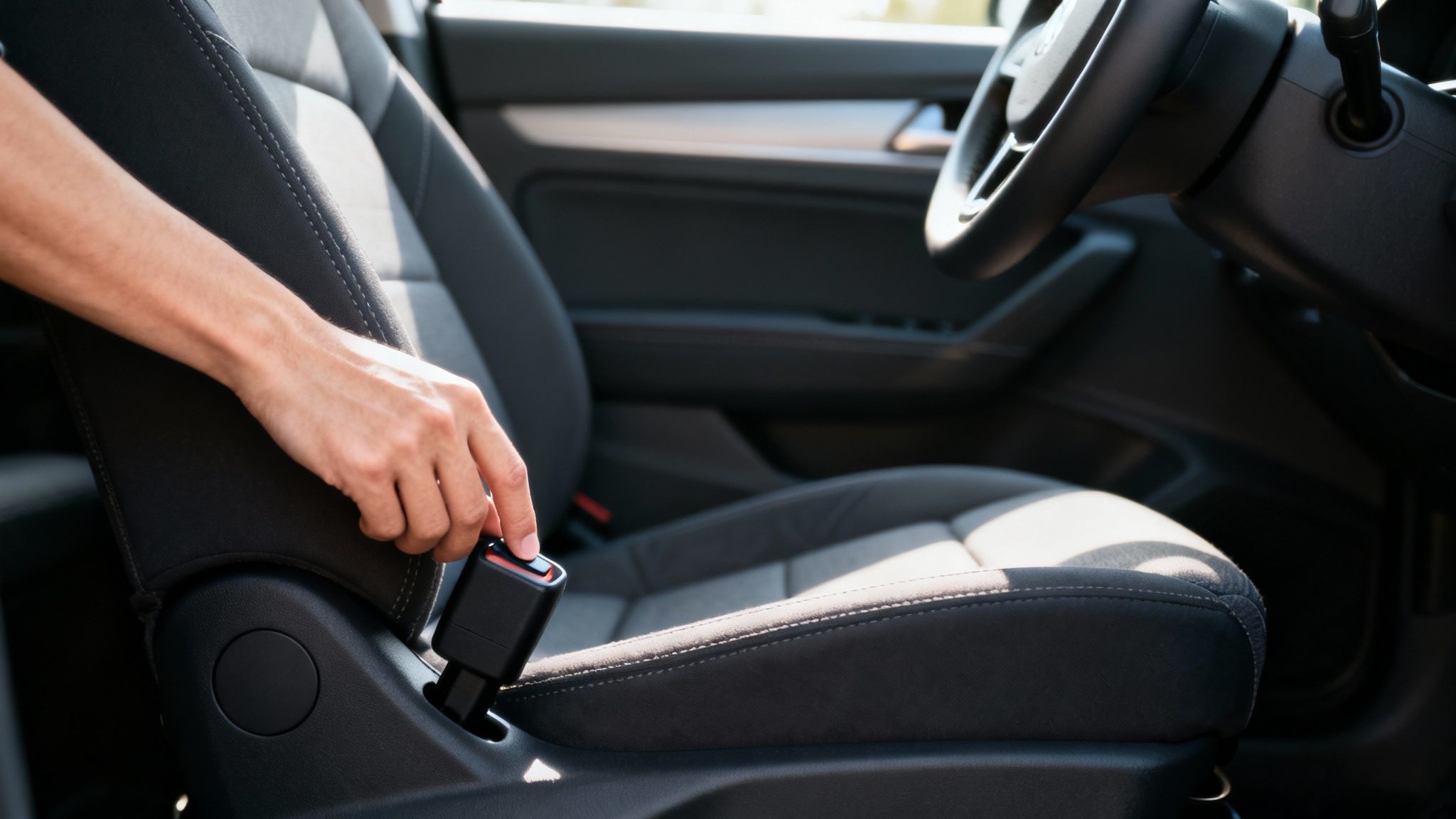
Think of your car seat's controls as a powerful ergonomic toolset. You just have to know how to use them. Let's walk through the key adjustments to create a position that feels custom-made for you, turning your daily commute from a pain into a pleasure.
Start with the Right Seat Height
Your line of sight is everything, so start by adjusting the seat height. You need to be high enough to see clearly over the steering wheel and dashboard, but not so high that you're crammed against the roof. A good rule of thumb is to leave at least a four-finger gap between your head and the ceiling.
Sitting too low is a common mistake that shrinks your field of view and encourages slouching. Finding that sweet spot gives you command of the road while keeping your body relaxed.
Position for Pedal Control
Next, let's get the distance right. Slide the seat forward or back until you can press the pedals all the way to the floor with a slight bend in your knee. Aim for roughly a 20-30 degree angle.
If your leg is completely straight, you're putting unnecessary strain on your knee and lower back. If you're too close, you'll feel cramped. This adjustment is also a safety issue—it ensures you can slam on the brakes in an emergency without your leg locking up.
To help you remember these key settings, here’s a quick reference table.
Key Seat Adjustments for Maximum Comfort
| Adjustment Point | Purpose | Optimal Setting Guideline |
|---|---|---|
| Seat Height | Ensures clear visibility and proper posture. | High enough to see over the dash, with a 4-finger gap to the roof. |
| Seat Distance | Allows full pedal control without straining joints. | Able to fully depress pedals with a 20-30 degree bend in the knee. |
| Backrest Angle | Supports the natural curve of the spine to reduce fatigue. | A slight recline of 100-110 degrees. |
| Headrest | Protects from whiplash and supports the head/neck. | Middle of the headrest level with the top of your ears, close to the head. |
Getting these four points right creates a solid foundation for a comfortable and safe driving experience.
A properly adjusted seat is the first and most critical step in a comfortable driving setup. It aligns your body, reduces strain, and enhances your control over the vehicle, turning every drive into a more pleasant experience.
Adjust Your Backrest Angle
Forget that "cool" gangster lean. Slouching or reclining too far is a recipe for back pain. For real support, set your backrest to a slight recline of about 100-110 degrees. This angle supports your spine's natural S-curve without making you reach for the steering wheel.
A perfectly upright seat can create tension in your upper back and shoulders, while too much of a recline leaves your lower back completely unsupported.
Fine-Tune Your Headrest and Steering Wheel
Now for the finishing touches. The headrest isn't just for resting; it's a critical safety device. Adjust it so the middle of the pad is level with the top of your ears and it's close enough to your head to prevent whiplash.
Finally, adjust the steering wheel so you can comfortably grip it at the 9 and 3 o'clock positions with a nice, relaxed bend in your elbows. These details are what separate a "good enough" driving position from a truly comfortable one. If you find your seat belt is still digging in, you might want to look into other simple fixes, like using seat belt stop clips to keep it in a more comfortable spot.
Finding the Right Lumbar Support for Your Back
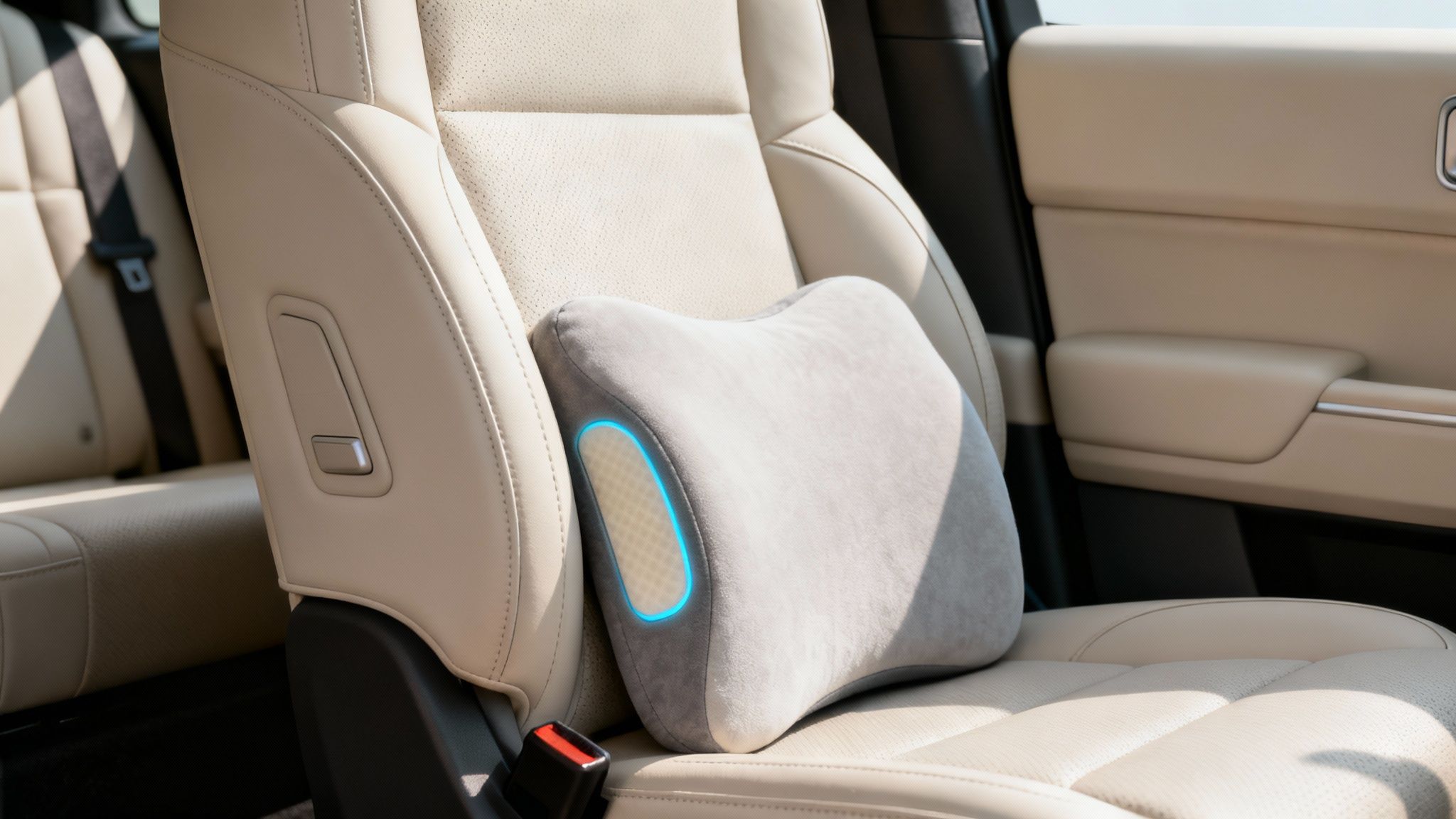
If you've got that nagging lower back pain as your constant co-pilot, there’s a good chance your seat’s lumbar support is to blame. The natural inward curve of your lower spine—your lumbar region—needs to be properly supported. Without it, you’ll inevitably slouch, leading to tired, strained muscles.
Many newer cars have built-in lumbar controls, but you'd be surprised how many drivers never touch them. Before you spend a dime on accessories, it's worth getting to know the tools you already have. This is often the first and most effective fix.
Mastering Built-In Lumbar Controls
First, you need to find the controls. Feel around the side of your seat base—that's where they usually live. You'll likely find either a simple two-way switch or a more sophisticated four-way pad.
- Two-Way Adjusters: These are pretty straightforward, moving the support in and out. Press the control to bring the support forward until you feel it gently fill the gap in your lower back. The goal is even, light pressure, not a hard shove.
- Four-Way Adjusters: These give you more control, adding up-and-down movement. Start by adjusting the height until the support is nestled perfectly in the small of your back. From there, tweak the depth so it feels supportive without being aggressive.
The sweet spot for lumbar support is when it feels like a natural part of the seat, perfectly molded to your spine's curve. If you feel a distinct bulge or a single pressure point, you've gone too far. The right setting is one you almost forget is there, but it’s doing its job keeping you upright.
Aftermarket Solutions for Unsupportive Seats
But what if your car doesn't have built-in support, or the system it has just isn't cutting it? Don't worry, the market is full of lumbar pillows and cushions designed to solve this exact problem. The key is finding the right one for your body and your car's specific seats.
Common Types of Lumbar Supports
- Memory Foam Cushions: These are incredibly popular, and for good reason. They mold to your unique shape, which helps distribute pressure evenly across your back. They’re a fantastic option for long road trips, though some can trap heat in warmer months.
- Inflatable Air Bladders: The biggest advantage here is customizability on the fly. A simple hand pump lets you inflate or deflate the cushion to get the exact firmness you need. This is perfect if your back pain fluctuates from day to day.
- Mesh Supports: Think of these as rigid, arched frames that offer firm support while promoting airflow. If you live in a hot climate or just run warm, a mesh support can be a game-changer by keeping a layer of air between you and the seat.
When you're shopping for a cushion, make sure it actually fits your car seat. A pillow that's too bulky can push you too far forward, messing with your ability to reach the pedals safely. The right accessory should feel like it belongs there, enhancing your posture without getting in the way.
And remember, great posture is a team effort. A properly adjusted seatbelt is just as important. For more on that, check out this great resource on using seat belt adjusters for adults.
Looking down the road, car comfort is getting even more high-tech. Engineers are developing seats with pneumatic systems that use biometric feedback to make micro-adjustments in real-time. The idea is to actively fight fatigue on long trips, a technology where the Asia-Pacific region is already taking a 30.9% market share. You can get a glimpse into the future of health-monitoring car seats on gminsights.com.
Choosing the Best Cushions and Covers
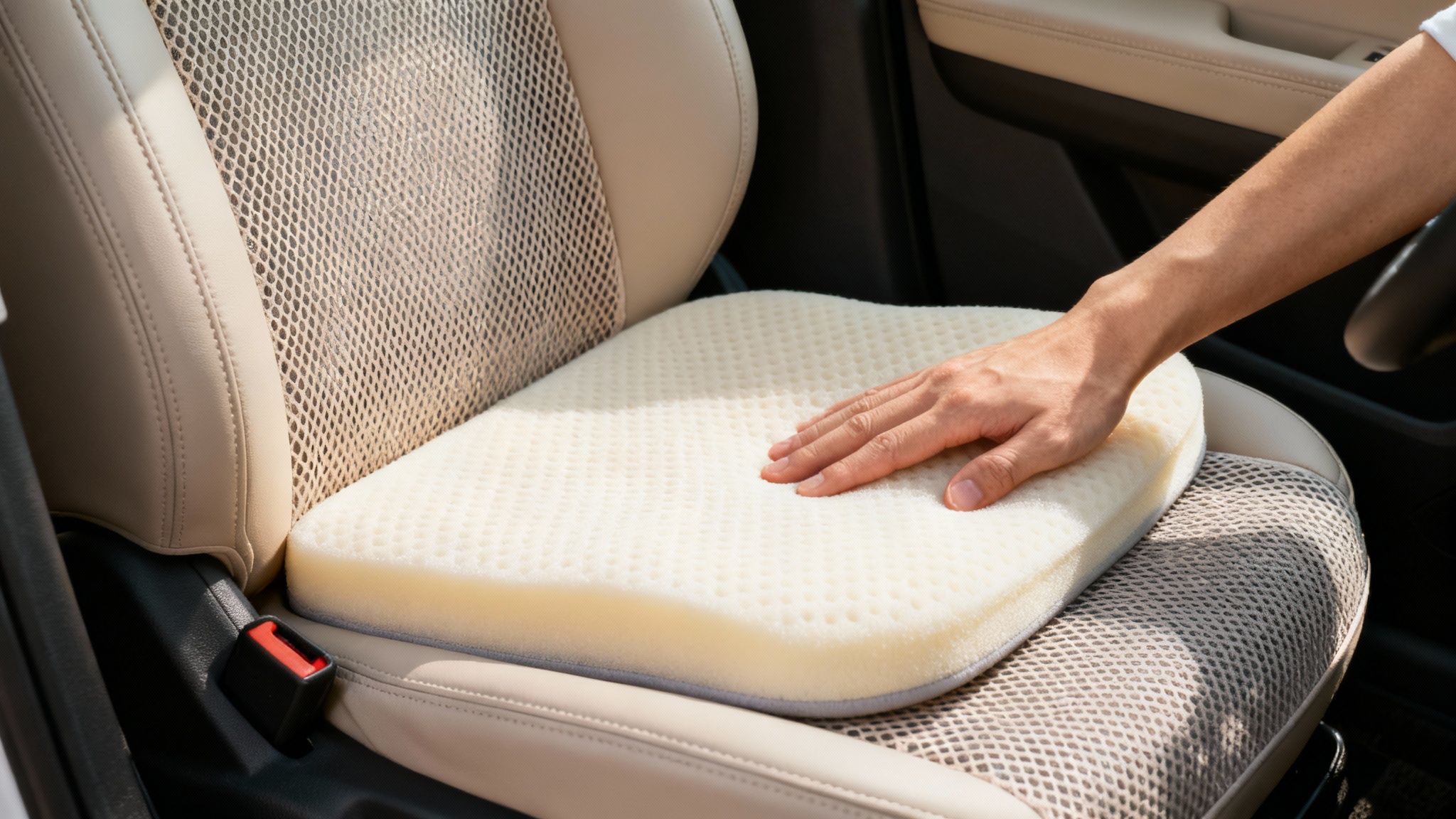
When you've tweaked your posture and adjusted the lumbar support but still can't get comfortable, it's time to bring in reinforcements. The right cushion or seat cover can completely transform your driving experience.
If your factory seats feel rock-hard or unsupportive, an accessory isn't just a luxury—it's a practical fix for daily commutes and long road trips. The trick is matching the product to your specific problem. A cushion designed for pressure relief won't solve a posture issue, so let's dig into the options.
Diagnose Your Discomfort
Before you start shopping, pinpoint exactly what's causing the problem. Is it a specific pressure point, a general lack of padding, or something else?
- Hard Seats and Pressure Points: Does your seat feel like a park bench? If your hips or tailbone are aching after a drive, you need something that distributes your weight more evenly.
- Poor Circulation or Numbness: This is a classic sign that the seat edge is digging into the back of your thighs, cutting off circulation. It's not just annoying; it can be a real issue on long drives.
- Incorrect Positioning: Sometimes the seat’s shape itself encourages slouching or doesn't provide enough height, throwing your entire posture out of whack.
Once you know what you're fighting against, you can find the right tool for the job.
Finding the Perfect Cushion Solution
Think of cushions as targeted problem-solvers. For that all-over hardness and nagging pressure points, a memory foam cushion is a fantastic choice. It molds to your body, giving you personalized support while also soaking up road vibrations.
If you struggle with circulation issues or find your legs going numb, look into a wedge cushion. These are higher at the back and taper down toward the front. This simple design tilts your pelvis forward, which improves your posture and, crucially, takes the pressure off your thighs.
For those dealing with sharp tailbone pain, a cushion with a coccyx cutout is purpose-built to provide immediate relief by removing pressure from that sensitive area.
The goal of a cushion isn't just to add softness; it's to correct a specific ergonomic flaw in your factory seat. The right cushion should make you feel supported and aligned, not just propped up.
Upgrading with Seat Covers
Seat covers offer a more general approach to comfort. While they won't fix major ergonomic problems, they're brilliant at improving the overall feel and temperature of your seats.
A plush sheepskin cover, for example, adds a luxurious layer of softness. It's also naturally breathable, which helps keep you comfortable in both hot and cold weather. For drivers in warmer climates, breathable mesh or bamboo covers are a game-changer for promoting airflow and preventing that sticky, sweaty feeling on a summer day.
And if you really want to bring your seats back to life, consider a professional upholstery cleaning to get them looking and feeling fresh.
One critical point: safety first. If your seats have side-impact airbags, make absolutely sure any cover you buy is explicitly labeled "airbag compatible".
Don't forget that comfort extends beyond just the seat itself. Irritating seat belt straps can be just as distracting. You can learn more about how padded seat belt covers prevent chafing and make the whole experience more pleasant.
4. Tackling Temperature and Vibration for a Smoother Ride
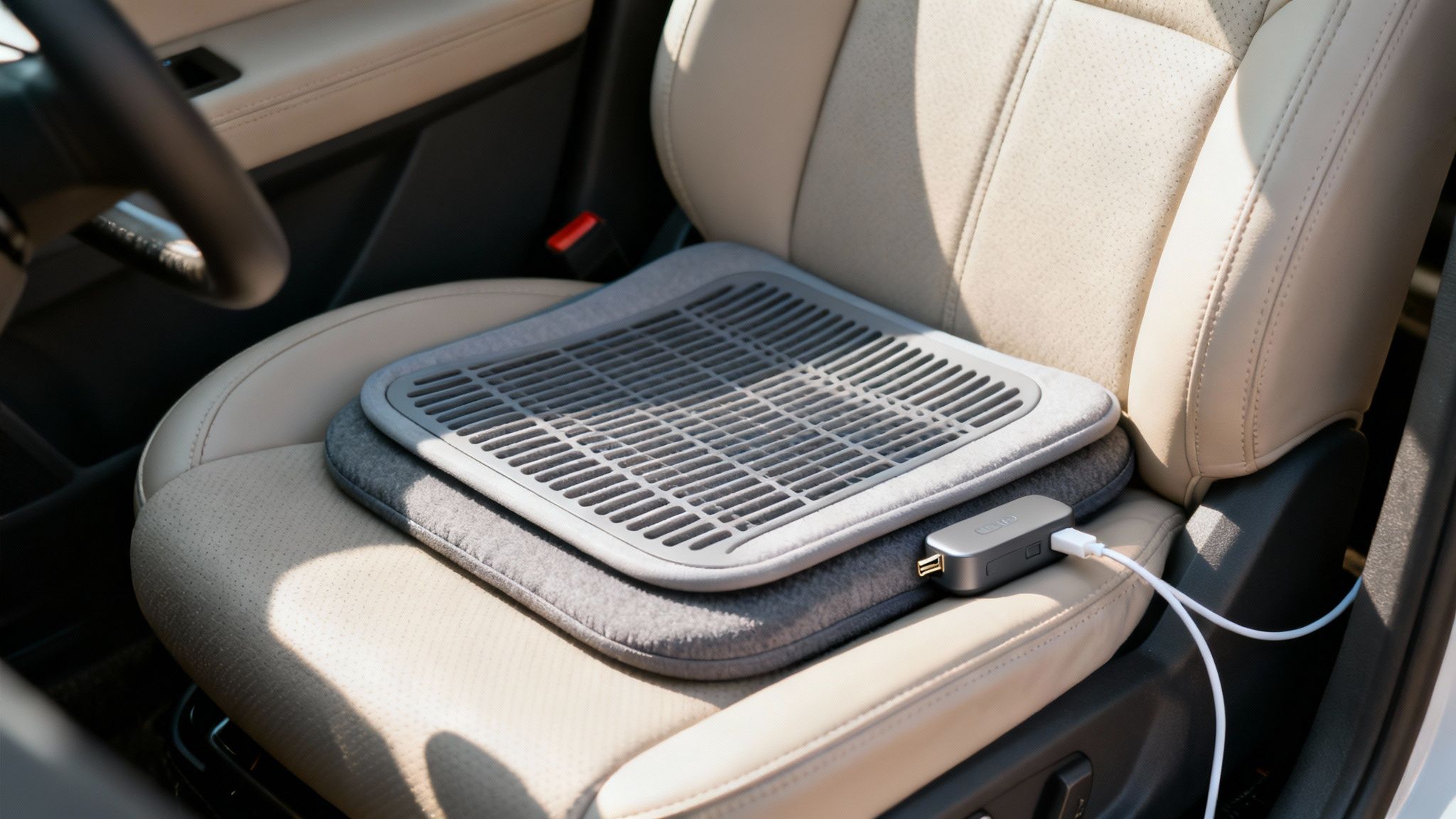
True comfort is about more than just the shape of your seat; it’s about controlling your immediate environment. Two of the biggest culprits behind a miserable drive are extreme temperatures and that constant, fatiguing road vibration.
A seat that’s scorching hot in July or freezing cold in January can make any trip unbearable. In the same way, that low-level buzz from the road might seem minor at first, but it can leave you feeling completely drained after a long drive. Let’s look at how to fix these common problems.
Conquer Extreme Seat Temperatures
There’s nothing worse than lowering yourself onto a scalding leather seat in the summer. If your car isn’t equipped with factory climate-controlled seats, you’re not out of luck. Aftermarket accessories can be a lifesaver.
- Beating the Heat: A ventilated cooling cushion is the best solution here. These clever pads use small internal fans to circulate air through a breathable mesh, actively wicking heat and sweat away from your body. They usually plug right into your car’s 12V outlet.
- Warming Up in Winter: An add-on heated seat cover is your best friend on a frosty morning. It works just like a factory-installed system, using heating elements to warm the surface quickly. It's a fantastic way to find instant relief from the cold and even soothe a stiff back.
When you’re shopping for one of these, check the power cord length and make sure it’s a simple strap-on design that won’t get in your way.
True comfort is always tied to safety. A distracting accessory is a dangerous one, which is why it's also helpful to understand things like how seat belt tension affects your ride. Getting the whole system right is key to a secure and pleasant drive.
Dampen That Annoying Road Buzz
You might not consciously register it, but the constant vibration that travels from the road through your seat is a massive contributor to driver fatigue. This is especially true in older cars, trucks with stiff suspensions, or if you regularly drive on less-than-perfect pavement.
The answer is a cushion designed specifically for vibration dampening. These are a step above your average foam pad.
- Gel Cushions: These are phenomenal at absorbing the high-frequency vibrations that wear you out. The gel material isolates you from the buzz, providing a stable, shock-absorbing layer between you and the car.
- Memory Foam Cushions: High-density memory foam is also fantastic at soaking up vibrations. As it molds to your body, it distributes your weight more evenly and minimizes the direct transfer of that road feedback to your spine.
For anyone who spends hours behind the wheel, whether for work or road trips, investing in a quality vibration-dampening cushion is a game-changer. It’s a small change that pays off big time, helping you arrive at your destination feeling far more relaxed and refreshed.
Not sure which accessory is right for you? This table breaks it down based on the problem you're trying to solve.
Comfort Accessory Problem-Solver
| Common Problem | Best Cushion/Cover Type | Key Feature to Look For |
|---|---|---|
| Stiff, unsupportive seat | Memory Foam Cushion | At least 2–3 inches of high-density foam for support. |
| Back gets sweaty and hot | Ventilated Cooling Pad | Active fans for air circulation, not just passive mesh. |
| Road vibrations cause fatigue | Gel Cushion | A "honeycomb" or layered gel design for max shock absorption. |
| Tailbone or hip pain | Coccyx (U-shaped) Cushion | A cutout at the back to relieve pressure on the spine. |
| Seat is too cold in winter | Heated Seat Cover | Multiple heat settings and an auto-shutoff feature. |
Think of these accessories as tools. By picking the right one for your specific issue, you can transform a fatiguing drive into a comfortable journey.
Enhancing Comfort and Safety for Every Passenger
A comfortable car isn't just for the driver. When you think about making a car seat more comfortable, it's easy to forget about everyone else, from the kids in the back to the adults riding shotgun. But a truly comfortable ride is one where every single person feels supported and secure.
For the little ones, long trips can be tough. The key is making sure their car seat is not just a safety device, but an ergonomic one. I always tell parents to look for features like breathable fabrics that keep kids from getting sweaty and decent padding to soak up those bumps in the road. For newborns and tiny infants, proper head and body inserts are a must—they prevent that dangerous head slump and keep their little bodies in a safe position.
Comfort for Child Passengers
It's no surprise that the baby car seat market is booming. Valued at USD 6.0 billion in 2024, its growth comes from two things: tougher safety laws and parents like us demanding seats that are actually comfortable for our kids. The materials and designs have come a long way.
When you're shopping for a child seat, keep an eye out for these comfort features:
- Adjustable Recline: This is a lifesaver for naps. You can find that sweet spot where they can sleep comfortably without sacrificing a safe angle.
- Ample Padding: Good, high-quality foam does more than just feel soft; it plays a real role in absorbing impact.
- Breathable Materials: Look for mesh panels or moisture-wicking fabrics. They make a huge difference in keeping your child cool and preventing that cranky, sweaty-back feeling.
Safe Accessories for Adult Passengers
Now for the adults. Comfort often comes down to a few smart accessories. A good neck pillow can be the difference between a relaxing trip and a sore neck, and a simple cushion can provide that little bit of extra lumbar support you need. But you can't just throw anything in the car—safety always has to be the top priority.
Seat belt extenders are a perfect example. For some people, they're essential for getting a safe and comfortable fit, especially for passengers with larger builds or those who need extra room for medical gear. If you're considering an extender, it is absolutely critical to use one that is E-Mark safety certified and made specifically for your vehicle's make and model. Our guide on using a seat belt extender for pregnancy has some great tips on getting a secure fit.
Here's the bottom line: never, ever compromise on safety. Any accessory you add, whether it's a simple cushion or an extender, must not interfere with how your seat belts or airbags work. Stick to certified, vehicle-specific products from brands you trust.
By paying attention to ergonomic support for kids and choosing safe, smart accessories for adults, you can turn your car into a place where every passenger can relax. And while you're focused on comfort inside the car, you can also add peace of mind with advanced car security systems to keep it protected.
Answering Your Top Car Seat Comfort Questions
When you're trying to get your driving setup just right, a few common questions always seem to surface. It makes sense—everyone wants a comfortable ride, but figuring out the right accessories and adjustments can feel like a guessing game.
Let's clear things up. We'll dive into some of the most frequent questions I hear, from dealing with stiff leather to making sure your posture is actually helping, not hurting.
How Can I Make My Stiff Leather Seats Softer?
This is a classic problem, especially in newer cars or luxury models with firm upholstery. The good news is, you absolutely can soften things up without a major overhaul.
The most straightforward fix is adding a good cushion designed specifically for pressure relief.
- A memory foam cushion is a fantastic all-around choice. It molds to your shape, taking the pressure off your tailbone and hips.
- Gel cushions are another great option. They do an excellent job of distributing your weight evenly and often have the added bonus of a cooling effect, which is a lifesaver on warm days.
- For pure, simple softness, you can't beat a genuine sheepskin cover. It adds a plush layer that's incredibly breathable without feeling too bulky.
Are Those Beaded Car Seat Covers Actually Comfortable?
Ah, the beaded seat cover—a true road trip icon. Whether they're comfortable really comes down to what problem you're trying to solve. Their main job isn't padding; it's ventilation. By creating a small air gap between you and the seat, they work wonders to stop you from sticking to your seat on a hot, humid day.
Some drivers swear by the subtle massaging feel they provide, saying it helps fight off fatigue on long hauls. On the other hand, some people just find the sensation weird or even annoying after a while.
The takeaway: If your biggest complaint is a sweaty back rather than a rock-hard seat, a beaded cover is a cheap and effective fix. If you're after cushioning, you’ll be much happier with a foam or gel pad.
How Do I Know if My Driving Posture Is Correct?
Good driving posture shouldn't feel stiff or forced. It should feel natural and supported, allowing you to relax while staying in full control of the car. It’s not about locking yourself into one perfect position, but about getting all the key adjustments to work together for you.
Here’s a quick way to check your own posture:
- Your Legs: When you press the gas or brake pedal all the way to the floor, your knee should still have a slight bend in it. You should never have to fully straighten your leg.
- Your Back: Aim for a slight recline, somewhere between a 100 to 110-degree angle. This supports the natural S-curve of your spine without making you slouch.
- Your Arms: You should be able to hold the steering wheel at the "9 and 3" position with a comfortable bend in your elbows. Reaching or leaning forward means you're too far away.
- Your Headrest: This one's for safety. The middle of the headrest should line up with the top of your ears to protect you from whiplash.
If you can hit all these points without feeling any strain, you're in great shape.
Is It Safe to Use Aftermarket Seat Cushions?
Generally, yes, but you have to be smart about it. Your safety should always come first. Simple cushions that just sit on the bottom of the seat or small pillows for lumbar support are almost always perfectly safe.
The real safety question comes up with full-seat covers or very large, bulky cushions. If your car has side-impact airbags built into the bolsters of the seat itself (many modern vehicles do), you must choose a cover that is specifically marked as "airbag compatible." These have special seams or openings designed to tear away so the airbag can deploy correctly.
And a non-negotiable rule: never use any cushion or cover that interferes with how your seatbelt fits. If it repositions the lap or shoulder belt, it could seriously reduce its effectiveness in a crash.
At Seat Belt Extenders, we believe comfort and safety should always go hand-in-hand. Find the perfect E-Mark safety certified extender for your vehicle and enjoy a more comfortable, secure fit on every drive. Explore your options.