
It's a frustration every driver knows well: you hop in the car, reach for your seat belt, and the buckle is gone. It’s slid all the way down the strap, forcing you to fish around for it by the floor. A seat belt stop clip is the simple, brilliant fix for this daily annoyance.
Think of it as a tiny button that clamps onto the seat belt webbing. Its only job is to stop the buckle from sliding down, keeping it right where you expect it—up by your shoulder, ready to go.
Unlocking a More Convenient Driving Experience
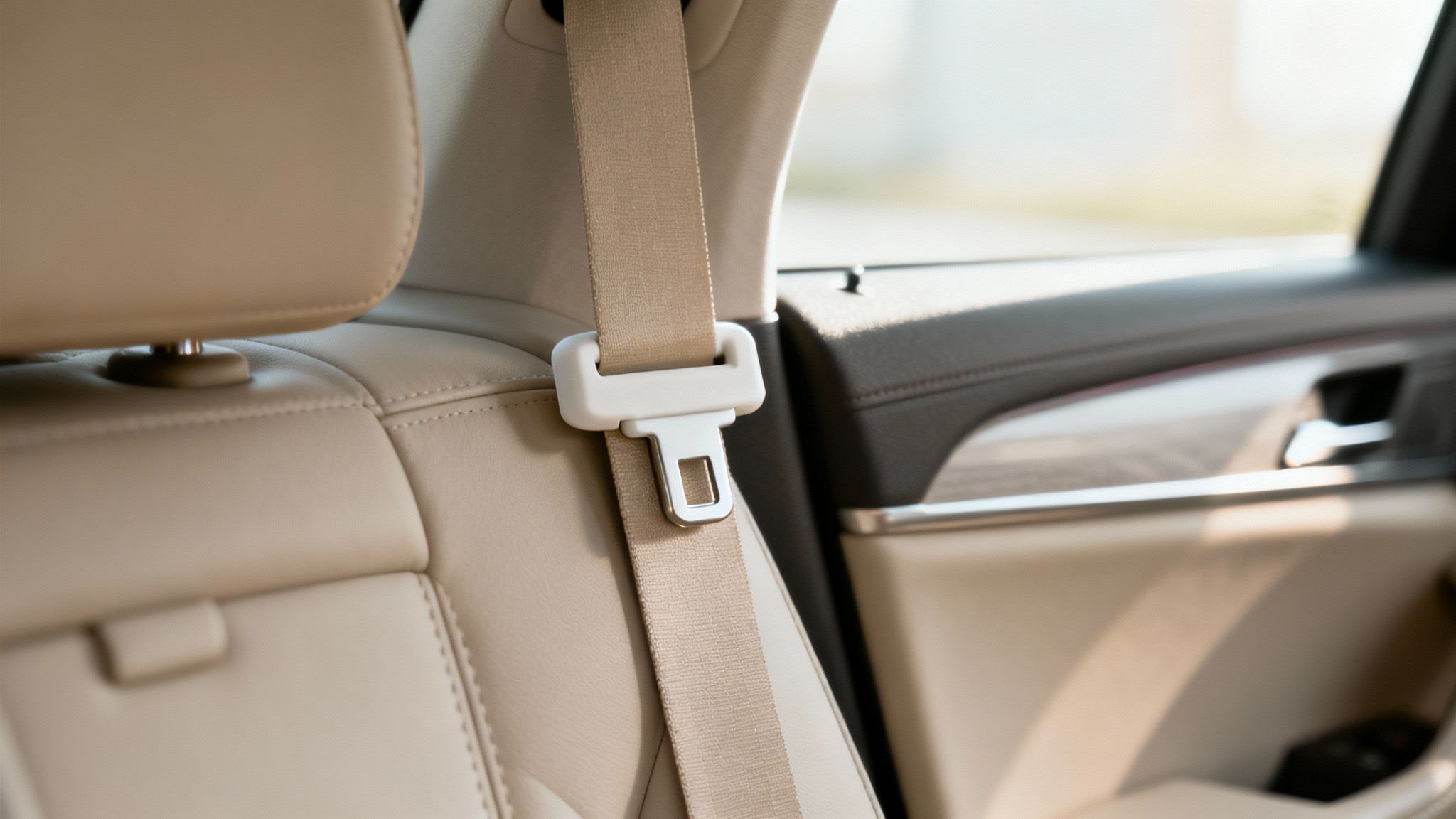
This little accessory is one of those "why didn't I think of that?" solutions. By creating a permanent placeholder for the buckle, it ensures you never have to hunt for it again. For anyone who has just accepted the sliding buckle as a minor but constant irritation, installing a stop clip is a genuine "aha" moment.
It’s a tiny upgrade that instantly eliminates one of the most universal hassles of getting into a car.
The Core Problems a Stop Clip Solves
So, how does this small button make such a big difference? It’s more than just a convenience—it tackles a few key issues related to comfort and accessibility. The clip creates a physical barrier that the buckle’s latch plate can't slide past, locking it at the perfect height.
This small change has a surprisingly big impact:
- No More Fumbling: It puts an end to the daily search for a lost buckle. You can grab it and click it in without a second thought, which makes buckling up faster and less distracting.
- Reduces Twisting: By keeping the buckle in place, it helps prevent the entire seat belt from getting twisted and tangled over time. A straight belt is a happy belt.
- Improves Accessibility: For older adults, drivers with limited mobility, or even kids learning to buckle themselves, having the buckle consistently within easy reach is a huge help.
A seat belt stop clip doesn't change how your seat belt works in an emergency. It's purely a convenience accessory designed to manage the buckle's position, performing the same job as the original factory-installed button that may have broken off.
A Quick Glance at Its Benefits
To help clarify exactly what a stop clip does (and doesn't do), this quick table breaks down its core purpose. It's easy to confuse them with other accessories, but their job is very specific. For instance, while they make buckling easier, they don't add any length. If you need more room, it's worth learning about the different seat belt extender types to find the right solution.
Here’s a simple summary of what a stop clip brings to the table.
Seat Belt Stop Clip At a Glance
| Problem Solved | Primary Function | Key Benefit |
|---|---|---|
| Buckle sliding down the webbing | Holds the buckle in a consistent, reachable position | Faster and easier buckling every time |
| Twisted or tangled seat belts | Maintains the belt's proper orientation | Reduces frustrating tangles and belt wear |
| Difficulty reaching the buckle | Keeps the buckle accessible near the shoulder | Improves accessibility for all passengers |
Ultimately, a stop clip is a small, inexpensive fix that restores your seat belt to its original, hassle-free design.
How These Simple Clips Actually Work
The real genius behind the seat belt stop clip is just how simple it is. There are no moving parts or complicated mechanics—and that’s exactly what makes it so reliable. At its heart, the clip is just a small, two-part device: a pin and a cap that locks onto it.
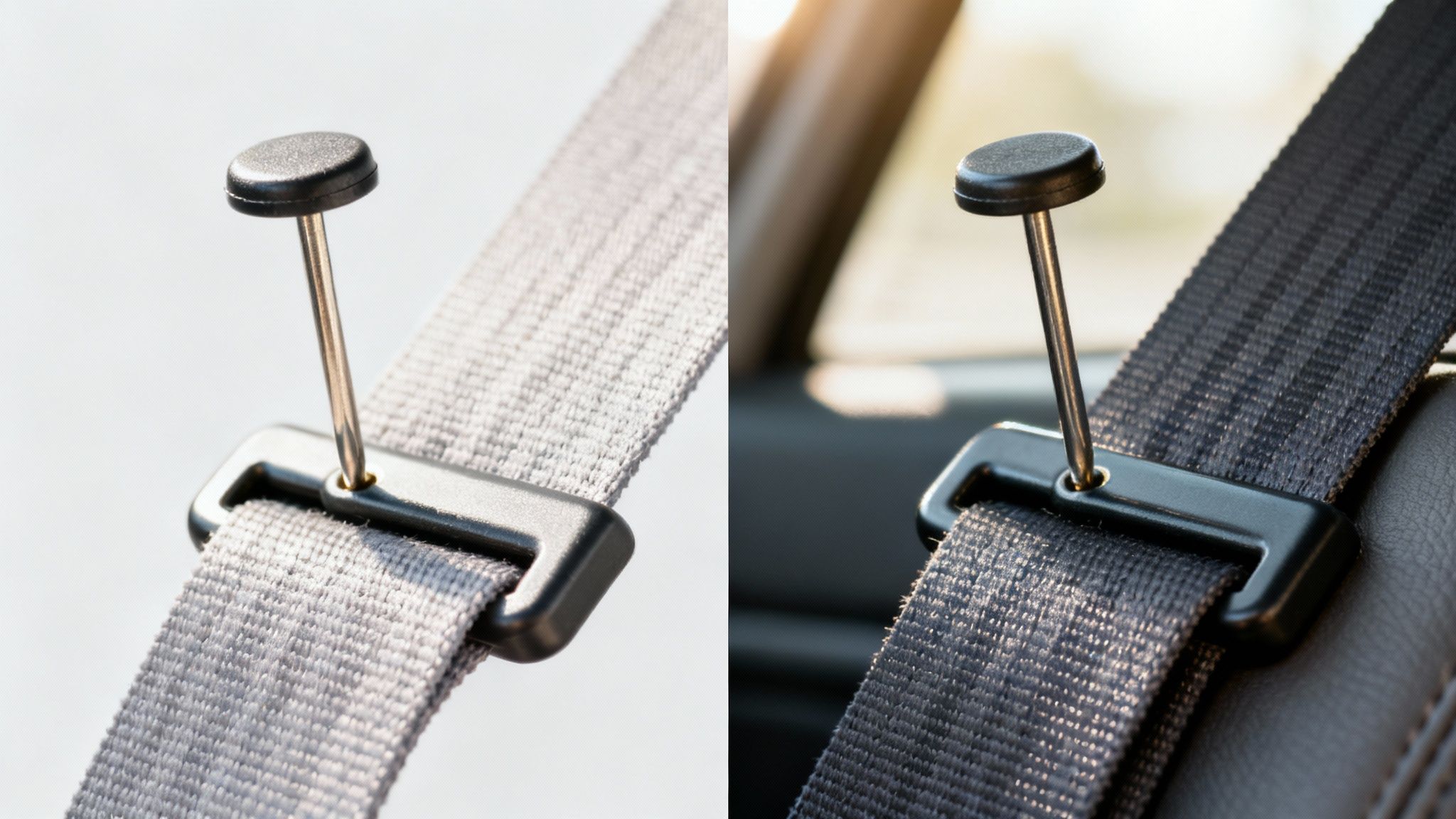
It works a lot like a rivet you'd use for fabric. You simply push the pin through the seat belt’s webbing and then press the cap firmly onto the other side, locking the two pieces together. That creates a small but solid bump that the buckle’s metal tongue physically can't slide past.
The Science Behind the Grip
The materials chosen for these little clips are a huge part of why they work so well. Most quality clips are made from tough plastics or nylon, and for good reason:
- A Firm Hold: These materials are strong enough to grip the thick webbing without cracking under the constant pressure.
- Keeps Webbing Safe: Unlike metal, a well-designed plastic clip won't cut or fray the seat belt’s fibers over time, which is critical for maintaining its strength.
- Handles Extreme Temps: Car interiors can get incredibly hot or freezing cold. These materials are built to handle those temperature swings without becoming weak or brittle.
This thoughtful material choice is key. Even though the clip is about convenience, it absolutely cannot damage the seat belt itself. A cheap or poorly made clip could cause slow, invisible wear. That’s why it’s worth finding a quality seat belt stop clip. You can get a better sense of how these materials handle force in our article on understanding seat belt tension.
The whole idea comes down to mechanical interference. The clip serves as a fixed, intentional roadblock, doing the exact same job as the original button that might have broken off your seat belt years ago.
A Small Part in a Big Market
It might seem like a tiny piece of plastic, but this component is part of a massive industry built around car safety. The global automotive seat belt market, which includes accessories like adjuster clips, was valued at around USD 19.66 billion in 2024. And it's only expected to get bigger, which just goes to show how much demand there is for reliable safety parts. You can dig into more details on the automotive safety market from Precedence Research.
In the end, what the stop clip does is beautifully simple. By creating a physical barrier, it makes sure the buckle stays right where you can reach it—no more fishing for it every single time you get in the car.
A Step-by-Step Installation Guide
Installing a seat belt stop clip has to be one of the quickest and most satisfying DIY car fixes out there. Seriously, the whole thing takes less than five minutes. You need hardly any tools, and it permanently solves that annoying problem of the buckle sliding all the way down.
Let's walk through how simple this is.
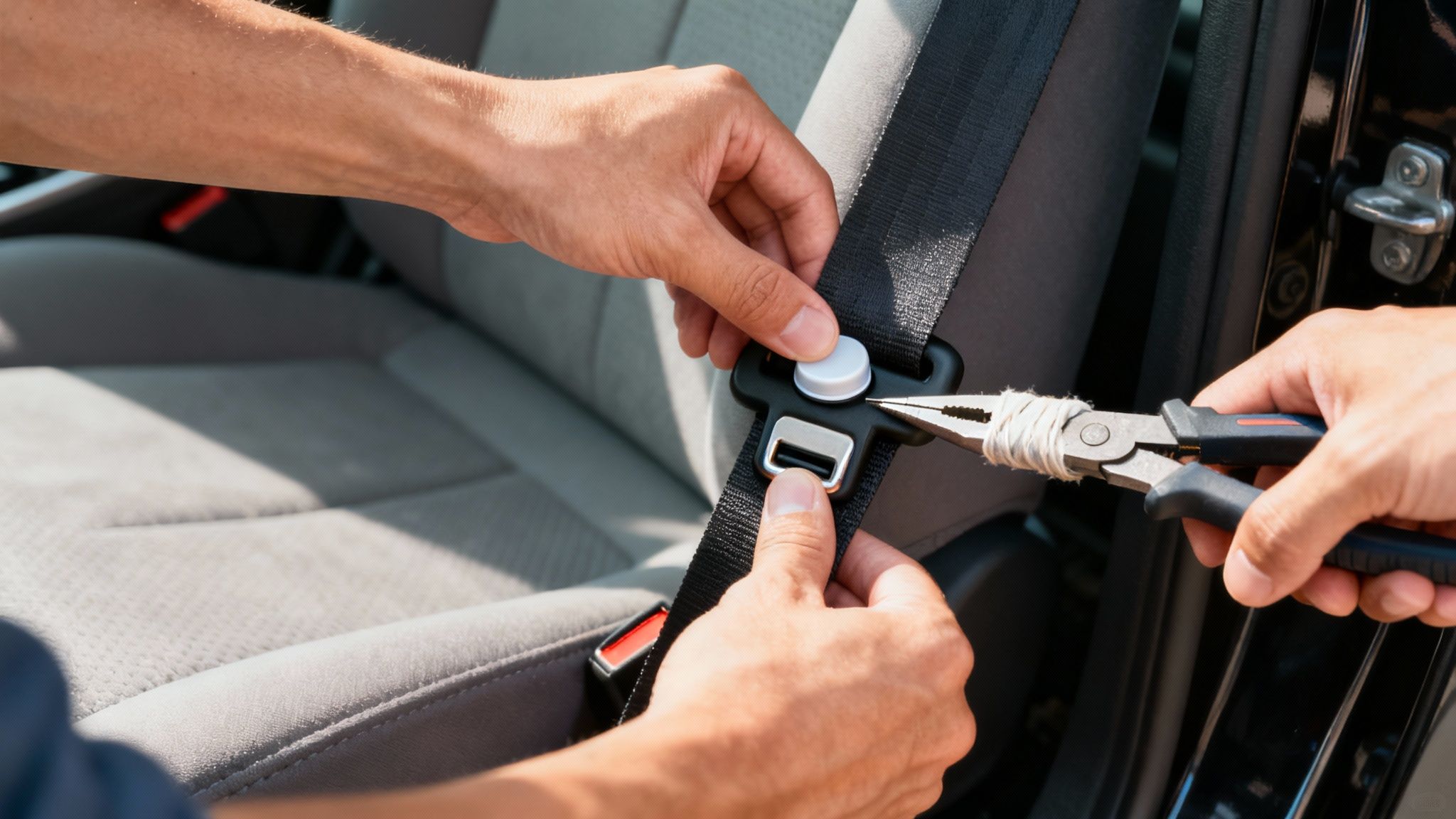
Most of these stop clips come in one of two flavors: a two-piece "pin and cap" model or a design that just snaps together. The installation is virtually identical for both, with the goal being to create a secure, permanent new button on the belt webbing.
Preparing for Installation
First up, let's get your tools. You really don't need much. While some clips can be squeezed together by hand, a pair of pliers makes the job a whole lot easier and guarantees a rock-solid fit. If you're using the common pin-style clip, a simple thumbtack is also a great help for creating a pilot hole.
Before you start, figure out where you want the buckle to live. Slide it up to a good resting position—a good rule of thumb is just high enough that it won't get slammed in the door when the belt retracts. Once you find the sweet spot, mark it with a small piece of chalk or even a clothespin.
Pro Tip: Wrap the jaws of your pliers with a single layer of electrical tape or a small piece of cloth. This is a simple trick that prevents you from scuffing or scratching your brand-new stop clip during installation.
Securing Your New Stop Clip
With your spot marked, you're ready to pop the clip on. Just follow these steps, and you'll get a perfect fit on the first try.
- Create a Pilot Hole (Pin-Style Only): Grab your thumbtack and gently push it right through the center of the seat belt webbing where you made your mark. This tiny hole makes it so much easier to get the clip's pin through without fraying the belt fibers.
- Insert the Pin: Push the pin half of the seat belt stop clip through your pilot hole from one side. You should see the pin poking out clearly on the other side of the webbing.
- Position the Cap: Now, take the other half of the clip—the cap—and place it directly over the exposed pin. Make sure it’s sitting flat and straight against the webbing.
- Secure the Clip: Using your cloth-wrapped pliers, give the two halves a firm squeeze. You should hear or feel a definite "snap" or "click" as they lock together. Give it a gentle pull just to make sure it's completely secure.
That's it! Your buckle now has a permanent, reliable stopping point. Keep in mind, these little clips are designed for convenience; they don't change how the seat belt actually fits you. For that, you might want to learn about how seat belt adjuster clips offer a different kind of solution.
Quick Troubleshooting Tips
Every once in a while, you might hit a small snag. Here’s how to deal with the most common issues:
- Pin Won't Go Through: Seat belt webbing is tough stuff. If the pin is putting up a fight, just use the thumbtack again to slightly widen the pilot hole.
- Clip Feels Loose: This usually means it didn't snap together all the way. Just give it another firm squeeze with the pliers until you feel it lock in tight.
- Cap Won't Align: Check that the pin is pushed straight through the webbing, not at an angle. This ensures the cap has a clear path to connect properly.
Getting to Grips with Safety and Legalities
It's only natural to be cautious about adding any aftermarket part to your car's safety system. So, let's clear the air about the seat belt stop clip. Its job is all about convenience, not meddling with the belt's life-saving mechanics. The clip’s one and only purpose is to stop the buckle from sliding all the way down the strap, keeping it right where you need it.
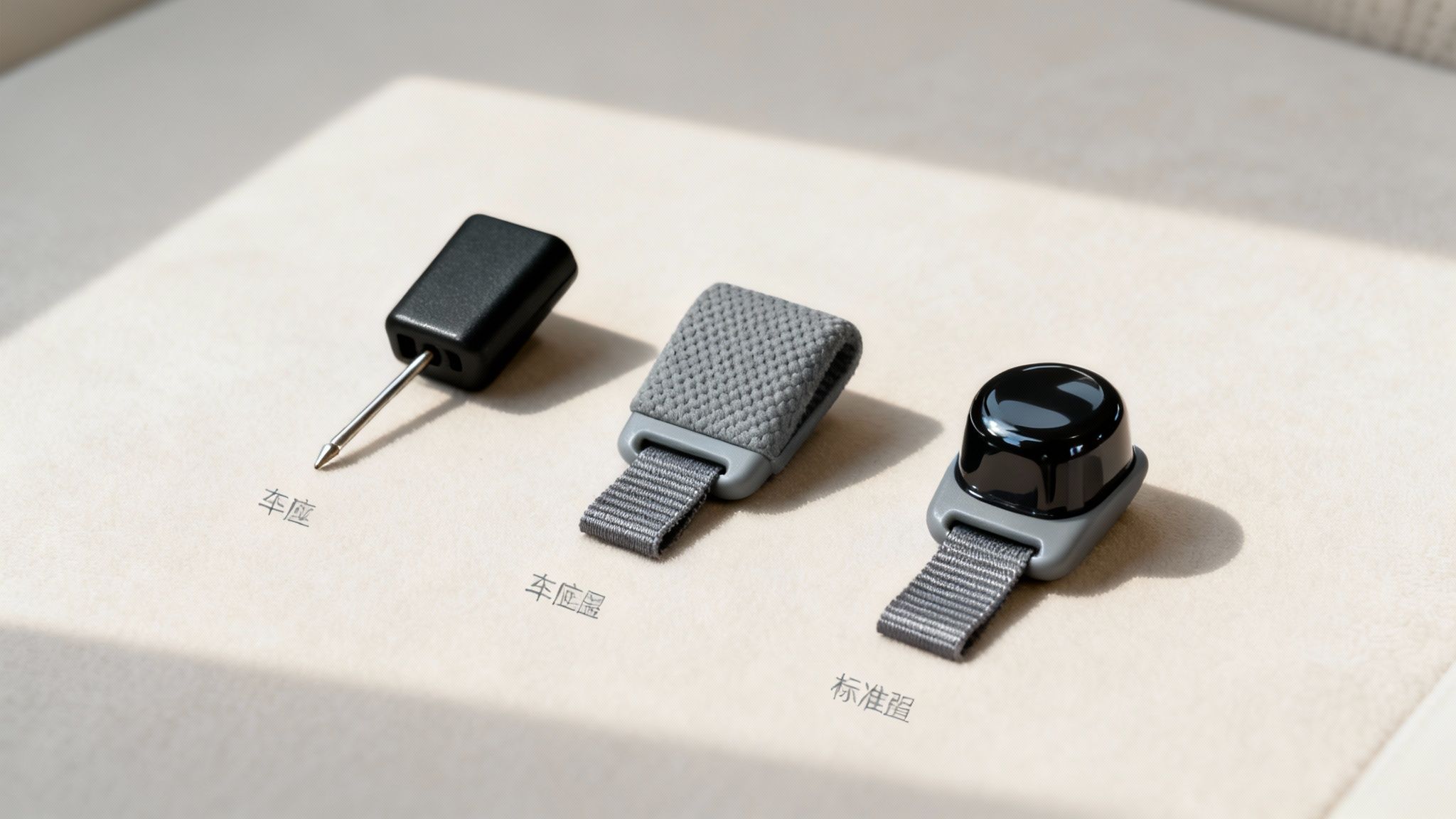
Think of it as a simple placeholder. This little button doesn’t change how the seat belt locks up in an emergency. It won't mess with the retractor mechanism or weaken the belt webbing, as long as you put it on correctly.
But placement really is everything. You need to position the clip high enough to keep the buckle handy, but never so high that it stops the belt from retracting all the way back into the pillar.
Quality Clips vs. Factory Buttons
Your car probably came with a factory-installed stop button. A good aftermarket clip does the exact same thing. When you're shopping for one, look for clips made from tough, belt-friendly materials like high-grade plastic or nylon.
These materials are built to grip the belt securely without fraying or damaging the fabric over the long haul. A cheap, flimsy clip, on the other hand, could just get brittle and snap, and then you're right back where you started.
A quality seat belt stop clip is essentially a direct replacement for a broken or missing factory button. It just brings back the original convenience without touching the critical safety systems your car was built with.
You might be surprised how big the market for these small parts is. The seat belt adjuster clip market hit USD 1.12 billion in 2024, which is just one slice of the massive automotive seat belt industry, valued somewhere between USD 15.67 billion and USD 24.6 billion.
What About the Law?
From a legal standpoint, stop clips are typically seen as simple convenience items. They aren't considered a modification to the safety restraint system itself because they don't change how the belt works or how long it is. This is a crucial difference compared to other accessories, and you can dive deeper into that topic in our article about whether seat belt extenders are legal.
In the rare event that a vehicle modification ever causes trouble, understanding your options when facing a traffic ticket can be a real help. But honestly, as long as the clip is installed properly and doesn't get in the way of the belt's function, it's highly unlikely to cause any legal headaches.
How to Choose the Right Stop Clip
Not all seat belt stop clips are created equal. Picking the right one means it’ll work perfectly, look like it belongs there, and last for the long haul. Think of it like buying buttons for a favorite coat—you want them to match the style and hold up to daily wear. It’s a small detail, but getting it right makes a world of difference in your day-to-day comfort.
When you start shopping around, you'll notice a few things that separate a good clip from a cheap one. Paying attention to these details will help you find the perfect fit for your car and your needs, so you can set it and forget it.
Material and Durability
The first thing to look at is what the clip is actually made of. You'll generally find two options: plastic and nylon. Each has its pros and cons.
- Standard Plastic Clips: These are the most common for a reason. They’re inexpensive, easy to find, and come in tons of colors. For the average driver, a decent quality plastic clip does the job just fine.
- High-Grade Nylon Clips: If you live somewhere with blistering summers or frigid winters, or you just want something tougher, nylon is the way to go. It’s far more durable and won’t get brittle from sun exposure or crack in the cold.
Color and Finish
Function is priority number one, but you also want the clip to blend in. A button that’s the wrong color or finish can stick out like a sore thumb and make your interior look like it’s been patched up.
Luckily, manufacturers make these clips in all the common interior colors—black, gray, beige, and tan are easy to find. Many even offer different finishes, like matte or semi-gloss, so you can get an almost perfect match to your car's original look. A well-chosen seat belt stop clip should be something you never even notice once it’s on.
Pro tip: Take a second to match the clip's color to your actual seat belt webbing, not just the plastic trim in your car. A clip that disappears into the belt itself will look like it came straight from the factory.
Installation Type and Compatibility
Last but not least, check how the clip attaches and make sure it’s right for your belt. Most are either a simple two-piece snap-on design or a pin-style clip that pierces the fabric for a more permanent hold. Both work well, so this often just boils down to what you feel more comfortable installing.
The most important thing here, though, is the width of your seat belt. The standard for most cars is around 1.9 inches (48 mm). While nearly every clip is made for this size, it never hurts to glance at the product specs just to be sure. A snug fit is a secure fit.
Common Questions About Seat Belt Stop Clips
As you get ready to solve that sliding buckle problem for good, you probably have a few last-minute questions. Let's tackle the most common ones so you can feel completely confident about using a seat belt stop clip.
Think of this as the final check-in before making a simple, effective upgrade to your car.
Can a Seat Belt Stop Clip Damage My Belt?
That’s a great question—nobody wants to mess with their safety gear. The short answer is no, a quality stop clip installed the right way won't harm your seat belt's fabric. They're designed with smooth, tough plastics that grip the webbing securely without fraying or cutting the fibers.
Where you can run into trouble is with a poor installation. If you use too much force, the wrong tools, or a cheaply made clip with rough edges, you could cause some minor wear over time. This is why it's so important to follow the instructions and use gentle pressure with pliers for a perfect, damage-free fit.
Are These Clips a Universal Fit for All Cars?
Most cars on the road today use a standard seat belt width of about 1.9 inches (or 48mm), and the vast majority of stop clips are made to fit this size. So, for most modern vehicles, you'll be just fine.
However, it's a mistake to assume they're truly one-size-fits-all. If you have a vintage car, a custom vehicle, or even some commercial trucks, the belt widths can differ.
It's always a good idea to double-check the product specs before you buy. If you're not sure, take a moment to measure your belt's width. A quick check saves you the headache of getting the wrong part.
How Do I Remove a Stop Clip If Needed?
One of the best features of a stop clip is that it isn't permanent. You can take it off just as easily as you put it on—you just do the installation steps in reverse.
To get it off safely, grab a small flathead screwdriver or a pair of needle-nose pliers and gently pry the two halves apart. The key is to work slowly to separate the pin from its base without snapping the plastic or snagging the seat belt. With a little patience, it will pop right off, leaving your belt good as new. If you're looking into other seat belt adjustments, you might also be interested in learning how to deactivate a seat belt alarm.
At Seat Belt Extenders, we provide solutions that blend seamlessly with your vehicle's existing safety system. For situations where you need more length, not just buckle positioning, explore our range of E-4/E-8 certified extenders. Find your perfect, secure fit today at https://seatbeltextenders.com.