
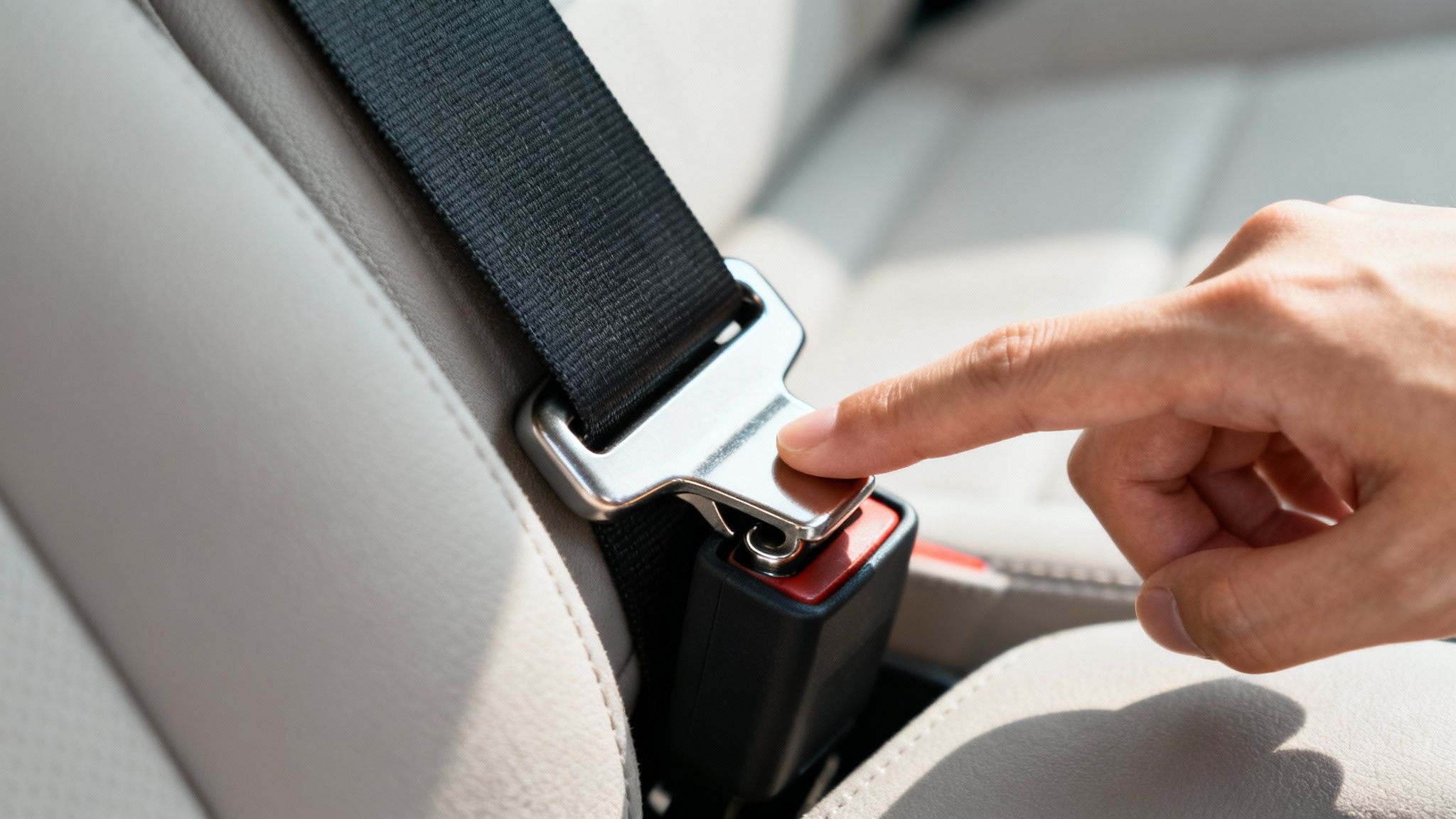
When you hear the term seat belt fastener, what probably comes to mind is the buckle. And you're right, but it’s really two parts working together: the buckle and the metal tongue that clicks into it. This simple mechanism is the final, critical link connecting you to your car’s entire safety system.
It's the little click that activates a whole network of protection, yet we rarely give a second thought to its design or the importance of a perfect fit.
The Unsung Hero of Your Car's Safety System
That satisfying click of your seat belt fastener is more than just an everyday sound—it's your confirmation that the system is engaged and you're secure. Think of it as the lock and key for your safety on the road. This small component is the single point of contact between you and the vehicle's restraint system, a system engineered to handle incredible forces during a sudden stop or a collision.
This guide will pull back the curtain on the world of seat belt fasteners, from the standard buckle that came with your car to specialized seat belt extenders. We’ll look at how these parts work together to create a secure fit, because without one, the whole system can't do its job correctly. Even subtle issues like incorrect https://seatbeltextenders.com/blogs/articles/seat-belt-tension can have serious safety implications during an impact.
Why a Secure Fit Matters
A seat belt’s primary mission is to keep you safely in your seat during a crash. It sounds simple, but a properly fastened belt is doing several complex jobs at once:
- Distributing Force: In a collision, the seat belt spreads the massive impact forces across the strongest parts of your body—your pelvis and rib cage.
- Preventing Ejection: Being thrown from a vehicle is one of the deadliest things that can happen in a crash. A secure belt holds you firmly in place, which is the most effective way to prevent fatal injuries.
- Working with Airbags: Your airbags are designed to work with your seat belts, not instead of them. A properly engaged fastener ensures you're positioned correctly for the airbag to deploy and protect you, not injure you.
"Wearing a seat belt is the single most effective thing you can do to protect yourself and others in the vehicle." - Kendra Blocker, Lead Seat Belt Engineer at General Motors
Our goal here is to help you understand, choose, and safely use these vital components. This is especially true when it comes to extenders, which provide a certified, reliable solution for anyone who needs a bit more length for a safe and comfortable ride.
While vehicle safety is paramount, it’s just one piece of the puzzle. It’s also worth noting how various senior safety devices can enhance security and independence in many other areas of life.
Why a Perfect Fit Is Non-Negotiable
That satisfying click when you buckle up is more than just a sound—it's the sound of a whole life-saving system coming online. It's best to think of your seat belt not as just a strap, but as a sophisticated safety net, engineered to catch you when the immense forces of a collision are unleashed. And for that net to work, it has to be positioned just right.
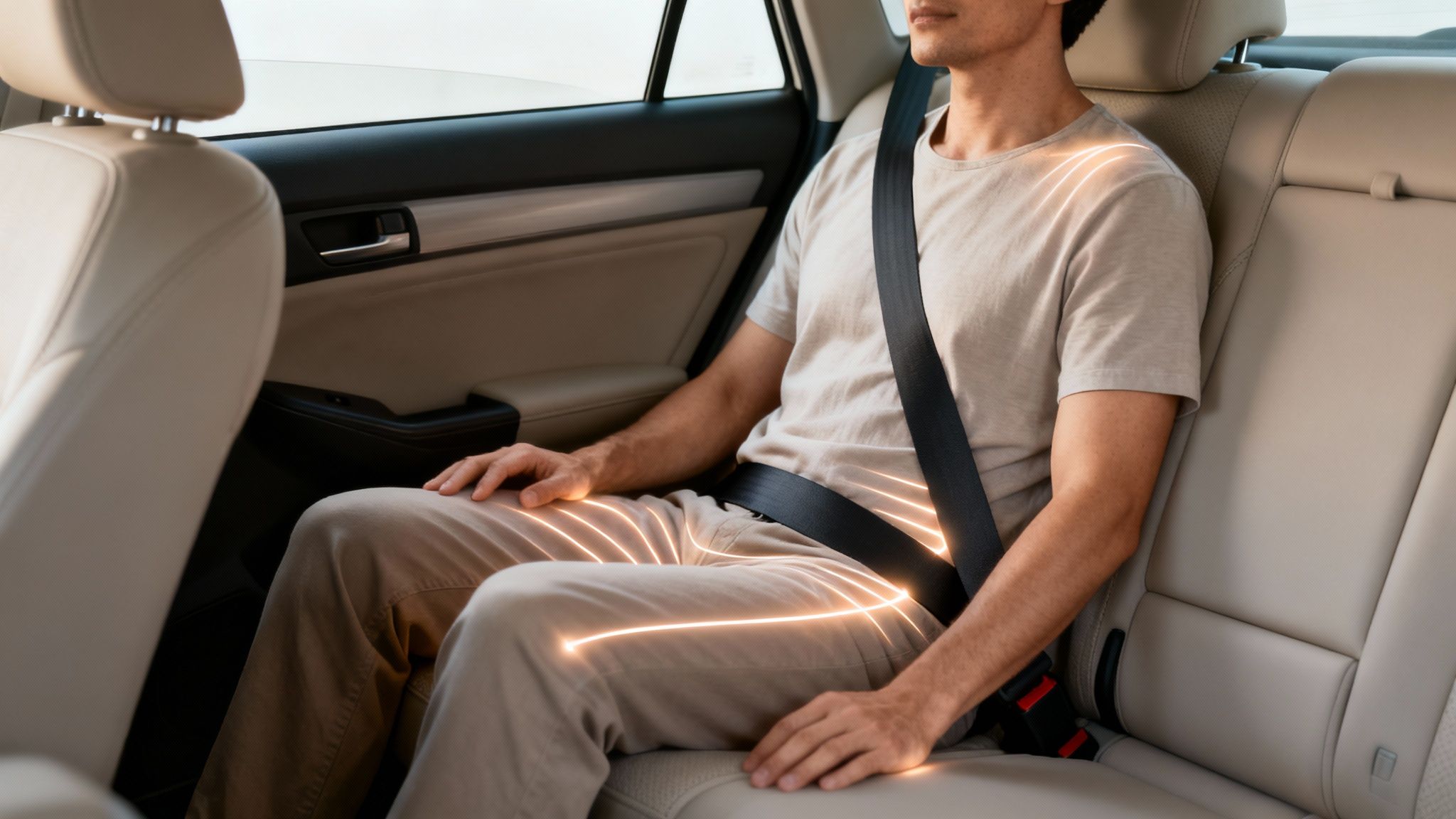
When a seat belt fits correctly, it channels the violent energy of a crash into the strongest parts of your skeleton—your pelvis and your chest. This deliberate energy distribution is what stands between you and devastating internal injuries. If the belt is loose or rides up onto your stomach, those same forces get focused on your body's softest, most vulnerable areas, which can be catastrophic.
The Physics of Protection
The science behind this is pretty straightforward. In a crash, your body instinctively wants to keep moving forward at the same speed your car was traveling. A properly fastened seat belt is the anchor that stops this, slowing you down along with the vehicle and preventing a brutal impact with the dashboard, steering wheel, or even ejection from the car.
This is exactly why even a little bit of slack can be so dangerous. An improperly latched or loose belt means your body travels farther and faster before the belt finally engages, making the eventual stop much more violent and dramatically increasing the odds of injury. The numbers don't lie.
Seat belts are proven to slash the risk of fatal injury by a whopping 45% for front-seat car occupants and up to 60% in SUVs, vans, or pickups. The consequences of not buckling up are severe; in 2020 alone, 51% of crash fatalities involved unbelted passengers. Discover more insights about these life-saving statistics on financebuzz.com.
How Extenders Maintain Safety
So, how do seat belt extenders factor into all this? It’s a common worry that adding length could mess with the seat belt's critical geometry. This is precisely why certified extenders are engineered with such demanding standards.
A high-quality, E4-certified seat belt extender isn’t just about adding a few inches. It's built to preserve the integrity and function of the vehicle’s original restraint system. It ensures the seat belt fastener clicks in securely and keeps the lap and shoulder belt positioned correctly across your body. You can dive deeper into the engineering in our detailed guide on seat belt extender safety.
Ultimately, this allows people of all sizes or those with specific mobility needs to get that perfect, non-negotiable fit. The mission is clear: adding length should never mean subtracting protection.
Decoding the Different Types of Seat Belt Fasteners
When you buckle up in your car, you're using what the industry calls an OEM (Original Equipment Manufacturer) seat belt fastener. That’s just the technical term for the standard buckle and metal tongue that came with your vehicle right from the factory. It was engineered to work perfectly with your specific car, but sometimes, "perfect" doesn't fit everyone.
For many drivers and passengers, the factory-installed belt is just a bit too short or the buckle is buried too deep in the seat. That's where seat belt extenders come into play. They act as a safe and secure bridge, but it's important to know they aren't all the same. Extenders generally fall into two main categories, each built for a very different purpose.
The Two Core Extender Fastener Styles
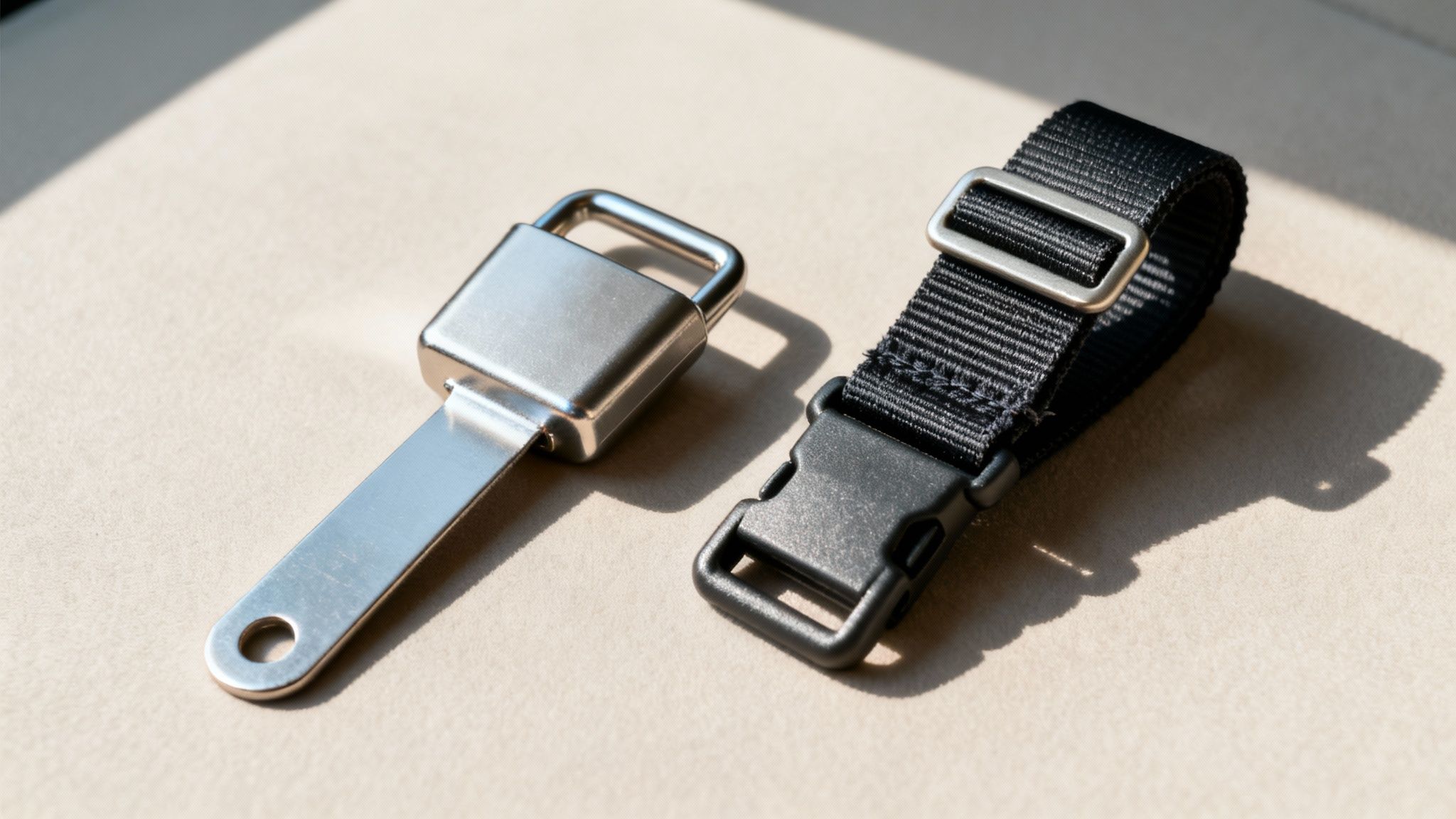
The two main players in the world of seat belt extenders are Rigid and Adjustable. Each one solves a specific problem, and picking the right one is absolutely critical for your safety. Think of it like using a fixed wrench versus an adjustable one—both tighten bolts, but you grab the one that’s actually right for the job.
- Rigid Seat Belt Extenders: These are short, sturdy arms, usually built with steel cable inside. Their job isn't to add much length, but to lift the buckle up, making it way easier to reach and click.
- Adjustable Seat Belt Extenders: These look just like a miniature seat belt, made from the same webbing material. With a buckle on one end and a metal tongue on the other, they are all about providing a flexible span of extra length.
Understanding where each one shines is key. If you're wrestling with a buckle that's sunk deep into the seat cushion, a Rigid extender is what you need. But if you can reach the buckle just fine and simply need more room for the belt to fit comfortably, the Adjustable extender is the correct tool.
Choosing the Right Fastener for Your Needs
Picking the wrong type of extender is more than just a hassle; it can compromise your safety. For instance, using a long Adjustable extender when you only needed to raise the buckle can introduce dangerous slack into the belt system. On the flip side, a Rigid extender won't do you any good if the belt is just too tight across your body.
To make it even clearer, let's compare them side-by-side.
Comparing Seat Belt Extender Types
This table breaks down the differences between Rigid and Adjustable extenders to help you decide which one fits your situation.
| Extender Type | Primary Use Case | Best For | Key Feature |
|---|---|---|---|
| Rigid Extender | Accessibility | Raising a buckle that's hard to reach, often due to car seat boosters, mobility issues, or recessed buckle designs. | A short, fixed arm that repositions the buckle receptacle higher and makes it easier to click into. |
| Adjustable Extender | Extra Length | Individuals needing more slack for a comfortable fit, such as people with larger body types or those wearing bulky gear. | A flexible strap of seat belt webbing that adds several inches of length to the overall belt system. |
This comparison highlights how each type is a specialized tool. Choosing the right one ensures you're not just more comfortable, but also maintaining the safety standards of your vehicle.
The fundamental goal of any seat belt fastener, whether OEM or an extender, is to ensure the belt lies flat across your pelvis and chest. The right extender maintains this critical positioning, while the wrong one can disrupt it.
Getting this choice right is essential for keeping your car's safety system intact. To dive deeper, you can get a detailed breakdown of the various seat belt extender types in our comprehensive guide. This will give you the confidence to pinpoint the exact solution you need, making sure every click is a safe one.
Your Guide to E4 Safety Certification
When you're looking for a seat belt extender, you're putting an enormous amount of trust into that device. So, how do you know it’s just as safe as the seat belt that came with your car? The answer is a crucial safety standard called E4 certification.
Think of it as the ultimate seal of approval for automotive parts. The "E" means the product meets the stringent safety regulations set by the United Nations Economic Commission for Europe (ECE), which are recognized worldwide. The number "4" tells you the certification tests were performed in the Netherlands, a country with some of the highest standards in the business.
This isn't just a label—it's your guarantee that the product is built to protect you.
What E4 Certification Really Means
For any seat belt fastener or extender to get that E4 mark, it has to survive the exact same punishing tests that the manufacturer's original seat belts go through. This is no simple check-up.
The process involves a whole battery of tests:
- Brute Strength: The extender is pulled with incredible force to make sure it won’t snap or bend under the strain of a sudden collision.
- Endurance Testing: It's buckled and unbuckled thousands upon thousands of times to simulate years of use, proving it won't wear out when you need it most.
- Crash Simulations: The device is put through its paces to ensure it works seamlessly with your car's existing safety system during an impact.
In short, E4 certification confirms the extender isn't a weak link in the chain. It’s designed to be a strong, dependable part of your vehicle's safety system. And while E4 is the international benchmark for the part itself, it's also smart to be aware of local rules, like state vehicle inspection requirements, which cover your vehicle's overall road-worthiness.
A product with E4 certification has basically been through a trial by fire. It’s proven it can handle the violent forces of an accident, giving you peace of mind that it will hold up and protect you.
This certification is what separates a legitimate, life-saving device from the risky, untested knock-offs you might find on some online marketplaces. Those uncertified products might look the same, but they come with zero guarantee of safety and could fail catastrophically in a crash. Always look for the mark.
Curious about the rules in your area? You can learn more about if seat belt extenders are legal in our dedicated guide.
How to Find the Right Extender for Your Vehicle
You might think finding the right seat belt extender is as simple as grabbing one off a shelf, but it’s nothing like buying a universal phone charger. One size absolutely does not fit all.
If there's one thing to take away, it's this: seat belt fasteners are not universal. Every car manufacturer engineers its own unique system. That means the metal tongue of a Ford seat belt is completely different from one you'd find in a Toyota, a Honda, or a BMW.
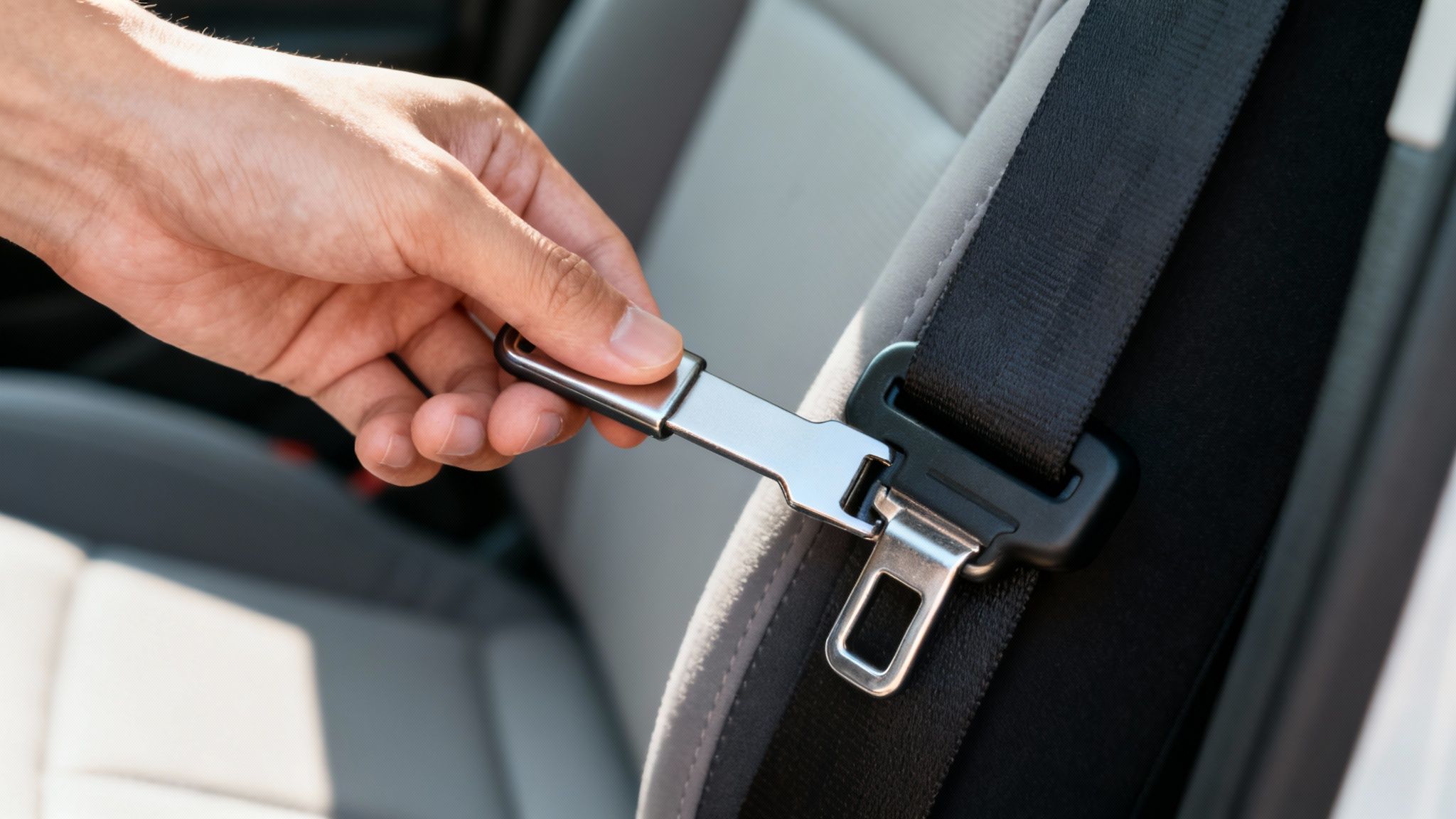
It actually gets even more specific. The design of a seat belt fastener can change between different models from the exact same brand. It can even vary based on the production year or whether it’s for a front or back seat in the same car. This is why any product you see marketed as a "universal fit" should set off immediate alarm bells—it's a promise that simply can't be delivered safely.
To get that secure, confident click, you need an extender that is specifically designed to match your vehicle's unique seat belt fastener. A proper connection means no wiggle, no looseness—just a solid, reliable lock every single time.
Identifying Your Vehicle's Fastener
So, how do you get the right match? The most straightforward way is to shop with a retailer that lets you search by your vehicle's exact details. It takes the guesswork right out of the equation.
Here's the process I always recommend:
- Gather Your Vehicle Information: Have the make, model, and year of your car ready. For instance, "2023 Ford Explorer" or "2021 Hyundai Palisade."
- Specify the Seat: Be clear about which seat needs the extender—driver's side, rear passenger, middle seat? The fasteners can differ from one seat to another.
- Use a Vehicle-Specific Search: Plug your details into a search tool designed for this purpose. This ensures the extender you select is engineered to perfectly match your car's original buckle and tongue. You can see just how a seat belt adapter is customized for each vehicle.
Following this targeted approach is the only way to be certain you're buying a product that will actually work and, more importantly, keep you safe.
The Special Case of Airplane Extenders
Just as car seat belts vary, airplane fasteners are in a league of their own. You can never use a car seat belt extender on an airplane. Period. The latching mechanisms are completely different, and automotive extenders are not certified by aviation authorities like the FAA.
For air travel, a dedicated, FAA-compliant airplane seat belt extender is the only safe and legal option. Using a car extender in the air is a serious safety risk and is not permitted.
These extenders are built from the ground up to meet the strict safety and latching standards required for commercial aircraft.
For many people, certified extenders are an essential tool for both safety and comfort. In vehicles from 65 different makes, they solve the problem of short belts in popular SUVs like the Palisade or Explorer. They’re a lifeline for plus-size individuals, people with mobility challenges, and even rideshare drivers ensuring passenger safety. With over 500,000 sold, these devices install in seconds while maintaining full safety integrity—a crucial point when you consider that proper belt use can reduce the risk of fatal injury by 45-65%. Discover more insights about seat belt safety habits at quote.com.
Your Questions About Seat Belt Fasteners, Answered
Let's cut through the confusion. When it comes to something as important as your seat belt, you need straight answers. This section tackles the most common questions we hear about seat belt fasteners and extenders, so you can make smart, safe choices for yourself and anyone who rides with you.
Are Seat Belt Extenders Safe and Legal?
Yes, but with one massive catch: they absolutely must be properly certified and correctly matched to your vehicle. The safety and legality of an extender hinge entirely on its certification. An extender that meets the tough E4 or E8 safety standards has gone through the same brutal crash testing as the seat belts that came with your car. This is your guarantee that it will hold up when it counts.
On the flip side, a cheap, non-certified extender from a random online seller is a serious gamble. These products have never been tested for strength and are dangerously likely to fail in a crash, leading to catastrophic injuries.
Legally, certified extenders are fine for adults. However, they should never be used with child car seats or boosters. Doing so can interfere with how the car seat is designed to work and puts a child at risk. Always stick with a reputable seller who can guarantee a perfect fit for your specific car.
Think of it this way: A certified extender is an engineered safety component. A non-certified one is just a piece of metal—and you're betting your life on it.
How Do I Know Which Extender Fits My Car?
This is where precision is key. Seat belt fasteners aren't a one-size-fits-all deal; they're unique to your vehicle's make, model, and even the year it was made. The metal tongue of the seat belt in a Honda CR-V is shaped differently than one in a Ram 1500.
The only truly reliable way to get a secure fit is to buy from a company that lets you search by your vehicle's exact details. Reputable suppliers have massive databases that map the right extender to your car, taking all the guesswork out of the equation. This ensures the connection is as solid and secure as the factory original.
Here’s how to get it right every time:
- Ditch the "Universal Fit" Idea: Run from any product that claims to be a universal solution. A safe connection simply isn't possible with a generic design.
- Specify the Seat: Sometimes the front seat belts are different from the back ones. Make sure you specify which seat the extender is for.
- When in Doubt, Snap a Photo: If you’re unsure, take a clear, close-up picture of your seat belt’s metal tongue and ask the supplier’s support team for help. They’ve seen it all.
Can I Use a Car Seat Belt Extender on an Airplane?
No, absolutely not. You should never, ever try to use a car seat belt extender on a plane. The buckle mechanisms are completely different technologies. Automotive extenders are not designed, tested, or approved by aviation authorities like the Federal Aviation Administration (FAA).
Airplanes have their own strict safety regulations and require specially designed airplane seat belt extenders. Trying to use a car extender on a flight is not only prohibited by airlines, but it's also a major safety hazard. If you fly often and need an extender, your best bet is to buy your own certified airplane extender so you're prepared for every trip.
When Is a Seat Belt Extender the Right Choice?
A seat belt extender is a critical safety tool for anyone who can't buckle their seat belt correctly and comfortably with the standard length. Its job is to close that gap, giving you a secure fit while keeping the belt properly positioned across your lap and shoulder.
An extender can make all the difference in these common situations:
- People with Larger Body Types: For anyone who finds the standard belt is just too short to click into place.
- Those with Limited Mobility: Perfect for individuals recovering from surgery or dealing with conditions like arthritis that make reaching or twisting difficult.
- Passengers with Medical Equipment: Helpful when a device gets in the way of the buckle.
- Police and First Responders: For professionals whose bulky utility belts make it hard to reach the standard buckle.
- Parents and Caregivers: A lifesaver for easily buckling kids into booster seats, especially when you have three across the back.
Ultimately, an extender ensures everyone in the car can buckle up the right way, every single time.
At Seat Belt Extenders, we are dedicated to providing E4-certified, vehicle-specific extenders that offer a secure and reliable fit. Find the perfect match for your car, truck, or SUV and buckle up with confidence.