
A seat belt adapter can feel like a simple fix, but it makes a big difference in comfort and safety. It snaps into your existing buckle in seconds, adding just the right amount of length without tampering with the factory hardware. Whether you’re stretching across the back seat or securing a booster, it’s the quickest way to gain a few extra inches.
Key Concepts Of Seat Belt Adapters
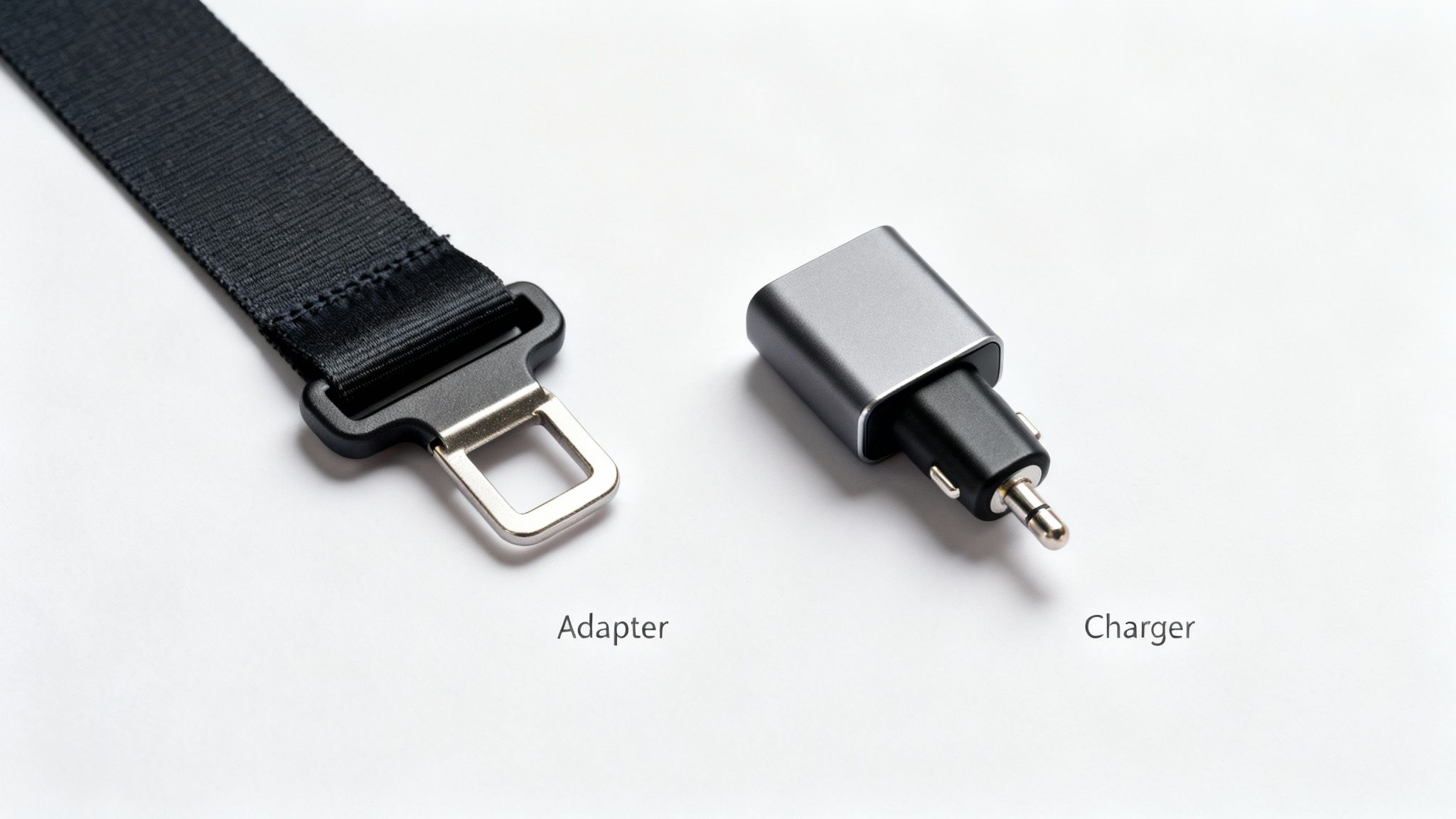
Imagine a seat belt adapter as the universal charger of the safety world. It pairs seamlessly with the three-point belts in most cars—and even on airplanes. That simple comparison is often the best starting point when you’re scanning specs.
Adapters Versus Extenders
- Adapters reroute your buckle to a new anchor point.
- Extenders slot between the tongue and the buckle to add extra webbing.
- Hybrid models tackle both tasks when a custom fit is needed.
For instance, you might use an adapter to shift a buckle away from a car seat handle. An extender, by contrast, tacks on 4 to 10 inches of extra strap.
Latch Connectors And Height Adjusters
Latch connectors grip the webbing and click into the car’s latch receiver. Height adjusters slide along the strap so the belt crosses your shoulder at just the right spot. Together, they ensure that in a collision, the force spreads safely across your frame.
- Slide the adjuster into your ideal shoulder position.
- Clip the latch connector in place until it clicks.
- Give a firm pull to confirm everything is snug.
Buckle Vs Latch Designs
Most modern vehicles use a buckle system—a sturdy female receptacle waiting for the metal tongue to lock in. Older cars often rely on a latch design, where a grub screw or clip holds the strap tight. I once helped a family retrofit a toddler seat adapter into a 1960s coupe by matching the latch geometry down to the millimeter.
“Safety starts with understanding how each piece connects,” advises our product engineer.
Height adjusters and fit devices have become a hundreds of millions to multi-billion-dollar market in recent years. That’s why uncertified adapters often trigger legal and safety red flags. Learn more about market trends at Cognitivemarketresearch.
You might also enjoy our detailed review of seat belt extender types for an in-depth look at how each design tackles specific use cases.
Building A Mental Model
Think of each adapter piece as a puzzle: tongue and buckle must match like interlocking bricks. When they align perfectly, the system locks under tension without a hitch.
- Measure belt width and webbing thickness before you buy.
- Refer to your vehicle’s manual for precise latch specs.
- Compare materials—steel tongues versus aluminum or reinforced plastic.
By mixing clear analogies with hands-on checks, you’ll shop—and install—with confidence. Those mental notes will keep guesswork out of the garage.
Meeting Safety Standards And Certifications
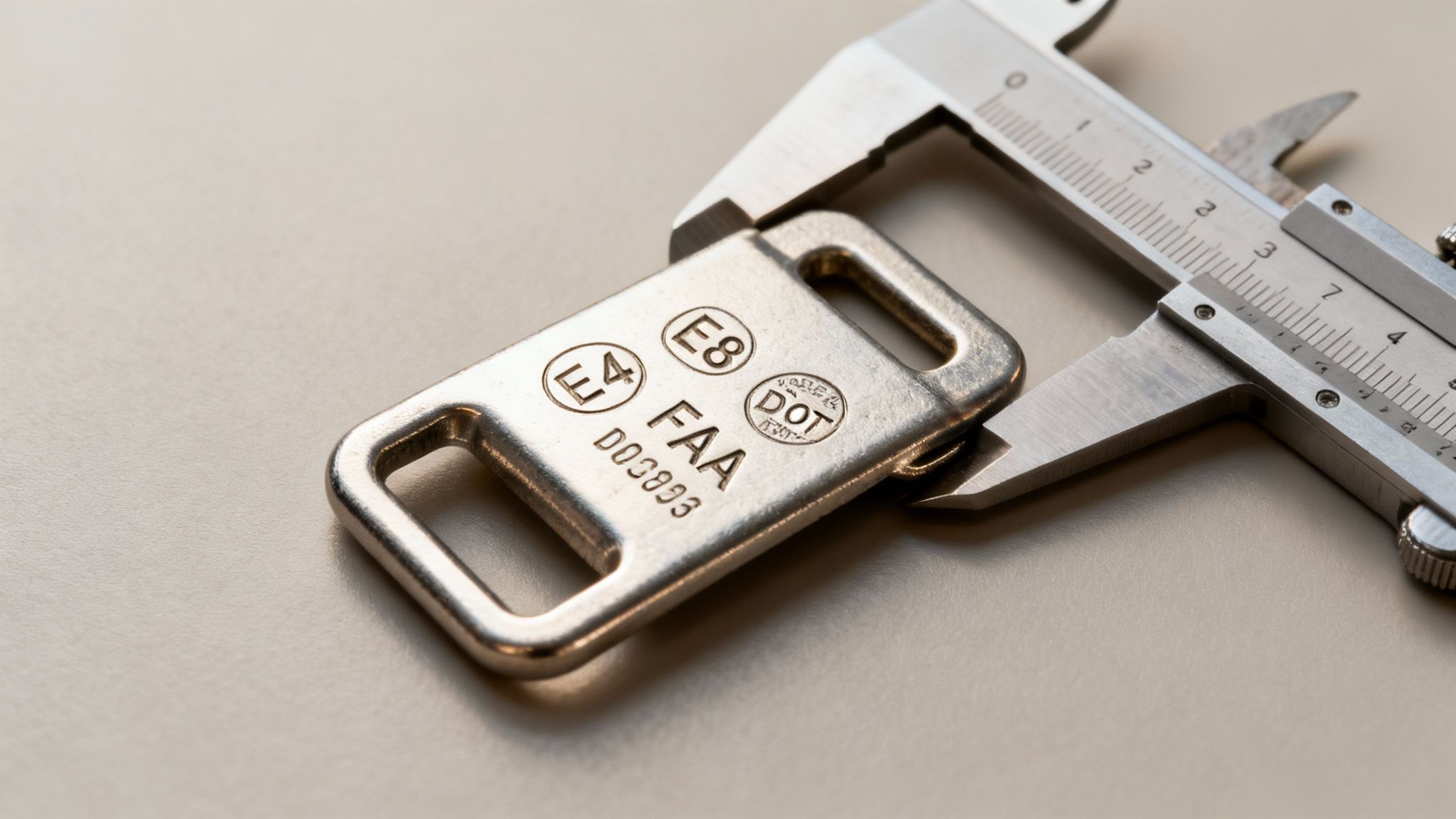
When you shop for an aftermarket seat belt adapter, think of it like picking a parachute—you want proof it’s been crash-tested. Global stamps such as E4 and E8 tell you the adapter has faced UN and EU crash regulations head-on. Consider these marks your first line of defense against unverified parts.
E4 hails from the Netherlands under UN/ECE Regulation 16, while E8 comes through the Czech Republic with its own EU crash requirements. Adapters bearing these approvals have survived a 12 kN pull test, resisted 300 °C heat, and withstood simulated 30 mph frontal impacts.
Key Homologation Checks:
- Pull strength above 12 kN for crash loads
- Flame resistance up to 300 °C without weakening
- Dynamic performance simulating a 30 mph frontal impact
FAA Approval For Air Travel
Flying adds another layer of scrutiny. Any seat belt extender meant for aircraft use must carry FAA certification under 14 CFR Part 23. That badge confirms the extender:
- Locks securely without jamming the buckle
- Keeps airbags deploying at the right moment
- Clears airport security without surprises
Adapters missing that FAA seal can be stopped at the checkpoint.
“An FAA-approved extender keeps airbags popping at the exact moment,” notes a veteran aerospace safety engineer.
Comparison Of Certification Standards
Below is a comparison of common certification standards for seat belt adapters, including region, key requirements, and typical applications.
| Standard | Region | Requirements | Typical Use |
|---|---|---|---|
| E4 | Europe (Netherlands) | 12 kN pull test, flame resistance | Vehicle aftermarket |
| E8 | Europe (Czech Republic) | Enhanced dynamic crash tests | OEM and aftermarket |
| FAA | USA | 7 g deceleration test, fit verification | Commercial aircraft |
| DOT | USA | FMVSS 209 compliance, anchorage strength | On-road vehicles |
Each stamp carries its own criteria—use this chart to pick the right fit.
Case Study Of Non Compliant Adapter
Back in 2019, an independent crash lab tore into unmarked extenders. A startling 73% failed the pull-strength test. Webbing ripped, and metal loops shifted by millimeters under load.
Uncertified adapters can fall apart mid-crash and turn your seatbelt into a flimsy ribbon.
The DOT enforces FMVSS 209, dictating webbing elongation limits and anchorage bar placement. Get those specs wrong and you risk:
- Belts detaching under load
- Airbags firing late
- Sensors tripping on unexpected angles
These failures prove certification isn’t optional.
Sensor Compatibility And Verification
Today’s seatbelts are smart systems—pre-tensioners, load-limiters and sensors work in concert. An adapter must maintain factory buckle geometry or you’ll trigger fault codes.
Make sure your extender syncs with:
- Crash sensors tuned to factory buckle angles
- Pre-tensioners that fire at specific webbing tension
- Load-limiters that meter belt payout
Quick Authenticity Check:
- Match the serial number against the manufacturer’s records
- Verify the approval stamp is legible on the buckle housing
- Look for FMVSS 209 or UN/ECE references on the label
Tip: Photograph the stamp and serial number before installation. It’s your backup if a warranty claim arises.
Safety rules are tightening worldwide. Asia-Pacific and North America lead the demand for certified, sensor-friendly adapters. For the latest market insights, see the Automotive Seat Belts Market Report.
Legal Requirements And Enforcement
Most states and countries require certified adapters. In several U.S. states, you can be fined for using expired or uncertified extenders. Airlines may even deny boarding without an FAA-approved model.
Common Penalties Include:
- Civil fines up to $1,200 per offense under FMVSS 209
- EU recalls forcing suppliers to remove non-compliant stock
- TSA confiscating unapproved extenders at security checkpoints
Always ask for certifications and test reports before buying—it saves time and money. Check your manufacturer’s warranty for regional exemptions or updates.
You may want to explore our in-depth guide on best practices for seat belt extenders Seat Belt Extender Safety.
Verifying certification takes seconds—and could save your life.
Exploring Market Trends And Adapter Demand
Before you settle on a seat belt adapter, it pays to understand what drives this market. Today the global automotive seat belt segment sits between USD 19.9–24.6 billion, growing at about 2.4–5.2% CAGR. That surge points squarely at aftermarket parts—from height adjusters to seat belt extenders—fuelled by safety recalls and stiffer regulations. You can delve deeper into the research on automotive seat belt market trends.
A wave of aging vehicle fleets and recent recall notices has shifted consumer attention toward reliable retrofit solutions.
- Asia-Pacific retrofit projects outpace others as many cars cross the 10-year mark.
- Height adjusters claim over USD 1.2 billion in yearly sales.
- North American markets ramp up fleet upgrades under regulatory mandates.
- European buyers zero in on sensor-compatible adapters for modern safety systems.
Regional Growth Hotspots
In Asia-Pacific, tightening safety rules and cross-region belt geometry standards spur a retrofit boom. Local regulations in China and India now demand certified extenders to meet new belt alignment measures.
Across North America and Europe, manufacturers focus on sensor-friendly designs that play nice with active restraint systems already in most vehicles.
Insight Asia-Pacific retrofit demand tops the charts by more than 20% over other regions.
Sustained Industry Momentum
Automakers (OEMs) and aftermarket brands continue to pour R&D into adapter improvements. Today’s designs often feature corrosion-proof steel tongues and reinforced webbing that resist wear even under repeated stress.
Modular connectors simplify transfers between cars, trucks and airplanes—no extra tools required.
For pregnant travelers, specialized models angle the belt around the abdomen for extra comfort. Learn more in our guide on seat belt extender for pregnancy.
Market data shows over 500,000+ units sold by top suppliers so far. Ongoing recalls and updated safety standards keep driving replacement and upgrade cycles.
| Segment | 2024 Revenue Estimate | CAGR Forecast |
|---|---|---|
| Retrofits | USD 3.5B | 4.8% |
| Height Adjusters | USD 1.2B | 5.1% |
| Air Travel Extenders | USD 0.6B | 3.9% |
Future Trends To Watch
Next-gen adapters are heading toward full integration with in-vehicle electronics, offering real-time tension data at the dashboard. Some prototypes even promise alerts when a belt extender approaches its service limit.
Wireless sensors tied to mobile apps could soon remind you when to inspect or replace an adapter.
- Inspect adapters every six months for rust or fabric fraying.
- Verify serial numbers before you install any new extender.
- Carry spare parts if you switch often between different vehicles.
- Store your extenders in padded pouches to shield them from heat and moisture.
Regulatory shifts and sensor compatibility rules will keep evolving. Staying ahead of these changes ensures your adapter remains safe and compliant—no surprises at inspection time.
Key Takeaway Steady market growth plus continuous innovation make certified adapters a smart, future-proof choice.
Keep an eye on collaboration announcements between automakers and adapter producers. Subscribing to trade journals and safety bulletins will help you spot emerging tech weeks or months before it hits the general market.
When you zero in on adapters that preserve original belt geometry and load paths, you’re choosing the highest standard of safety without sacrificing comfort.
That deeper understanding empowers you to select the right seat belt adapter—balancing compliance, convenience and peace of mind.
Choosing The Right Seat Belt Adapter
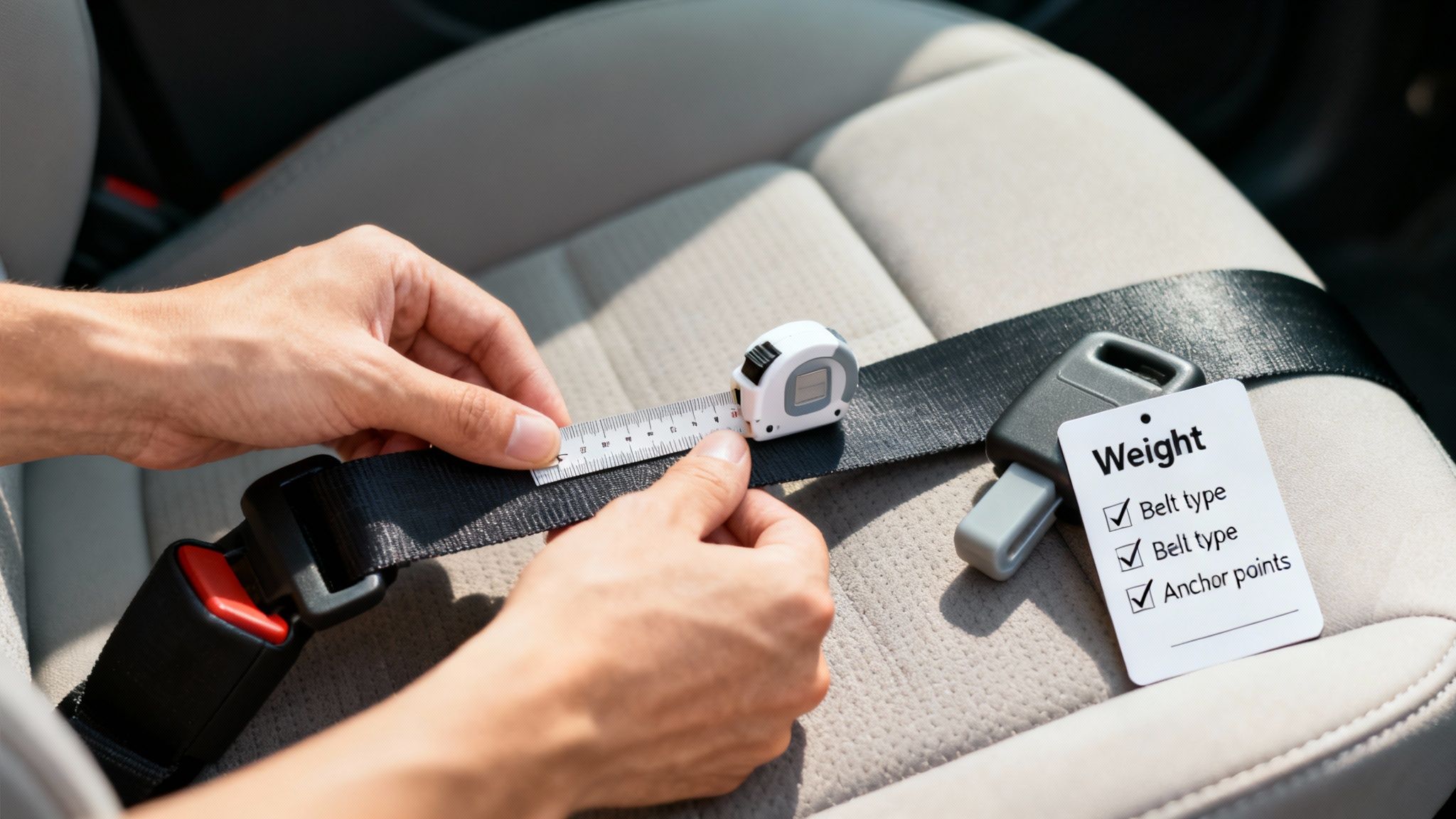
Picking an adapter begins with a simple question: does your vehicle use a buckle tongue or a latch clip? Once you know that, grab a tape measure and note the belt’s width and where it anchors to the frame. These details set the stage for a secure fit.
Follow these steps before you buy:
- Identify Belt Type: Will the adapter need to accept a metal tongue or a latch-style clip?
- Measure Webbing Width: Most belts fall between 45 mm and 60 mm wide.
- Match Weight Rating: From infants to plus-size adults, every profile needs a specific load capacity.
- Verify Compatibility: Peek at your owner’s manual and airline rules for three-point belt approval.
This approach keeps you from ending up with an adapter that won’t latch or, worse, voids crucial safety certifications. Remember, not all three-point extenders carry the FAA’s thumbs-up for inflight use.
Matching Passenger Needs
Seat belt adapters can handle a broad spectrum of weight:
- Infant Models: Often start at 9 kg, featuring extra stability bars and snug fit.
- Child Designs: Include adjustable heights so the belt crosses the shoulder—not the neck.
- Adult Extenders: Rated up to 158 kg or more, these focus on ergonomics and easy clicking.
- Plus-Size Adapters: Wider openings prevent fabric stress when you snap them into place.
By matching the adapter’s rating to your passenger, you avoid slack or overstrain—two quick routes to discomfort or unsafe buckling.
Seat Belt Adapter Type Comparison
Here’s a quick look at the main options and where they shine (and stumble):
| Adapter Type | Compatible Belt | Use Case | Pros | Cons |
|---|---|---|---|---|
| Standard Extender | Three-point buckle | Giving adults extra reach | Simple, reliable | Only adds length |
| Buckle Shifter | Latch systems | Vintage cars or odd latches | Precise fit | Needs exact measurements |
| Child Seat Adapter | Three-point buckle | Securing toddler seats | Height adjustment | Weight range is limited |
| Airline Approved | Aircraft belts | Inflight extension | FAA certified | Only for plane use |
Use this chart to see which adapter matches your belt style and travel plans. Side-by-side comparison prevents surprises once you click it in place.
Vendor Questions To Ask
Before hitting “add to cart,” get answers to these must-ask questions:
- What’s the adapter’s load rating and which certifications does it carry?
- Will it fit both my car’s and the airline’s three-point belts?
- Does the webbing thickness match my measurements?
- Is there a fit-or-return guarantee if it doesn’t click smoothly?
This checklist weeds out products that might void warranties or, worse, compromise safety.
Putting It All Together
Once you’ve narrowed your options, sketch a mini chart comparing each adapter against your belt measurements and certification needs. Then:
- Trial-fit at home or at the airport gate to catch alignment quirks early.
- Swap models until the webbing lies flat, without twist, and locks with a firm click.
- Snap a photo of the certification stamp—store it on your phone for quick checks.
- Keep spare adapters in padded pouches to avoid scratches or bends.
- Inspect webbing and metal tongues every six months; retire any with frays or kinks.
This hands-on process ensures a safe, hassle-free buckle every time you hit the road—or the skies.
You might be interested in our guide on seat belt adjusters for adults for size-specific extensions.
Final Considerations
When material choices come into play, lean toward steel tongues—they resist corrosion far better than plastic. And always check for reinforced webbing rated at 12 kN pull strength or higher. If doubts remain, reach out to customer support with your measurements and vehicle details—they’ll guide you to the perfect match.
Installing And Maintaining Seat Belt Adapters
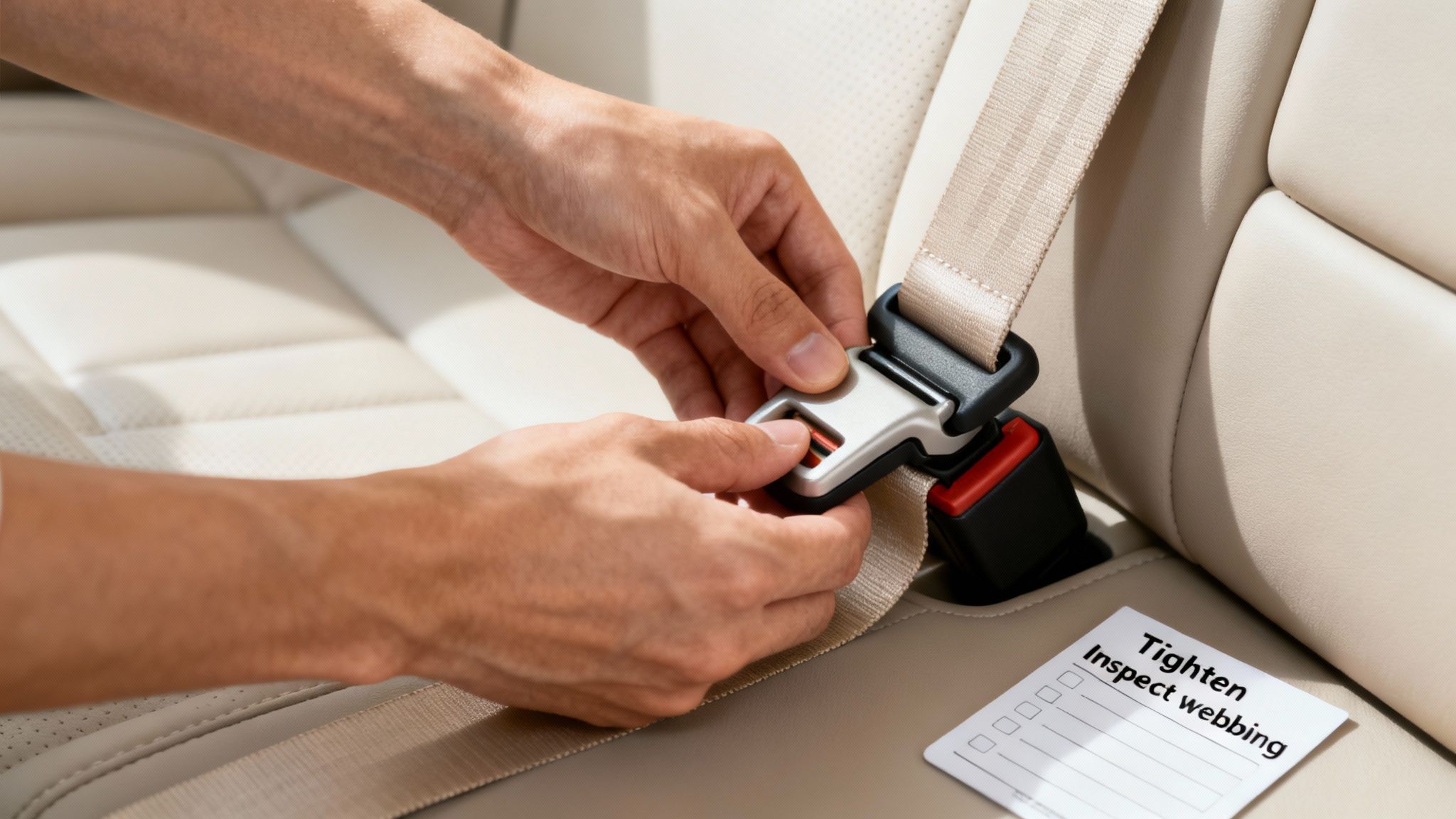
Proper installation and routine care are the keys to a dependable seat belt adapter. A few quick checks can mean the difference between a snug fit and a loose buckle.
Aligning Latch Fittings
First, insert the adapter’s metal tongue into your vehicle’s buckle receiver.
- Clip in the tongue until you hear a firm click.
- Ensure it sits flush against the buckle with no gaps.
- Give the webbing a gentle tug to confirm it’s locked.
Misalignment under load can let the adapter shift. For instance, a twisted belt webbing can reduce its strength by over 20%. If the adapter feels loose, realign it before moving on. Refer to troubleshooting photos if your buckle receiver looks worn or misshaped.
Verifying Belt Tension Under Load
Correct tension keeps the adapter secure during sudden stops.
- Pull the webbing until it feels snug, leaving about 2 inches of movement.
- Sit back and flex your knees to mimic a quick jolt.
- Recheck the latch for any sliding or shifts.
If you notice more than 1 inch of give, tighten the setup again.
Cleaning And Storing Adapter Components
Cleaning your adapter extends its service life. Wash polyester webbing with mild soap and lukewarm water, rinse well, and air-dry flat to prevent mold or fiber weakening.
Wipe metal tongues and buckles with a rust inhibitor or light oil. For tricky corners, check out our guide on seat belt adjuster clips to learn clever fitting tricks.
Store all parts in a dry pouch away from heat or humidity. Label each pouch by vehicle or airline to keep everything organized.
Common Mistakes To Avoid
- Skipping tension checks after installation
- Using harsh cleaners that weaken webbing
- Leaving metal parts unprotected in damp conditions
- Ignoring the manufacturer’s inspection schedule
Replace any adapter showing frayed webbing or bent tongues immediately.
Troubleshooting Installation Issues
Adapters may shift if your seat moves or after long drives. Always trace the belt path from buckle to anchor to spot twists.
- If the latch clicks but still slides, clear debris from the buckle
- Swap out worn parts showing cracks or excessive play
- Use a soft brush to remove dirt from latch housing
For stubborn issues, use the manufacturer’s fit guarantee to request a replacement or adjustment.
Real World Example
A rideshare driver discovered her adapter loosened after dozens of back-to-back trips. She added a secondary belt clip for extra hold and scheduled monthly inspections. That simple routine cut down on mid-shift adjustments and kept her passengers safer.
Best Practices
- Inspect adapters before each road trip or flight
- Store extenders in climate-controlled areas to prevent rust
- Photograph serial numbers and approval stamps for warranty claims
- Rotate between adapters if you switch vehicles frequently
Routine checks and proper storage ensure your seat belt adapter stays ready for action. Stay updated on any new vehicle or airline guidelines to keep your setup secure—safety first.
Navigating Manufacturer Policies And Travel Requirements
When you’re shopping for a seat belt adapter, the fine print on returns and warranties can feel like decoding a map. A clear policy keeps you from hitting a detour of unexpected fees or denied claims.
In most cases, manufacturers give you a trial window—often 30 days—to test the adapter and make sure it clicks with your vehicle or airline seat. For someone on the move, that short test period can mean the difference between smooth travel and a frustrating roadblock.
Seat Belt Extenders, for instance, stands out with:
- Free 3-Day Shipping on qualifying orders, so you’re never left waiting.
- Lifetime Returns that let you swap or refund any time you find a mismatch.
- Fit Guarantee which promises the correct model—or your money back.
Documenting Serial Numbers And Certifications
Think of a serial number like your adapter’s fingerprint. It’s your go-to proof if you ever need a warranty repair or an exchange.
Before installing, snap a clear photo of the safety stamp and serial. Store it alongside your purchase receipt—much like you’d file important car documents.
“Documenting your adapter ensures smooth exchanges and avoids last-minute disputes,” notes a quality control specialist.
To keep everything in order:
- Compare serials with the manufacturer’s online registry before any trip.
- Save certification images in a dedicated phone folder.
- Email yourself a copy of purchase confirmations and approval stamps.
When you stack up roadside checks against airline inspections, the rules shift quickly. Here’s a side-by-side glance:
| Policy Aspect | Car Travel | Airline Travel |
|---|---|---|
| Return Window | 30 Days for most manufacturers | 14 Days due to airline turnover |
| Warranty Coverage | Lifetime on certified extenders | Limited to manufacturing defects |
| Inspection Focus | Serial and safety stamps | FAA approval stamp and model match |
| Approval Tip | Check state regulations before purchase | Verify airline rules when booking |
Following Airline And TSA Guidelines
Carrying an adapter through airport security resembles bringing along a small instrument—you need paperwork and clear labeling.
- Call your airline’s customer service to confirm their adapter rules.
- Email them your adapter specs along with approval stamps.
- Print that email and tuck it into your boarding folder.
At the gate, agents often do a quick visual check. To breeze through:
- Seal the adapter in a clear plastic bag for instant visibility.
- Keep your certification printouts in an accessible pocket.
- Proactively show the FAA approval stamps.
Tip Book flights early and secure written approval—think of it as a boarding pass for your adapter.
Handling Roadside Inspections
Getting pulled over? Having your adapter’s paperwork is like having a VIP pass.
- Present the certification label and proof of compliance right away.
- Explain that the extender carries a UN/ECE E-4/E-8 or FAA-approved stamp.
- Offer your purchase receipt and any airline emails as supporting evidence.
- Keep a spare adapter in your glovebox or carry-on kit for quick swaps.
By treating your seat belt adapter like any other safety device, you’ll roll through checkpoints with confidence—whether you’re cruising down the highway or taxiing on the tarmac. Verify regulations before departure.
Common Questions About Seat Belt Adapters
Navigating seat belt adapters can feel overwhelming at first. With so many certifications, weight limits, and airline rules, it helps to break down each concern.
Below we answer common questions on weight limits, safety, airline rules, and compatibility.
These answers draw on certification standards, installation tips, and travel policies—so you can pick and use your adapter without second-guessing.
- What weight limits do adapters support?
- Are uncertified adapters safe for child seats?
- How can I tell if my airline accepts an extender?
- Can one adapter work in multiple vehicles?
Adapters designed for infants often top out around 9 kg, while models intended for adults can hold up to 158 kg. Before you buy, check the load rating stamped on the metal buckle or printed on the webbing.
Uncertified extenders might look sturdy, but they haven’t passed the same pull-test requirements. If you’re installing a child seat, always look for the E-4 or E-8 approval mark—otherwise you risk voiding the seat’s warranty or, worse, compromising safety.
Airlines each have their own policies, and gate agents frequently examine extenders. It pays to call your carrier ahead of time and verify FAA compliance.
Frequent Airline Checks
Agents may ask to see documentation at security or boarding. Make your day smoother by having everything on hand:
- Print your FAA approval stamp and certification details.
- Pack a backup adapter in checked baggage.
- Arrive at least 30 minutes early to sort out any questions.
When you need one adapter to cover multiple cars, look for designs with modular connectors. These snap in—including most latch styles—so you can transfer the extender from your sedan to an SUV without tools.
Still, not every extender fits every vehicle. Always match the belt’s width and latch type to the adapter’s specs. A quick measure of your seat belt webbing against the extender’s listed dimensions is an easy way to avoid surprises.
For upkeep, spot-clean the webbing with mild soap and water, and inspect the metal parts for rust or bending. If you notice any fraying or distortion, retire the adapter immediately and replace it.
With these FAQs in your corner, you’ll breeze through adapter selection and use. Always refer to the specific product guide and your airline’s policy for the final word.
Seat Belt Extenders https://seatbeltextenders.com