
The truth is, there’s no one-size-fits-all answer for airline seat belt size. While they typically fall somewhere between 39 and 51 inches, the exact length can be a bit of a moving target. It really depends on the airline, the specific plane you’re on, and even the seat you’re in.
Think of it less like the standardized belt in your car and more like trying to find the right pair of jeans—the size can vary wildly from one brand to the next.
Decoding Airline Seat Belt Dimensions
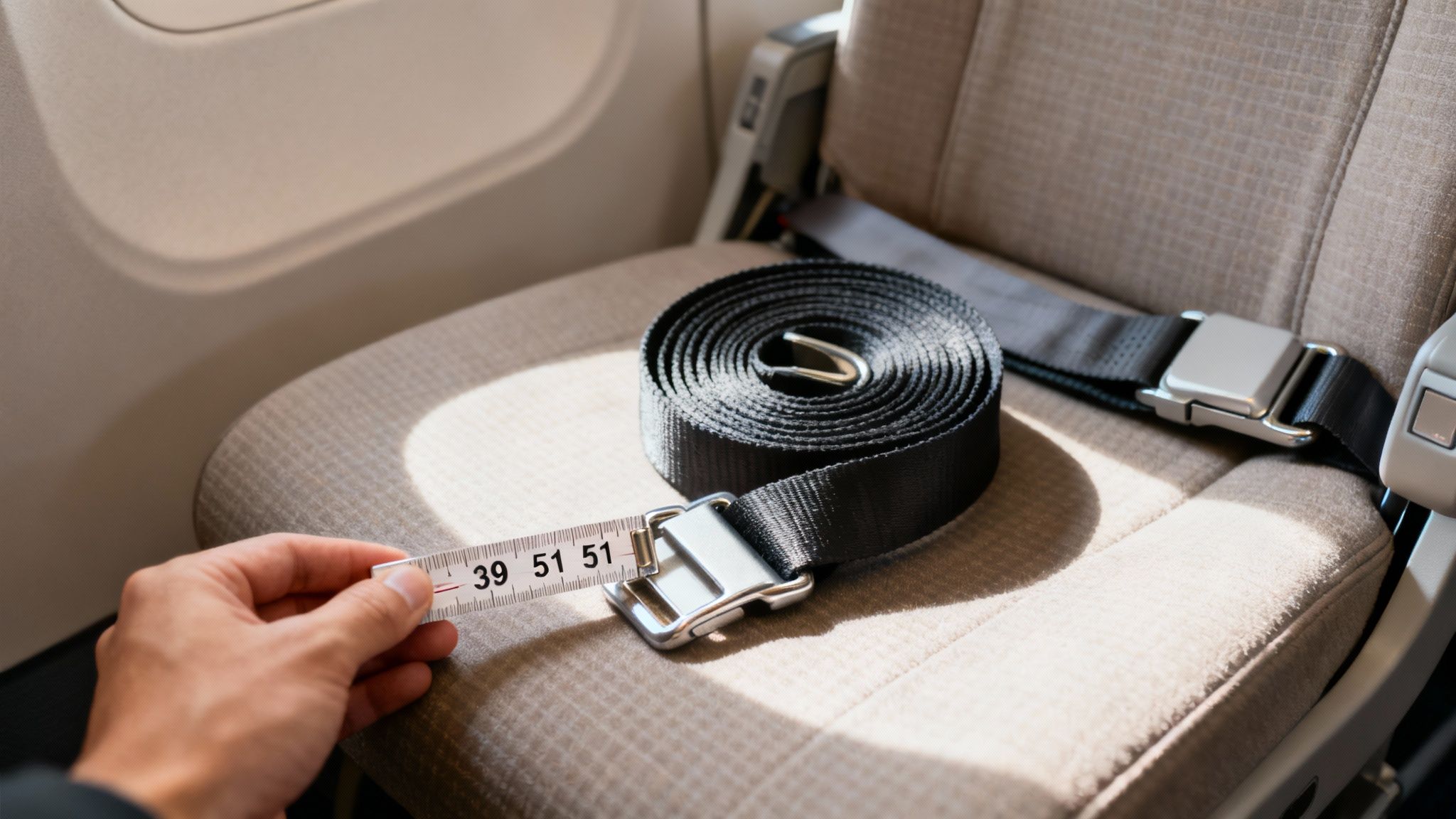
Getting a handle on the typical airline seat belt size is the first step to making your flight less stressful and a lot more comfortable. Since there isn't a federally mandated length, airlines are left to their own devices, which means the measurement you get is tied to their choice of seat manufacturer and the aircraft model.
This is exactly why a little prep work goes a long way. Knowing what you might encounter can make a huge difference, especially when you’re settling in for a long-haul journey. It's a surprisingly dynamic corner of the aviation industry; the commercial aircraft seat belts market is actually set to grow by USD 34.41 million over the next five years. This growth is largely fueled by the massive production of the narrow-body jets that have become the workhorses of modern air travel.
Average Seat Belt Lengths on Major Airlines
To give you a clearer picture, I've put together a quick reference guide. This table shows the typical seat belt lengths you can expect on some of the biggest airlines. Just remember, these are averages—the actual length can still vary from one plane to another.
Average Seat Belt Lengths on Major Airlines
| Airline | Average Seat Belt Length (Inches) | Notes |
|---|---|---|
| Delta Air Lines | 40-45" | Varies slightly between their Airbus and Boeing fleets. |
| American Airlines | 45-47" | Generally one of the more consistent lengths. |
| United Airlines | 39-43" | Can be on the shorter side in older economy cabins. |
| Southwest Airlines | 43-45" | Fairly standard across their Boeing 737 fleet. |
| JetBlue | 44-46" | Known for slightly more generous seat pitch and belt length. |
Seeing the numbers laid out like this can help you anticipate whether you might need an extender.
If there's one thing to take away from all this, it's that your safety is the crew's top priority. Every airline provides free, FAA-approved extenders—all you have to do is ask. They want to ensure you can remain securely buckled, no questions asked.
Knowing these averages is a great starting point. If you want to dive deeper, you can also learn more about the common seat belt extender types to feel even more prepared. Ultimately, this kind of knowledge lets you walk onto the plane with confidence, ready for a safe and comfortable flight.
Why Seat Belt Lengths Are So Inconsistent
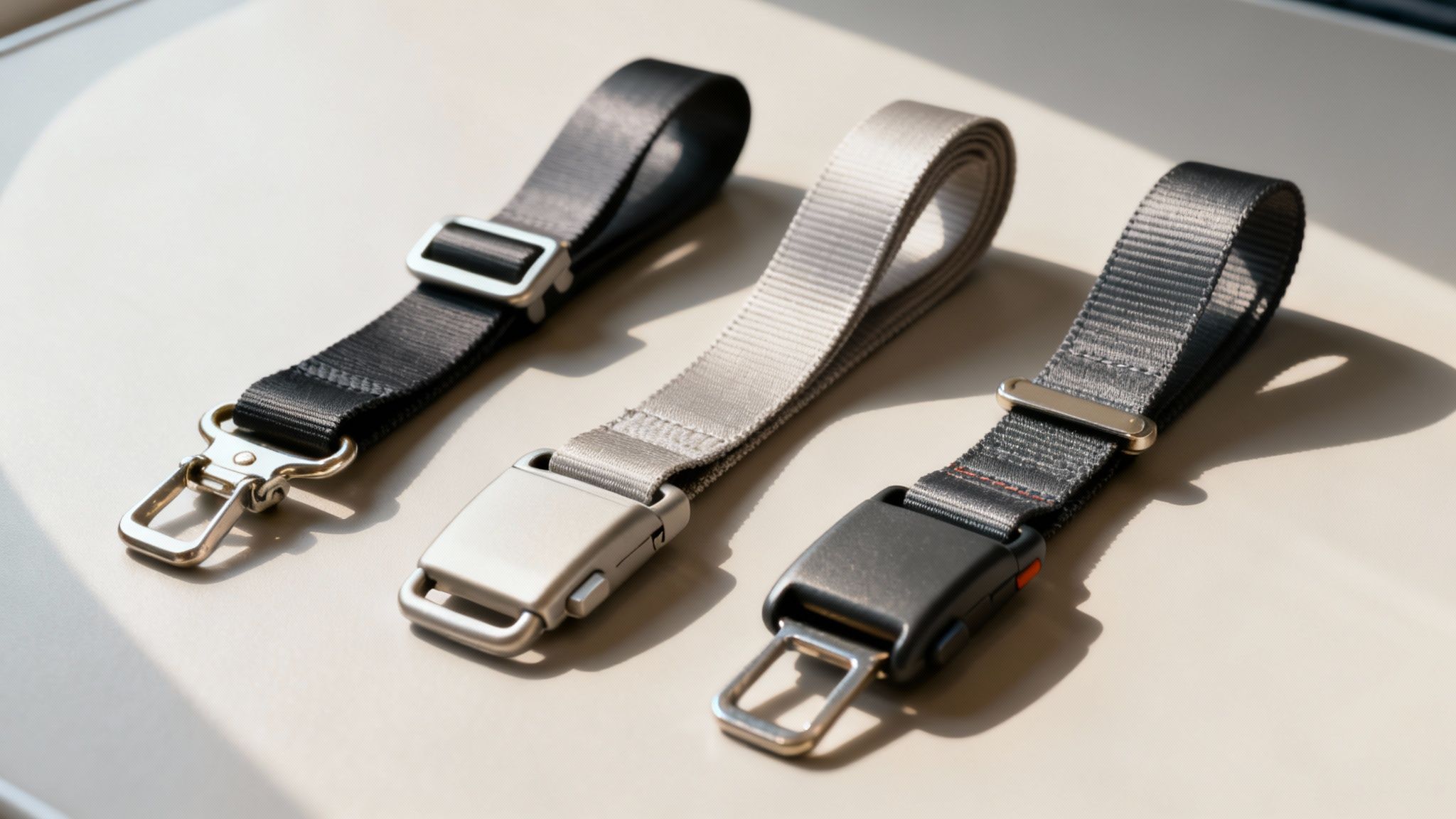
If you've ever felt like you had inches to spare on one flight and could barely buckle up on the next, you’re not imagining it. This frustrating lack of consistency isn’t random; it’s a direct result of how the airline industry operates. There's simply no universal standard for seat belt length.
Think of an airline’s fleet like a mixed collection of cars. A Boeing 737 from the 1990s is going to have different seats—and belts—than a brand-new Airbus A321neo. Airlines get their cabin interiors from different manufacturers, and each one has its own design specs.
This creates a real patchwork of lengths across a single airline’s fleet. Your experience can change dramatically from one plane to the next, even if you’re flying with the same carrier.
Key Factors Driving Inconsistency
The length of the belt you get is really down to the business and operational decisions that airlines make. They don't just use one supplier for all their seats and safety parts.
Here’s what causes the most variation:
- Aircraft Model and Age: Older planes were designed with different seating hardware. Newer jets often have slimmer, more modern seats, and the belts are installed to match.
- Seat Manufacturer: Airlines work with various companies like Recaro, Collins Aerospace, or Safran to outfit their cabins. Each one builds seats to the airline's custom order, which includes the specified length of the seat belt.
- Cabin Class: This is a big one. A First or Business Class seat is wider and almost always comes with a longer belt than one in Economy. You can even find differences between Economy and Premium Economy on the same aircraft.
This complexity can also impact how the belt feels. If you want to dive deeper into the mechanics, you can read more about seat belt tension and how it affects both safety and comfort.
The FAA’s Role: A Common Misconception
It’s easy to assume a government body like the Federal Aviation Administration (FAA) would mandate a specific length for every seat belt. In reality, that's a common misunderstanding of what they regulate. The FAA is laser-focused on the belt’s performance and structural integrity, not its exact measurement.
The FAA’s regulations are incredibly strict, but they prioritize strength and reliability. They require a seat belt to withstand immense forces and for its buckle to work perfectly every time. The actual length is left up to the airline and its seat supplier.
This is why there’s no "magic number" for airline seat belt size. The airline’s real responsibility is to provide a safe restraint system for everyone. That’s why they must offer free, certified extenders to any passenger who needs one to buckle up securely. At the end of the day, the inconsistency is just a side effect of a competitive industry where customization and varied suppliers are the norm.
How to Discreetly Check Your Seat Belt Fit On Board
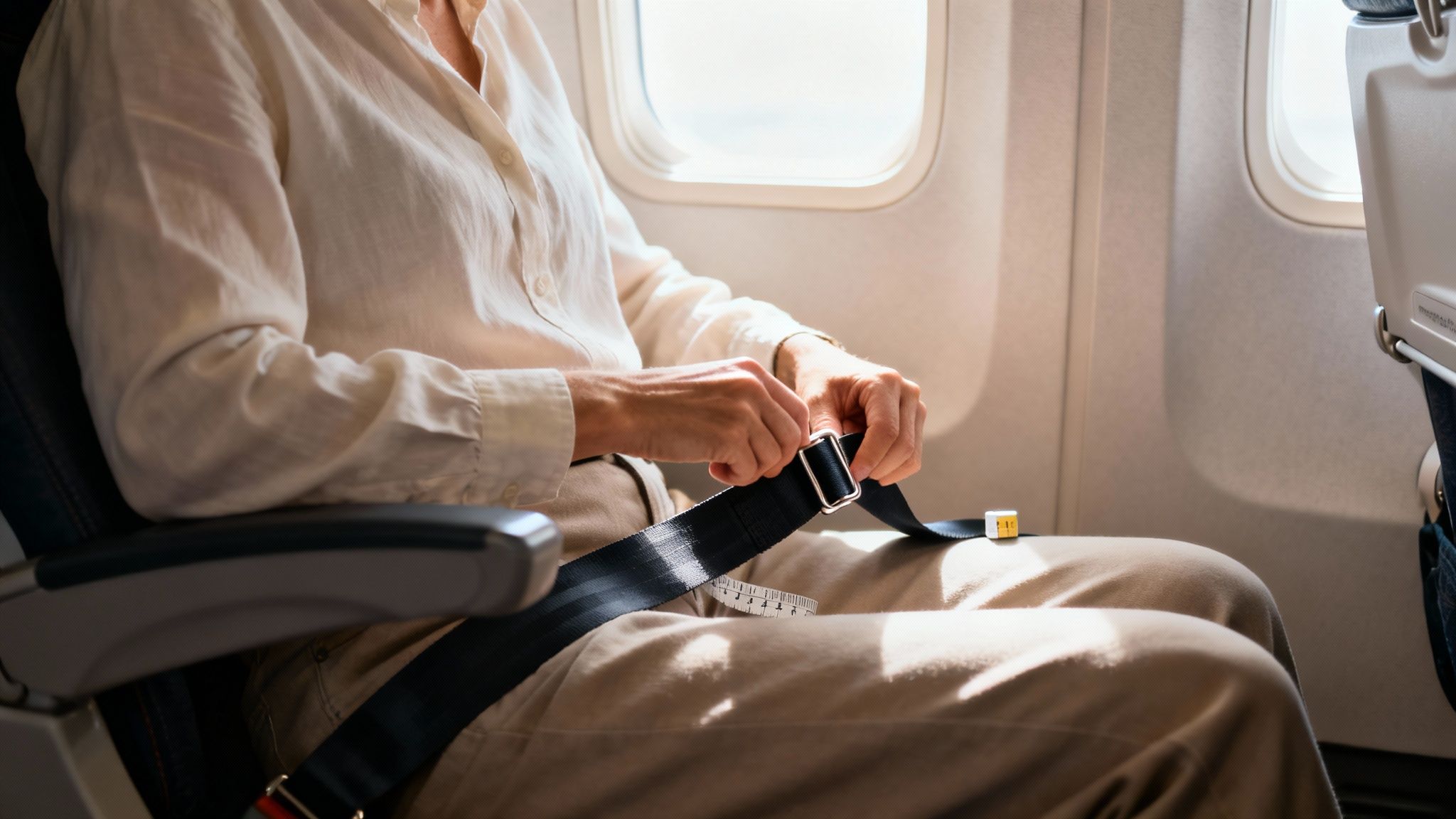
Let's be honest, that moment after you sit down can bring a little wave of anxiety. The big question: will the belt fit? It’s a feeling many travelers know well, but there’s an easy, low-key way to check the airline seat belt size without anyone noticing.
The trick is to do it right when you get to your seat, before the cabin fills up and things get busy.
Just grab the metal latch end of the belt and pull it across your lap toward the buckle. You don't even have to click it in. This simple motion instantly tells you how much slack you’re working with.
If it looks like it’s going to be a tight squeeze, you’ve got plenty of time to catch a flight attendant’s eye and quietly ask for an extender. Getting this sorted out early makes for a much more relaxed start to your flight. It’s the same proactive mindset that helps in other situations too, which you can read about in our guide on using a seat belt extender for pregnancy.
Knowing Your Buckle: Type A vs. Type B
Beyond the belt's length, the buckle itself is the other half of the equation. While designs can vary, nearly all commercial airplanes use one of two main styles: Type A or Type B. Knowing which one you're dealing with is key to getting a secure fit.
- Type A: This is the one you’ll see on most modern jets. It’s a straightforward, rectangular metal buckle that has a lift-gate or flap. You push the flat metal tongue in until it clicks, and to get it undone, you simply lift the flap.
- Type B: You might run into this style on older planes or some international airlines. Instead of a flap, it has a push-button release, which is almost always red. You just press the button, and the latch pops right out.
Figuring out the buckle type isn't just for curiosity's sake—it’s all about compatibility. An extender will only work if it’s designed for the specific buckle type on your seat. It has to latch securely to be safe.
This focus on design and safety is part of a surprisingly large industry. The market for aviation seat belts has grown substantially, jumping from USD 429.33 million to USD 463.85 million in a single year. That growth highlights just how serious the industry is about safety standards for every single component on board, right down to the buckle. You can dive deeper into the numbers and discover key insights into the aviation safety market.
Navigating Airline Policies on Seat Belt Extenders
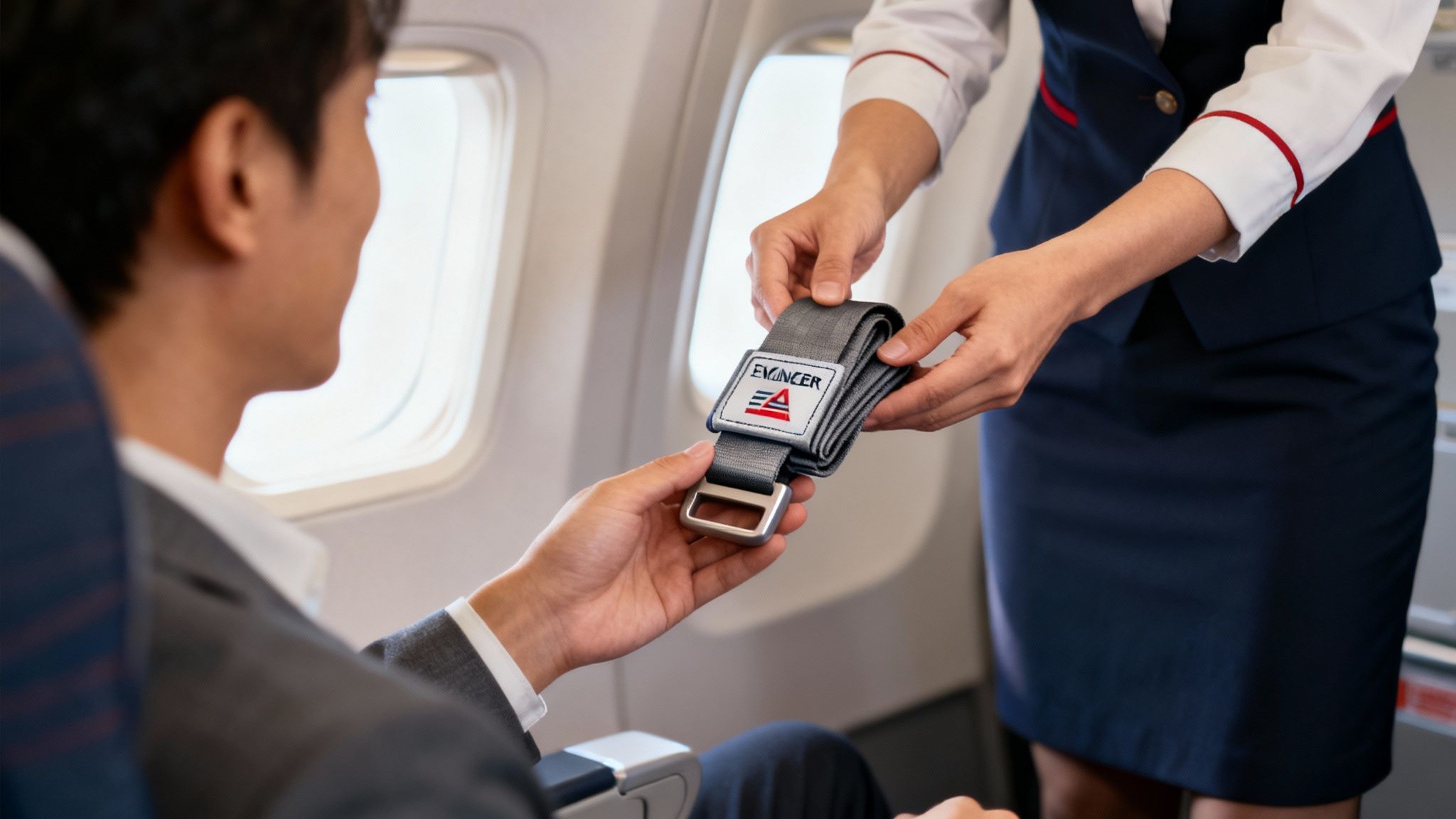
Figuring out the rules for seat belt extenders can seem a bit murky, but the core policy is actually refreshingly simple and traveler-friendly. Every major airline is required to provide FAA-approved seat belt extenders to any passenger who needs one, and they always do it free of charge.
Flight crews handle these requests all the time, and they’re trained to be professional and discreet. Their number one priority is making sure everyone is safely buckled in, so don't hesitate to ask for their help.
The easiest time to make your request is while you're boarding. Just catch a flight attendant’s eye near the entrance and quietly say something like, "Hi, could I get a seat belt extender for 24A?" They'll bring one to your seat once you've settled in, keeping the whole process smooth and private.
The Problem with Bringing Your Own Extender
Here’s where things get serious. While it might feel more convenient to just buy your own extender and bring it with you, this is one area where airline policies are completely inflexible. Airlines and the Federal Aviation Administration (FAA) strictly prohibit passengers from using personal seat belt extenders on commercial flights.
This isn’t just a bureaucratic rule—it’s a critical safety and liability issue.
An extender provided by the airline is officially part of that aircraft's safety equipment. That means it’s been certified, inspected, and maintained under the same strict standards as the seat belt itself.
Your personal extender, no matter how high-quality it appears, lacks a documented maintenance history and FAA certification specific to that plane. In an emergency, its performance is an unknown, and that’s a liability no airline is willing to accept.
This commitment to certified equipment is fundamental to aviation safety. The global market for commercial aircraft seat belts, valued at around $2.17 billion, shows just how much is invested in these heavily regulated parts.
Why Airline-Issued Is the Only Way to Go
When you use the airline's extender, you know you're using a device that’s a perfect match for the seat's buckle and has passed all its safety checks. Think of it this way: you wouldn't show up at a rental car agency with your own set of tires and ask to put them on the car. The company can only be responsible for the equipment it provides and maintains.
To learn more about the rules and fly with confidence, it helps to understand the regulations behind them. For a detailed breakdown, check out our guide on whether seat belt extenders are legal for air travel. At the end of the day, putting safety first means always using the equipment the airline provides for a secure and worry-free flight.
When an Extra Seat Might Be Required for Safety
Let's face it, navigating airline policies can feel a bit overwhelming, especially when you're dealing with something as personal as seating. Most airlines have what's known as a "Customer of Size" policy, and it's important to know this policy exists for one reason and one reason only: safety.
This isn't about judging anyone or making them uncomfortable. It's about a fundamental, non-negotiable federal rule: every single passenger must be able to securely fasten their seat belt when that sign is on. This rule is what protects you, your fellow passengers, and the crew during unexpected turbulence or in an emergency.
If you can't get that buckle to click, even with an extender from the airline, the restraint system isn't doing its job. That’s the hard line where these policies kick in.
Understanding the One-Extender Rule
The rule of thumb on most major airlines is pretty simple. You need to be able to buckle up, either with the standard belt or with one airline-provided extender. That's it. Flight attendants are strictly prohibited from linking multiple extenders together, as doing so voids the safety certification and compromises the belt's integrity in a crisis.
So, what happens when the plane's belt plus a single extender still isn’t quite enough? The airline has to find another way. The safest and most common solution is to make sure you have an empty seat next to you.
Having that extra space allows the armrest to come down fully and ensures you can properly fasten your seat belt across your lap, which is the ultimate goal. If you're curious about the engineering and regulations behind this, it's worth taking a moment to understand the principles of seat belt extender safety and why using certified equipment is so critical.
Proactive Steps for a Smooth Journey
Nobody wants to deal with a stressful situation at the gate. The best way to avoid this is to get ahead of it long before you head to the airport. Knowing the airline's specific "Customer of Size" policy puts you in control.
Here’s a quick game plan for a hassle-free trip:
- Check Policies Online: The easiest first step is a quick search for "[Airline Name] Customer of Size policy." This usually takes you straight to their official guidelines.
- Contact Customer Service: If the website leaves you with questions, just give them a call. Explain your needs, and they can often pre-arrange seating when you book, taking all the guesswork out of it.
- Communicate at the Airport: Find the gate agent before boarding starts. A discreet, private chat gives them time to make any necessary adjustments without an audience or the pressure of a boarding line.
Walking up to the gate with this knowledge empowers you to work with the airline staff, ensuring your journey is not just safe, but also comfortable and stress-free.
Your Questions About Airline Seat Belts, Answered
Even with all the details covered, a few common questions always pop up. Let's tackle them head-on so you can fly with confidence.
Can I Ask for an Extender Before I Board?
Absolutely. In fact, this is often the smoothest way to go about it. Simply have a quiet word with the gate agent before boarding starts.
A polite request at the desk gives the airline staff a heads-up. They can make a note of your seat number and have an extender ready for you, often bringing it to your seat discreetly before you even have to ask again.
Do All Airlines Use the Same Extenders?
No, they definitely don't. Airlines source their seats and safety equipment from different manufacturers, which means you’ll run into different buckle systems, like the common Type A and Type B. An extender from a Delta flight simply won't click into a seat belt on a United plane.
This is a huge reason why you should only ever use the extender provided by the airline. Each one is specifically designed and certified for their own fleet, ensuring the connection is genuinely secure.
What if I Feel Embarrassed to Ask?
It's completely understandable to feel a little awkward, but try to remember this: flight attendants see this as a routine part of their job. They handle these requests on practically every flight.
To the cabin crew, providing an extender is a safety task, just like stowing a bag or giving the pre-flight briefing. Their only concern is making sure you're buckled in safely, not passing judgment.
If you want to be as low-key as possible, just catch a flight attendant’s eye as you're getting to your seat or once you've settled in. A simple, quiet, "Excuse me, could I have a seat belt extender?" is all you need to say.
Are Extenders Available on International Flights?
Yes, they are. This is a global safety standard. International airlines and aviation authorities all follow the same safety-first rules.
Whether you're flying to London or Tokyo, every commercial airline is required to provide certified extenders to any passenger who needs one, completely free of charge. You can ask with confidence, no matter where in the world you're flying.
For any travel situation, having the right equipment brings peace of mind. Seat Belt Extenders is your trusted source for E-4/E-8 certified extenders for your vehicle, ensuring a safe and comfortable fit every time. Find your perfect match today at https://seatbeltextenders.com.