
Think of an airplane seat belt extender as a simple but crucial safety device. It's a short strap with a buckle and a metal tongue, designed to add extra length to the standard airline seat belt. This ensures you can buckle up securely and comfortably, no matter your body size.
Your Guide to a Safer and More Comfortable Flight
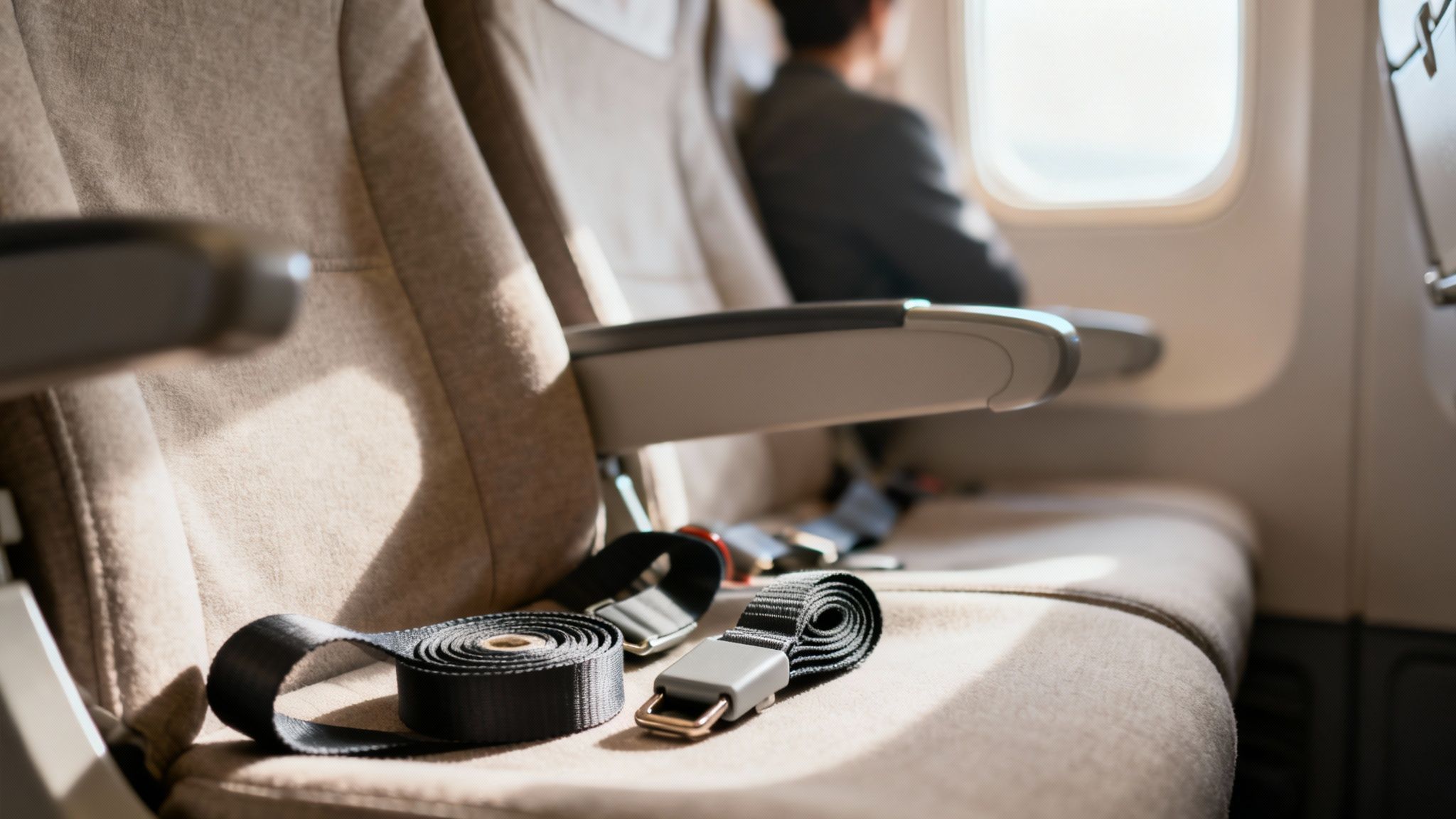
Flying should be about the excitement of the journey, not the worry of fitting into your seat. For a lot of travelers, the simple act of buckling a seat belt can be a real source of anxiety. Airplane seat belts aren't all the same length—they vary based on the aircraft model and even past repairs—so they don't always fit everyone. This is where a seat belt extender for airplanes becomes an indispensable tool for both safety and peace of mind.
Imagine it like a small bridge. If the main belt can't quite reach the buckle, the extender connects the two ends, closing the gap and creating a secure fit. This is more than just comfort; it’s a federal safety requirement. You have to be properly buckled in for takeoff, landing, and any time the "fasten seat belt" sign is on.
Why Extenders Are More Common Than You Think
You're not alone if you need an extender. With a growing focus on inclusive and comfortable travel for everyone, the demand for these devices has surged. The global market for seat belt extenders, including those for cars and buses, has ballooned to around USD 1.27 billion. That number shows a clear trend: safety systems are finally starting to adapt to real people in all their diversity.
This guide is here to clear up any confusion and put your mind at ease. We'll walk you through everything you need to know, starting with the single most important rule: you can only use the extender provided by your airline.
The only purpose of a seatbelt is to keep you safe. Don’t let the need for an extender affect your self-worth; your safety is the only thing that matters. Cabin crews handle these requests daily and are trained to assist discreetly.
Key Points for a Smooth Journey
Knowing the ropes before you fly can make all the difference. We’re going to cover the essentials to help you travel with total confidence.
Here’s a quick look at what you’ll learn:
- Airline-Provided Only: We'll dig into why you can’t bring your own extender on a plane, even if it's sold as "FAA-approved."
- How to Ask: You'll get practical, easy tips on how to discreetly ask a flight attendant for an extender.
- Proper Usage: We'll show you the right way to attach and secure the extender to ensure it keeps you safe.
- Global Policies: Find out how regulations can vary on international flights, especially when it comes to things like infant loop belts.
To help you get started, here's a quick cheat sheet for using an extender on your next flight.
Quick Guide to Using an Airplane Seat Belt Extender
This table sums up the essential do's and don'ts for a hassle-free experience when you need a bit of extra room.
| Key Consideration | What You Should Do | Why It's Important |
|---|---|---|
| Requesting an Extender | Ask a flight attendant discreetly as you board or once you're seated. | Cabin crew are trained to provide these and will do so privately. Asking early avoids delays. |
| Type of Extender | Only use the extender provided by the airline. | Personal extenders are not permitted, as their safety and maintenance history are unknown. |
| Installation | Click the extender into one side of the seat belt, then click your belt into the extender. | This creates a secure, continuous loop that functions just like a standard seat belt. |
| During the Flight | Keep the belt fastened snugly across your lap whenever seated. | The extender's job is to ensure the belt can protect you during unexpected turbulence. |
Following these simple steps ensures your safety is never compromised.
Navigating airline rules might seem tricky, but it's pretty straightforward once you know the basics. If you want to dive deeper into the specific regulations, you can learn more about the legality of seat belt extenders and be fully prepared for your next trip.
Why You Must Use the Airline's Extender
When you're flying, there's one rule about seat belt extenders for airplanes that's an absolute must-know: you can only use the one given to you by the airline. It might seem easier to just bring your own, but doing so is a major no-go for some very important safety and legal reasons.
Think of an airplane as one of the most complex, highly regulated machines on earth. Every single component, right down to the smallest screw, is meticulously tracked, tested, and certified. The seat belts and the extenders that go with them are no different—they're a critical part of the plane's safety equipment, not just simple accessories.
This all comes down to a core principle in aviation called airworthiness. Every single piece of equipment on a commercial flight has to be accounted for and maintained under a strict, legally required program.
The Continuous Airworthiness Maintenance Program
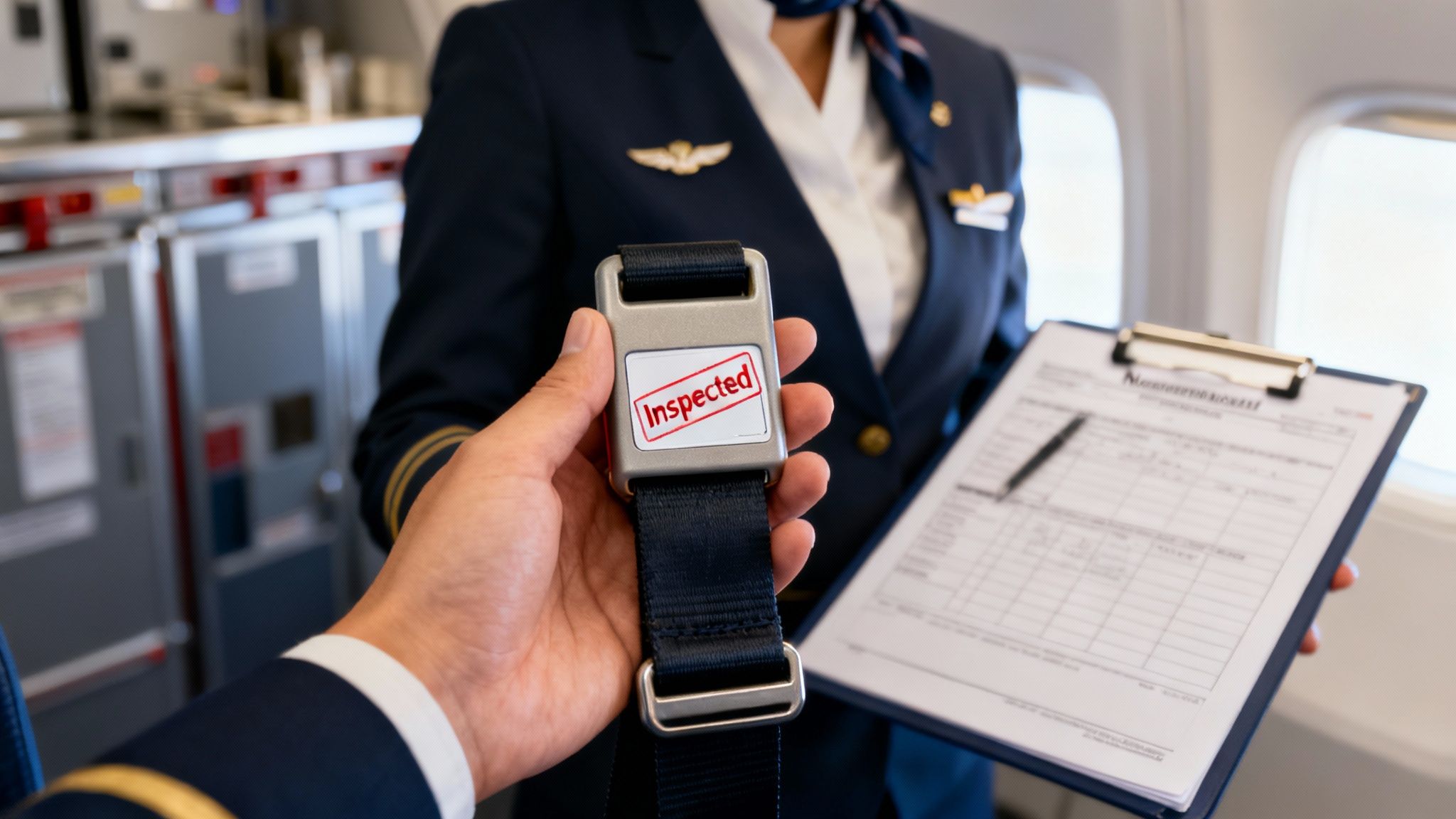
Airlines operate under a Continuous Airworthiness Maintenance Program (CAMP) for every part of their aircraft. This is a fancy way of saying that every component, including the seat belt extenders they keep on board, is regularly inspected, serviced, and has its history documented to ensure it meets incredibly high safety standards.
An airline's extender is a known quantity. Its history, materials, and performance are all documented. A personal extender, regardless of its quality, introduces an unknown and unacceptable variable into a system where there is no room for error.
This rigorous process is what guarantees the equipment works exactly as it should, especially in an emergency. When a flight attendant hands you an extender, you're getting a piece of equipment that is a fully integrated part of this closed-loop safety system.
Your personal extender, however, lives completely outside that system. It has no maintenance history with the airline, no inspection records, and no official, certified place on that aircraft.
Deceptive Marketing and FAA Regulations
You’ve probably seen online sellers advertising their extenders as "FAA-approved" or "airline certified." This is, frankly, dangerous and misleading. The Federal Aviation Administration (FAA) does not approve or certify any seat belt extenders for passengers to bring on board and use themselves.
The FAA has been very clear on this, issuing directives that explicitly disallow personal extenders. Only equipment provided by the airline, which is maintained under their CAMP, is allowed. Why? Because despite what a seller might claim, the FAA doesn't inspect or test these consumer products. You can read more about the https://seatbeltextenders.com/blogs/articles/faa-approved-seat-belt-extenders.
Bringing your own extender is a bit like a mechanic using a random part they found online to fix your car's brakes. It might look the same, but its quality and reliability are a total mystery—a risk you'd never take on the ground, let alone at 30,000 feet.
Liability and Insurance Implications
Beyond the immediate safety risks, using a non-approved part on an airplane opens up a huge can of worms when it comes to liability. If an accident were to happen and a personal extender failed, it could create a nightmare of insurance and legal problems.
Airlines are fundamentally responsible for the safety of everyone on board, and that responsibility is directly linked to the certified equipment they provide and maintain. Letting passengers bring on unverified hardware would completely undermine that core principle of aviation safety.
It's for all these reasons that flight attendants are trained to stop passengers from using their own extenders. If they see you trying to use one, they'll ask you to put it away and will happily give you one of theirs—one that has been inspected, certified, and is trusted to keep you safe.
How Seat Belt Extender Rules Change Around the World
Flying internationally can sometimes feel like you’re hopping between different worlds, and that includes the rules for something as simple as a seat belt extender. What's perfectly normal on a flight out of Chicago might be completely different on a flight from Frankfurt.
It's one of those travel details that's easy to overlook, but knowing the local aviation rules can save you a lot of confusion. Just like every country has its own currency and customs, aviation authorities from the FAA in the US to EASA in Europe have their own specific safety regulations.
What's Usually the Same Everywhere
Thankfully, some things are pretty consistent no matter where you fly. You'll find that almost every airline, from American to Emirates, prohibits passengers from bringing and using their own personal extenders. The safety and liability reasons are universal.
Another common rule? No extenders in exit rows. This is a hard-and-fast policy because anything that could get in the way during an emergency evacuation is a no-go. The length of the extenders airlines provide is also fairly standard, typically adding about 25 inches (or 63 cm) to the seat belt, which is usually enough for most passengers who need it.
Where you'll start to see things change is in the fine print. For example, KLM Royal Dutch Airlines is clear that they provide extenders on request but absolutely forbid personal ones. They specify the standard 63 cm length and are quick to point out the exit row restriction. It’s a good reminder that even if policies seem similar, it’s always worth checking the specifics. You can dig deeper into how international airlines handle passenger safety to see just how much the details can vary.
The Biggest Difference: Infant Loop Belts
Here’s where things get really interesting—and potentially confusing for parents. The most significant difference you’ll encounter outside the U.S. is the infant seat belt extender, also known as a "loop belt" or "belly belt." This is a special, smaller belt that attaches to the adult’s seat belt and secures an infant sitting on their lap.
While these infant loop belts are not only common but often required on flights in Europe, Asia, and other regions, they are strictly banned by the FAA for all flights in the United States.
This stark contrast in policy can catch traveling families off guard. One airline might hand you a device that another airline has outlawed due to safety concerns.
Let’s look at how this plays out in the real world:
- Flying from London to New York on British Airways: The cabin crew will likely give you an infant loop belt for your lap child and instruct you to use it.
- Flying from New York to London on Delta: You won't be given one, and you won’t be allowed to use one, even if you just got off a flight where it was mandatory.
The FAA argues that during severe turbulence or a crash, the force of the parent's body could harm the infant pressed against the loop belt. On the other hand, many international regulators believe the belt is far safer than simply holding a child in your lap with no restraint at all.
Knowing about these global differences ahead of time is the best way to avoid any surprises at 30,000 feet. If you’re flying internationally, especially with a child, do yourself a favor and check the specific policies for every single airline on your itinerary.
How To Ask For And Use An Extender On Your Flight
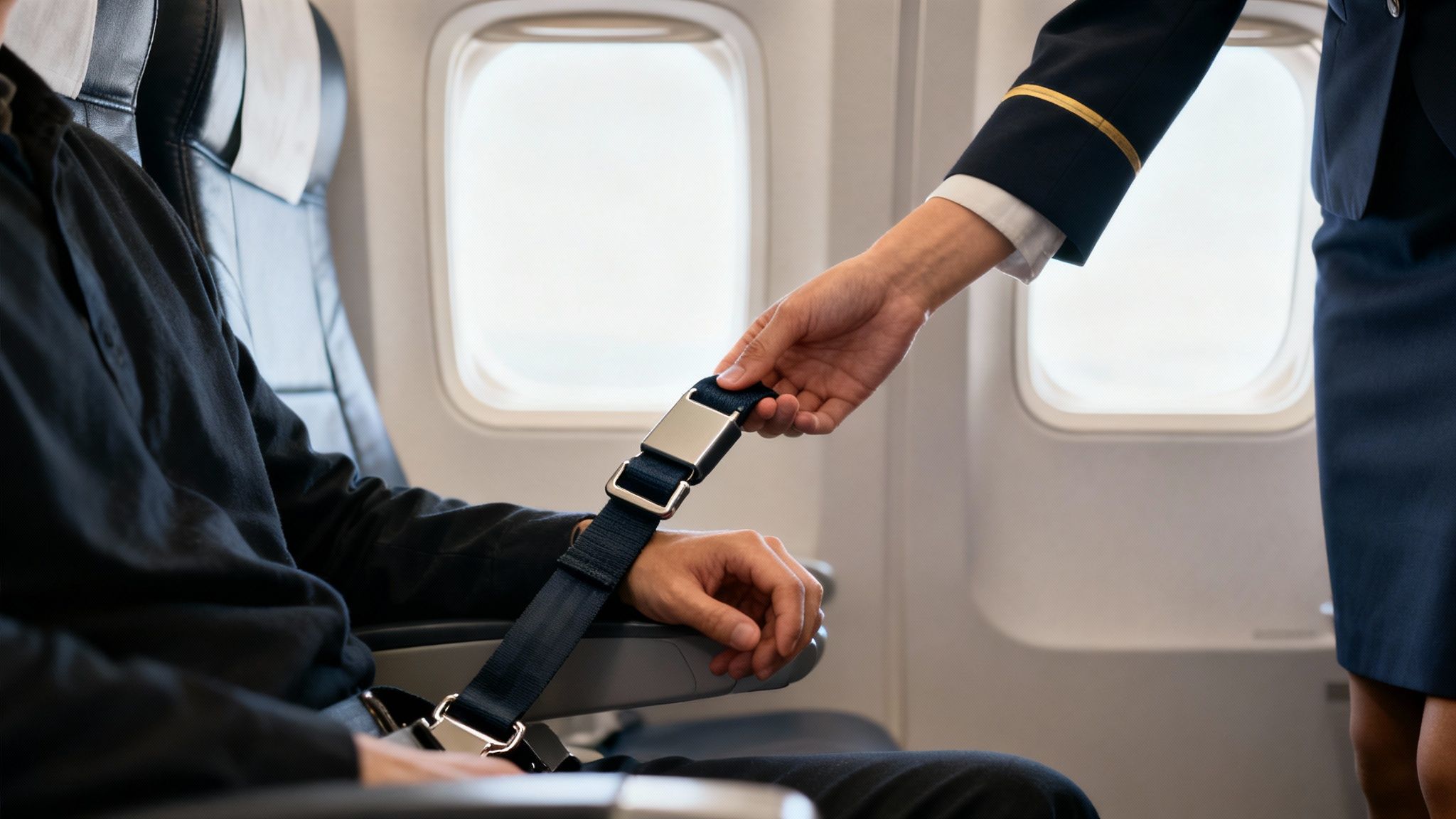
Recognizing you might need a seat belt extender for airplanes is the first move. Still, approaching a flight attendant can feel a bit nerve-wracking. In reality, cabin crews handle these requests dozens of times each day—they’re trained for it.
Thinking ahead about when and how to ask takes the stress out of boarding. A clear, confident request means you’ll be settled in your seat before you know it.
The Best Time And Way To Ask
Timing can make all the difference. The sweet spot is during boarding—before the cabin fills up and the crew shifts into their final takeoff routines.
You have two prime moments:
- As You Board: Smile at the attendant by the door and say, “Hi, could I please have a seat belt extender for 22A?”
- At Your Seat: Once you’re settled, catch an attendant’s eye in the aisle and ask quietly.
No need for a long explanation. A polite, direct approach is always appreciated.
Your self-worth has nothing to do with the length of a seat belt. These belts can vary in size due to maintenance and repairs. Your only focus should be on your safety, which is exactly what the extender provides.
Correctly Installing The Extender
Attaching the extender feels just like using your regular belt—one continuous safety loop.
- Attach the Extender: Slot the metal tongue of the extender into the buckle on one side of the seat belt.
- Listen for the Click: You’ll hear a reassuring “click.” Give it a gentle tug to confirm it’s locked.
- Buckle Your Belt: Take the metal tongue from the original belt and click it into the extender’s buckle—listen for the second “click.”
- Adjust for a Snug Fit: Pull the loose end to tighten. It should rest firmly across your lap and pelvic area—secure but comfortable.
It helps to review the typical airline seat belt size to gauge how much extra length you might need.
What To Do In A Tricky Situation
On rare occasions, you might face a hiccup—perhaps the extender won’t click, or the crew is tied up mid-cabin. Stay calm and follow these steps:
- If your first request goes unnoticed, pause for a moment, then politely ask again.
- If the extender doesn’t lock properly, show it to the attendant immediately. A faulty safety device will be swapped out on the spot.
Remember, a fastened seat belt is a federal requirement. You’re entitled to any equipment needed for a safe flight. Stay composed, speak up, and you’ll arrive at your destination both comfortable and secure. At the end of your journey, simply unbuckle the extender and leave it on your seat or hand it to a crew member as you deplane.
Picking the Right Seat Belt Extender for Cars and Buses
So, you can't use your own extender on a plane. But the second your feet hit the ground, that personal extender becomes one of your most important travel tools. Whether you're hopping in a rental car, a shuttle bus, or a ride-share, having the right one on hand means you’re buckled up safely for the next leg of your journey.
Unlike the highly standardized belts on aircraft, the seat belts you find in cars are all over the map. Manufacturers use different designs, which means you need to be a bit of a detective to find an extender that’s a perfect match for the vehicle you're in.
It’s just like trying to use the wrong key for a lock—it might look right, but it won’t click securely. That same idea applies here. An extender has to be made specifically for your vehicle’s seat belt to work properly and, more importantly, safely.
Matching the Latch is Non-Negotiable
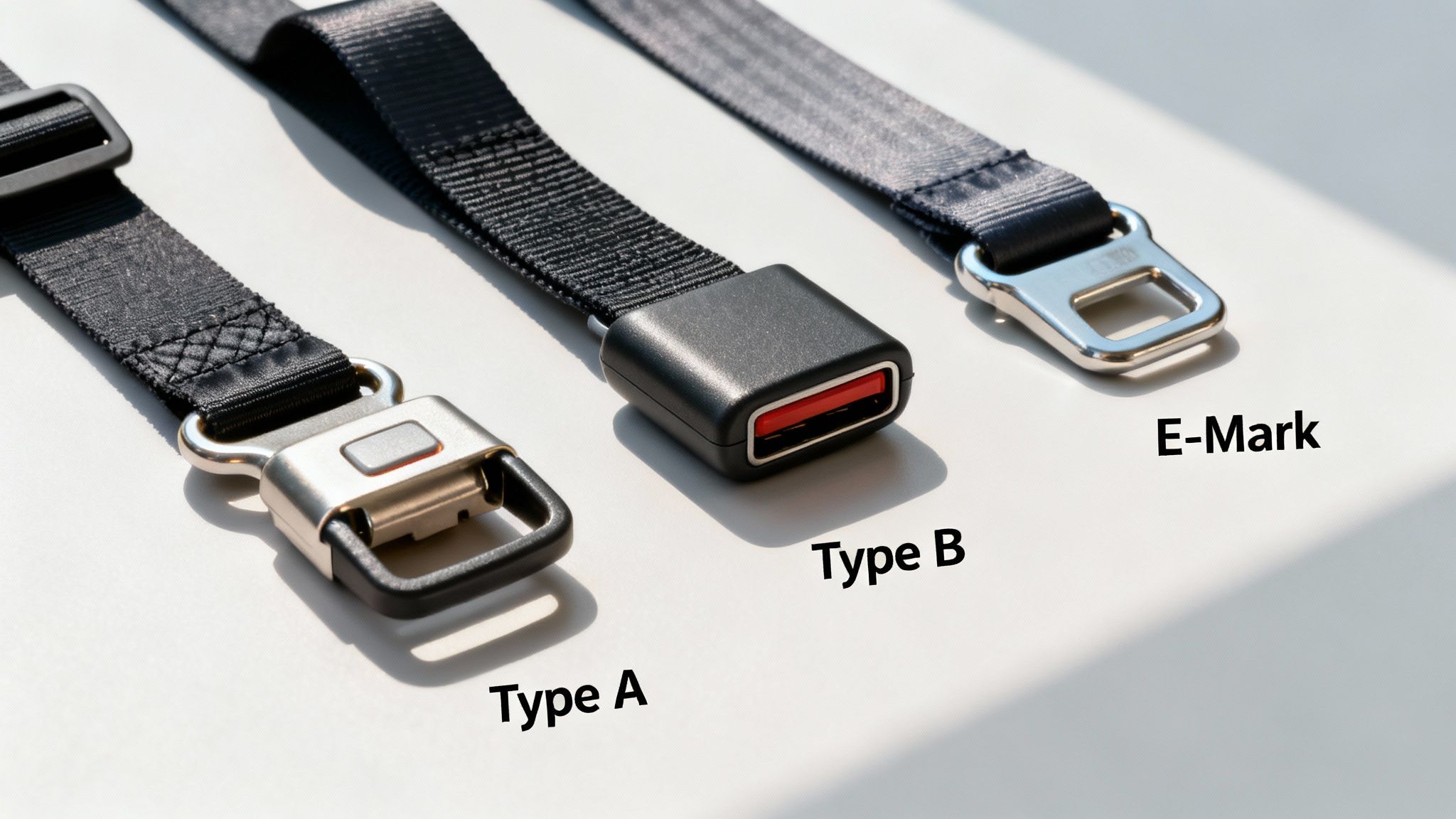
The single most important thing to get right is the latch type. There’s no universal extender for cars, because every automaker has its own way of doing things. The vast majority of vehicle belts fall into two main camps, often called Type A and Type B.
The difference comes down to the precise shape and size of the metal tongue at the end of the belt. A Type A extender will only click securely into a Type A buckle, and a Type B extender only works with a Type B buckle. Getting this wrong is a huge safety risk. You might hear a "click," but it could be a false latch that will pop right out under the strain of a sudden stop.
To figure out exactly what your car needs, it helps to see the differences up close. You can find excellent visual guides that break down the various seat belt extender types.
Look for Signs of Quality and Safety
Once you know which latch type you need, your next job is to check for quality. A seat belt extender isn't just a simple strap; it's a critical piece of safety gear that has to be tough enough to handle incredible force in an emergency.
Here's what to keep an eye out for:
- Tough Webbing: The fabric should be the same kind of high-strength polyester that car manufacturers use for their own factory-installed belts.
- Solid Feel: The metal tongue and buckle components should feel heavy and solid. No flimsy plastic parts.
- Official Safety Certification: This is the big one. Look for an E-Mark safety certificate, like E4 or E8. This is a European standard recognized worldwide, and it proves the extender has passed serious safety tests.
Think of it this way: a certified extender has gone through the same brutal testing as the seat belts that came with your car. That E-Mark is your guarantee that it will hold up when it counts.
For families on the go, making sure every passenger is properly secured is paramount. While you're sorting out extenders for adults, it's a great time to also look into the best portable booster seats for travel, ensuring the little ones are just as safe in cars and buses.
Comparing Extender Features for Non-Airline Travel
Choosing the right extender comes down to a few key details. The table below breaks down exactly what you should be looking for to ensure you’re making a safe choice for your car, bus, or other ground transportation.
| Feature to Check | What to Look For | Why It Matters for Your Safety |
|---|---|---|
| Latch Compatibility | A confirmed match for your vehicle's make, model, and year. | This is the only way to get a secure lock that won't fail under pressure. |
| Material Quality | High-strength polyester webbing and robust steel components. | Guarantees the extender can handle the extreme forces of a sudden stop or impact. |
| Safety Certification | A clear E-Mark (e.g., E4/E8) safety rating printed on the label. | This is independent proof that the product meets strict international safety standards. |
| Length | A size that adds just enough length for a comfortable fit, not more. | Too much slack can change the way the seat belt works, making it less effective in a crash. |
By focusing on these crucial points, you can pick an extender that gives you a safe, secure fit every time. It's the best way to make sure your safety is covered from the moment you leave the airport until you arrive at your final destination.
Travel Strategies for a Better Journey
Getting your seat belt buckled is just one part of the puzzle. A truly smooth and comfortable flight experience really starts long before you even get to the airport. By planning ahead, you can walk onto that plane with confidence, knowing you've set yourself up for a great trip.
A little bit of foresight goes a long way. Simple things, like picking the right seat or getting familiar with an airline's rules, can completely change the game.
Prepare Before You Fly
The best way to avoid stress at 30,000 feet is to handle the details on the ground. Knowing an airline’s specific policies for passengers of size, for instance, means no unwelcome surprises at the gate. Many seasoned travelers swear by an aisle seat for a bit more room to stretch, while others prefer the window for the extra personal space it provides.
Here are a few simple but powerful things you can do before you fly:
- Select Your Seat Wisely: When you're booking, take a close look at the seat map. Be aware that bulkhead seats often have rigid, immovable armrests, which can make them feel narrower than a standard seat.
- Review Airline Policies: A quick search for the airline’s “Customer of Size” or “Passenger of Size” policy will tell you everything you need to know about their procedures, including whether you might need to purchase an extra seat.
- Take Advantage of Pre-boarding: Just about every airline offers pre-boarding to passengers who need a little extra time. This is a fantastic perk that lets you get settled in your seat without feeling rushed by the long line of people behind you.
Communicate with Confidence
Flight attendants and gate agents are there to make sure everyone has a safe and comfortable flight. You just need to let them know what you need, and the key is to be clear and respectful. Whether you're quietly asking for a seat belt extender for airplanes or inquiring about wheelchair assistance, a friendly tone makes all the difference.
Your comfort and safety are the top priorities. Never feel like you're being an inconvenience by advocating for your needs—it’s an essential step for a good travel experience.
If getting through a sprawling airport terminal feels daunting, don't hesitate to request wheelchair assistance ahead of time. It's a free service designed to make your journey easier. Also, if you're traveling with medical devices like a CPAP machine, make sure it’s clearly labeled; this way, it won't be counted as part of your carry-on allowance. For more great advice, check out these essential tips for flying with a mobility scooter which offer some fantastic insights.
When you pair these strategies with a solid understanding of airline procedures, you create a complete plan for stress-free travel. For a closer look at the technical side of things, be sure to read our in-depth guide on seat belt extender safety.
Your Questions Answered: Flying With a Seat Belt Extender
It's completely normal to have questions about using a seat belt extender on a plane. Flying can be stressful enough without worrying about the rules. Let's clear up some of the most common concerns so you can feel totally prepared for your next trip.
Can I Bring My Own "FAA Approved" Extender on the Plane?
This is the big one, and the answer is a firm no. You absolutely cannot use your own seat belt extender on a commercial flight, and here’s why.
Despite what you might see from online sellers, the FAA simply does not approve or certify seat belt extenders for passengers to buy and bring on board. Any product marketed that way is, frankly, being dishonest. The only extender you can legally and safely use is one provided directly by your airline's cabin crew.
Think of it this way: their equipment is part of the plane's certified safety system. It's subject to the same rigorous maintenance and inspection schedules as the rest of the aircraft. Bringing your own introduces a component with an unknown history and quality, and for safety's sake, that's a non-starter.
How Do I Ask for an Extender Without Making a Scene?
First, remember that flight attendants handle this request all the time. They are professionals, and your safety is their priority—they won't bat an eye. The best time to ask is usually as you're boarding or right after you've settled into your seat, before the main cabin door closes.
Just catch a crew member's eye and ask quietly. A simple, polite phrase is all you need:
- "Hi, could I please have a seat belt extender when you get a chance?"
- "Excuse me, I'll need an extender for seat 22A."
There’s absolutely no need to feel self-conscious or over-explain. The crew is there to help, and getting you buckled in safely is part of their job.
Your self-worth has nothing to do with the length of a seat belt. Seat belt lengths can vary from plane to plane or even seat to seat due to repairs. Requesting an extender is a simple act of prioritizing your safety.
What Happens If the Airline Runs Out of Extenders?
It's extremely rare, but on a completely full flight, it is a possibility. Since you're required by federal law to be securely buckled in for critical phases of flight like takeoff and landing, you wouldn't be able to fly if the belt doesn't fit.
In this unlikely event, the flight crew's first move would be to see if they can reseat you somewhere else where the belt might fit differently. If the plane is 100% full and no other options exist, you may have to be booked on the next available flight. This is another great reason to ask for an extender early in the boarding process, not at the last minute.
Are All Airline Extenders a Standard Size?
Yes, the extenders that airlines provide are a standardized length. They're designed to add about 25 inches to the existing seat belt, giving a consistent amount of extra slack.
What isn't always consistent, however, are the seat belts themselves. Belts on different aircraft models, or even in different seats on the same plane, can vary slightly in length. Sometimes they're even shortened a bit during a repair. So while the extender itself is a standard size, the total belt length you end up with can feel a little different from flight to flight.
At Seat Belt Extenders, we ensure you have the perfect fit for all your ground travel needs. While our extenders are designed for cars and buses, our goal is to keep you informed and safe for every part of your journey. Find your vehicle's match at our official website and travel with confidence.