
When it comes to your child's safety in the car, there's no room for ambiguity. So, let’s get straight to the point: are seat belt extenders safe to use with booster seats?
The answer, from every child passenger safety expert, car manufacturer, and safety agency, is a clear and resounding NO. This isn't a matter of opinion; it's a critical safety rule based on how these systems are designed to work.
Why Extenders and Booster Seats Are a Dangerous Combination
Think of your car's seat belt as a safety system that's been meticulously designed and crash-tested. A booster seat has one very specific job: to position your child so that the adult seat belt fits their smaller body correctly. It’s all about geometry.
When you add a seat belt extender into this equation, you change the entire geometry of that carefully engineered system. It's like adding an un-tested, aftermarket part to a high-performance engine. That one small change can cause the whole system to fail under the violent forces of a crash.
The Unseen Risks of Incorrect Geometry
For a seat belt to protect your child, it has to lie across the strongest parts of their body. This is non-negotiable.
- The Lap Belt: It must sit low and snug across your child's strong hip bones. It absolutely cannot rest on their soft belly, where it can cause catastrophic internal injuries in a crash.
- The Shoulder Belt: This part should cross the middle of the collarbone and chest, never cutting into the neck or slipping off the shoulder.
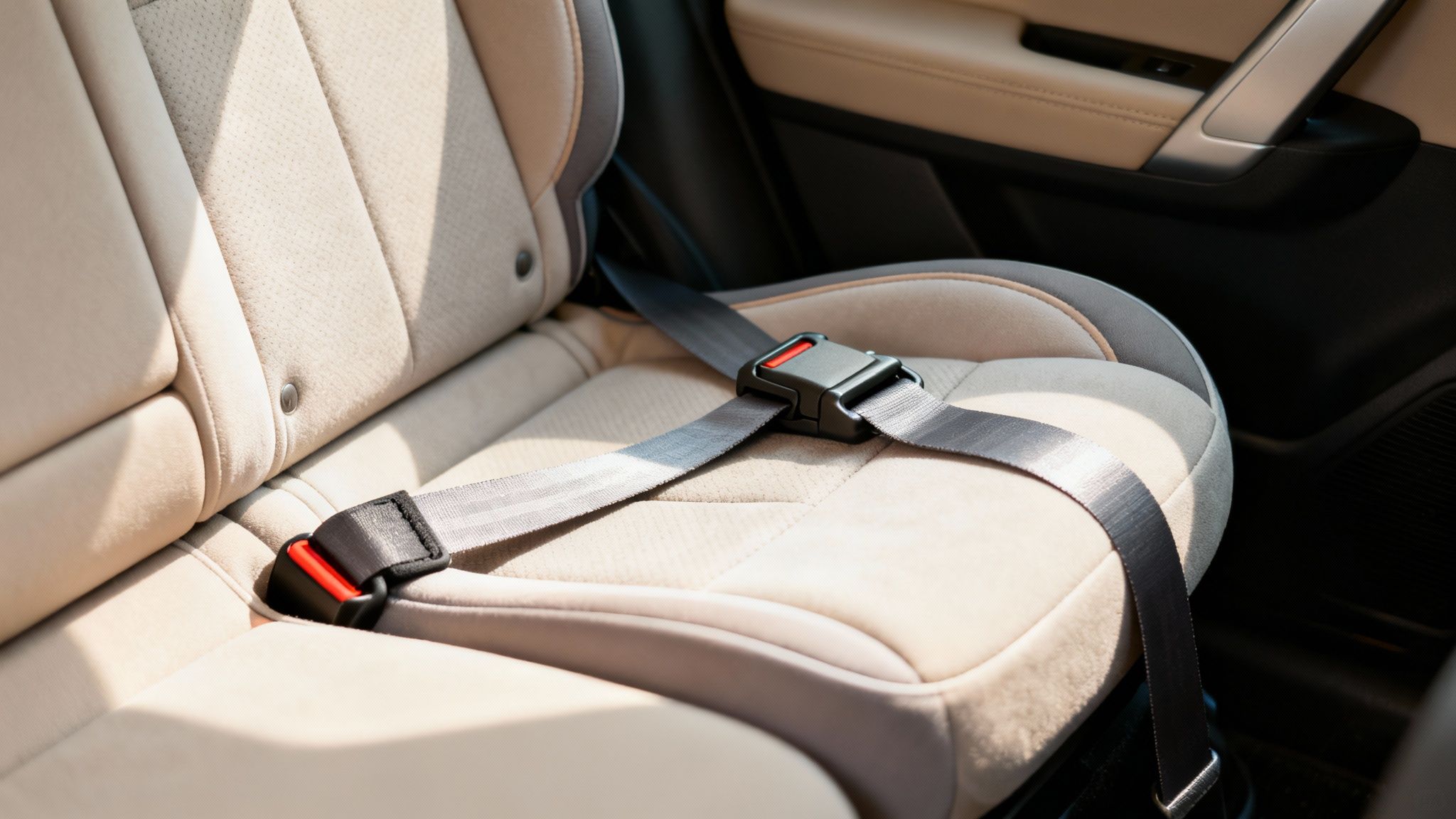
An extender moves the buckle, which almost always pulls the lap belt up high onto the child’s abdomen. This is one of the biggest dangers and a primary reason why extenders and boosters must never be used together. For more on their proper use, you can review this in-depth guide on seat belt extender safety.
In a crash, a poorly positioned seat belt can cause more harm than good. The forces are incredible, and if they are applied to the wrong parts of a child's small body, the results can be devastating injuries to the spine and internal organs.
Why Extenders and Boosters Are a Dangerous Combination
To see these risks clearly, it helps to break down exactly how an extender disrupts the safety system. This table summarizes the core issues.
| Safety Principle | The Risk When Using an Extender |
|---|---|
| Correct Lap Belt Fit | The extender repositions the buckle, pulling the lap belt up onto the soft abdomen instead of the strong hips. |
| Crash Force Distribution | Forces are directed to vulnerable internal organs and the spine, not the sturdy pelvic bones. |
| Booster Seat Stability | The extender can introduce slack and alter the belt path, potentially causing the booster to shift or rotate in a crash. |
| System Integrity | Extenders are not crash-tested with booster seats, creating an unknown and unapproved combination. |
This isn't just theory; it's a proven danger with tragic real-world consequences.
The terrible reality of this was brought to light in a landmark 2013 case where a young child in Tennessee suffered a traumatic brain injury. He was thrown from his booster seat during a collision, even though he was buckled in. The culprit? A seat belt extender that prevented the seat belt from doing its job.
How a Booster Seat Actually Protects Your Child
To understand why a seat belt extender is such a risky addition, we first need a solid grasp of what a booster seat is actually doing. It’s a beautifully simple concept. Unlike a car seat with its own 5-point harness, a booster seat has just one job: to 'boost' your child up so the car's seat belt—designed for an adult—fits their smaller frame correctly.
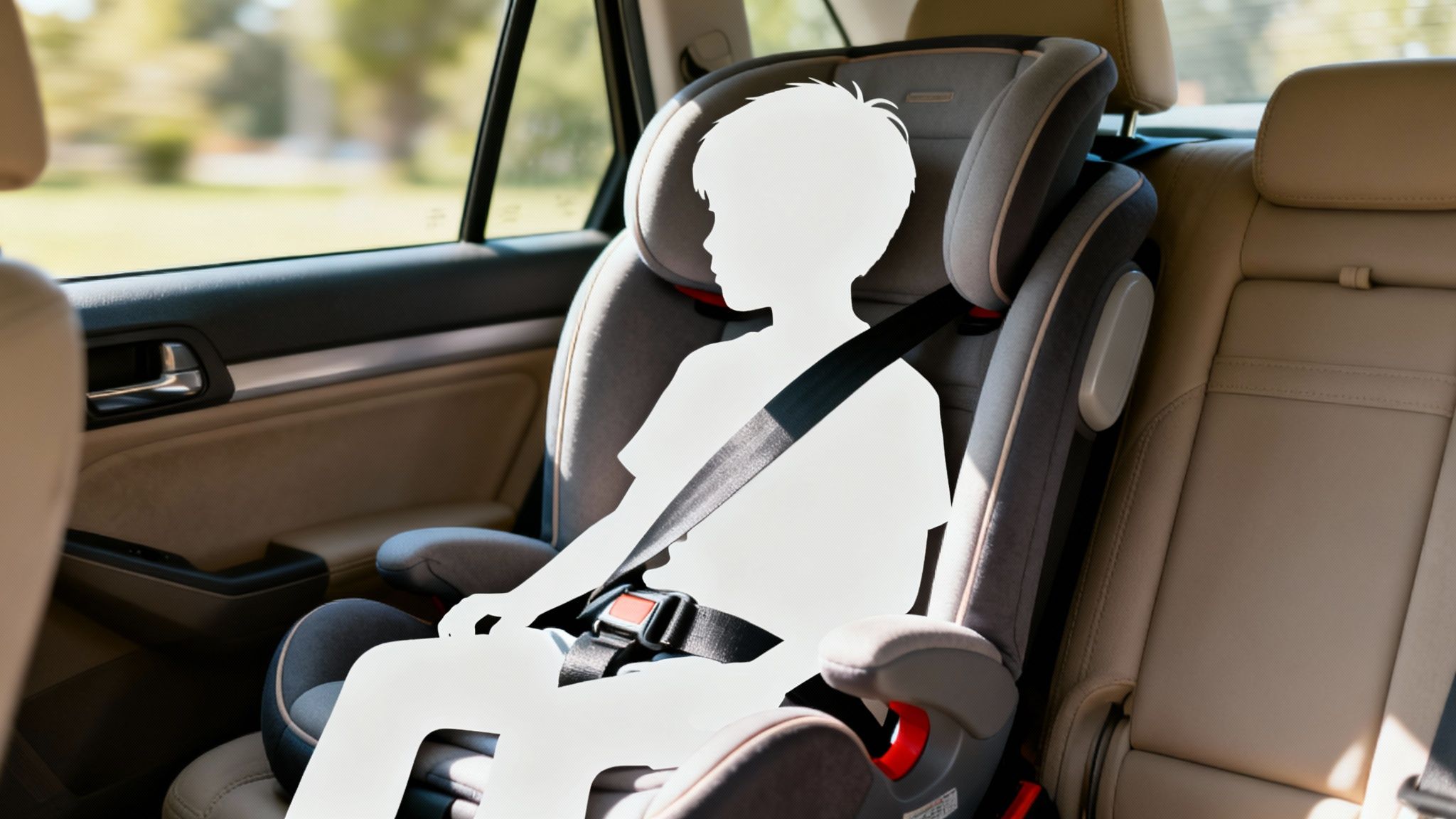
That one little job is monumental. During a crash, the forces are massive. A properly positioned seat belt is engineered to channel that incredible force to the strongest points of the skeleton—the solid hip bones (pelvis) and the sturdy collarbone.
Think of a booster as the crucial bridge that allows your child to safely use the car's built-in safety system long before their body is big enough to do so on its own.
The Anatomy of a Safe Fit
Child Passenger Safety Technicians (CPSTs) have a five-step test to see if a child is ready to graduate from a booster. We can use that same checklist to understand what the "gold standard" of a safe fit looks like for a child who is still in their booster.
Here's what perfect looks like:
- The Lap Belt: It has to sit low and snug across your child's upper thighs, anchored on their strong hip bones—never creeping up onto their soft tummy.
- The Shoulder Belt: It should lie flat across the middle of their shoulder and the center of their chest, not digging into their neck or falling off their shoulder.
Any deviation from this precise placement instantly undermines the entire safety system. With seat belts, position is everything. For a deeper dive into the basics, check out this guide on What Is a Booster Seat? A Parent's Guide to Safety Rules.
Here's an analogy: A seat belt is like a guardrail on a winding mountain road. If it’s positioned correctly, it keeps the car on the road and prevents a catastrophe. But if it’s too high or too low, the car goes right over or under it, making it completely ineffective. A booster seat makes sure that "guardrail" is at the perfect height for your child.
Why Correct Belt Geometry Matters
Our bodies aren't built like tanks. The abdomen is full of vital organs—the liver, spleen, and intestines—that are incredibly vulnerable to blunt force. When a lap belt rides up onto the belly in a crash, it can cause devastating internal injuries. This is a well-documented and tragic phenomenon known as "seat belt syndrome."
The entire design of a booster seat is meant to prevent this. High-back boosters use shoulder belt guides to keep the diagonal belt in place, while both high-back and backless models have lap belt guides or armrests to lock the lap belt down on the hips. This meticulous routing is the heart of its protective power and is key to managing the dynamics of seat belt tension in a collision.
Once we’ve established what a perfect, safe fit looks like, it becomes painfully obvious why introducing an extender is so dangerous. An extender fundamentally changes the seat belt’s geometry by moving its anchor point. This one modification can completely undo all the critical work the booster seat was designed to do, putting your child at serious risk.
The Three Critical Dangers of Adding an Extender
It's tempting to reach for a seat belt extender for a little extra convenience, but when it comes to a child in a booster seat, that shortcut can have catastrophic consequences. Using an extender introduces three specific, well-understood dangers that dismantle the protection your child's booster is designed to provide.
Each of these risks can turn a highly-engineered safety system into an unpredictable hazard. Once you understand what’s happening with belt geometry, buckle crunch, and induced slack, it becomes crystal clear why the answer to "are seat belt extenders safe for boosters?" is always a hard no.
Danger 1: Compromised Belt Geometry
A booster seat has one primary mission: to position the vehicle's seat belt across the strongest parts of a child's body. An extender shatters this fundamental principle by changing where the buckle sits.
Think of the lap belt as a protective shield. The booster's armrests and belt guides are there to keep that shield locked down low, right across your child's sturdy hip bones. The moment you click an extender into place, you've moved the anchor point of that shield.
This new, higher anchor point yanks the lap belt up off the hips and onto the soft, unprotected abdomen. During a crash, all that immense force is driven directly into your child’s internal organs—the liver, spleen, and intestines—instead of being safely distributed across their pelvic bone. This can cause horrific internal injuries, a tragic phenomenon known as "seat belt syndrome."
The National Highway Traffic Safety Administration (NHTSA) is unequivocal in its warnings against using aftermarket extenders with booster seats for this exact reason. Their research shows that improper belt fit dramatically increases the risk of severe abdominal injuries.
Danger 2: Buckle Crunch
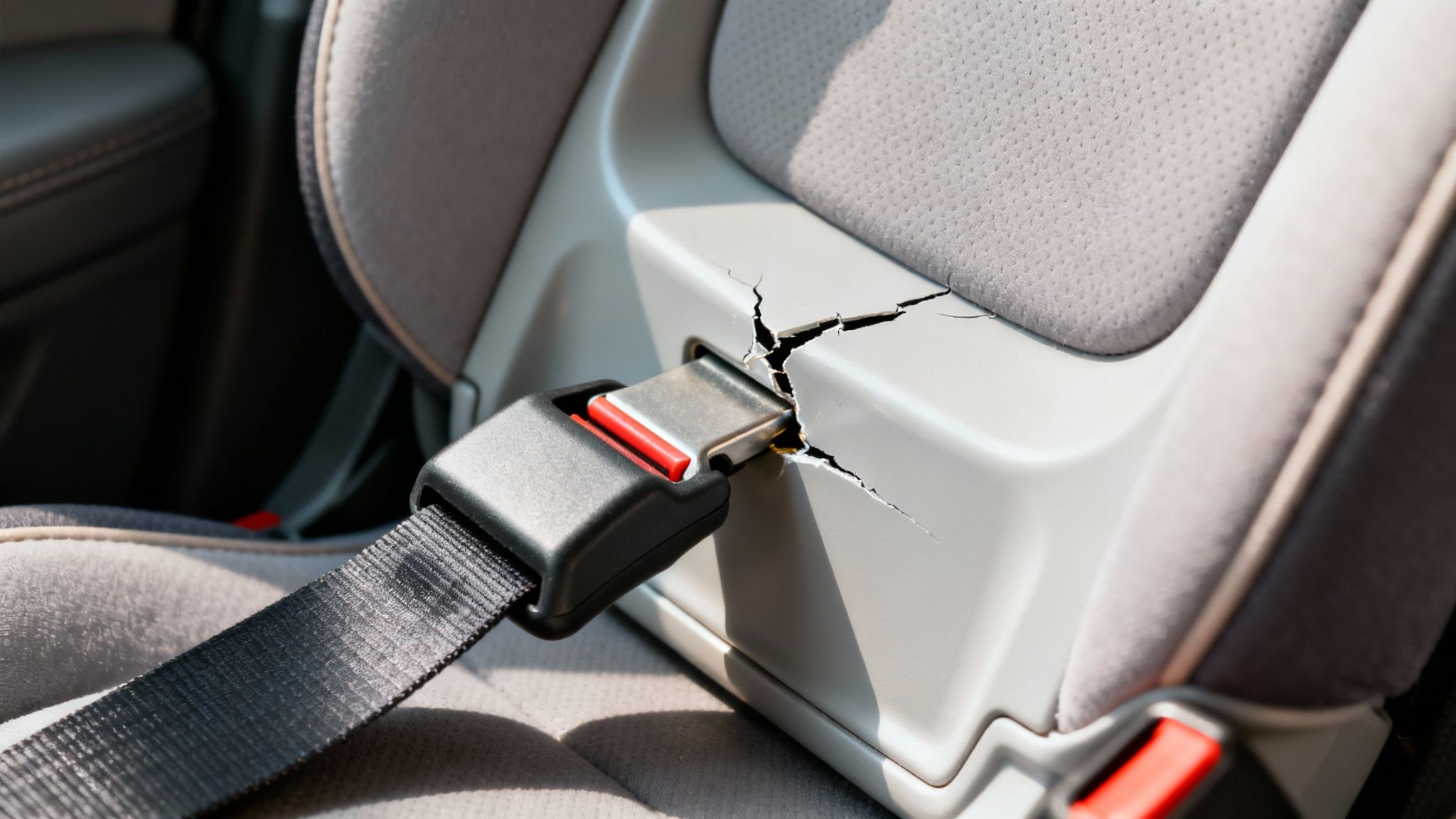
The second major threat is a mechanical failure called buckle crunch. This happens when the hard body of the seat belt extender creates a dangerous pressure point against the booster seat itself.
Your car’s seat belt buckles are usually attached to a flexible webbing stalk, which lets them move and sit flat against the seat. In contrast, many extenders are made from rigid plastic or metal. When you pair one with a booster, especially a wider one with enclosed armrests, that stiff extender can get wedged right up against the booster’s plastic frame.
During a collision, the forces are immense—more than enough to shatter hard plastic. If the extender is wedged against the booster, the crash energy can cause the extender's casing to crack and break apart.
When buckle crunch occurs, the entire seat belt system can fail. The belt releases, offering zero protection. This can lead to the child being thrown forward or even ejected from their seat, resulting in catastrophic head, neck, and spinal injuries.
This is a particularly sneaky danger because everything might look and feel fine during a normal installation. But under the extreme stress of a crash, that hidden pressure point causes a complete and sudden failure. To get a better sense of how these devices are built, you can see the different seat belt extender types in our detailed guide.
Danger 3: Induced Belt Slack
Finally, adding an extender introduces dangerous slack into the seat belt system, which can defeat one of its most important safety features: the retractor.
The retractor is the mechanism inside your car's pillar that yanks the belt tight during a sudden stop. It’s engineered to instantly eliminate any slack, pinning the occupant firmly in their seat. An extender can get in the way of this process.
By changing the belt's angle and position, an extender can keep the retractor from properly sensing crash forces or from tightening the belt all the way. This creates just a little bit of extra slack in the system.
A tiny bit of slack might not sound like a big deal, but in the split-second physics of a crash, it's a huge problem.
- Delayed Restraint: The slack allows your child's body to move forward with more force before the belt finally catches and restrains them.
- Increased Force: This extra forward momentum means their head and neck snap forward much more violently when the belt eventually locks.
- Secondary Impact Risk: It dramatically increases the chances of the child's head hitting the seat in front of them, the door, or other hard surfaces inside the car.
In short, induced slack gives your child a "running start" inside the vehicle during a crash, making potential injuries far more severe. All three of these dangers show that an extender isn't a simple accessory—it's an untested modification that can cause a meticulously designed safety system to fail when your child needs it most.
What Car Manufacturers and Safety Experts Say
When it comes to your child's safety, it’s best to go straight to the source: the engineers who designed your car and the experts who have dedicated their lives to preventing injuries. On the question of using seat belt extenders with boosters, their guidance isn't just a suggestion—it’s a unified, non-negotiable warning.
Let me be perfectly clear: Never use a seat belt extender with a booster seat or any other child restraint. Every single car manufacturer, child passenger safety technician (CPST), and safety organization is in complete agreement on this.
The Universal Agreement from Vehicle Manuals
Think of your vehicle’s owner's manual as the ultimate rulebook for its safety systems. It’s written by the very engineers who crash-tested your specific car. If you flip to the section on child safety or seat belts, you’ll find explicit warnings against this exact practice.
Major brands are all singing the same tune:
- Toyota manuals state clearly not to use extenders with child restraint systems.
- Ford warns that extenders are not designed for, and must not be used with, child seats.
- Honda flat-out prohibits using any seat belt extender with a car seat or booster.
This isn't just legal fine print; these are critical safety directives. Manufacturers know that adding an aftermarket part like an extender introduces an untested and dangerous variable that can cause the entire system to fail in a crash. Understanding these expert recommendations is key, whether it's for car seats or reviewing a comprehensive guide to childproofing your home.
Warnings from Leading Child Safety Advocates
Beyond the car companies, independent safety organizations and advocates—the people on the front lines of child passenger safety—are even more direct. It's their job to analyze crash data and teach parents how to avoid tragedy, and their message couldn't be clearer.
Groups like Safe Kids Worldwide and the certified experts at The Car Seat Lady consistently teach that extenders create unacceptable risks, like dangerous belt fit and the potential for buckle crunch. They spend their days at car seat check events correcting this exact type of misuse because they’ve seen the devastating outcomes firsthand.
"A seat belt extender should NEVER be used with a booster seat or a car seat. It moves the buckle, which in turn moves the lap belt off the strong hip bones and onto the soft, vulnerable abdomen, which is a recipe for disaster in a crash." – The Car Seat Lady
This universal agreement highlights just how serious this is. The experts also clarify important legal distinctions, which you can learn more about by reading our guide on whether seat belt extenders are legal.
The Science Backing the Warnings
This isn't just about following rules; it's about physics and anatomy. These warnings are rooted in decades of crash test data and real-world injury analysis. Time and again, research into booster seat misuse shows that improper belt positioning is a leading cause of severe injuries in children.
For example, a 2013 NIH study on 4- to 7-year-olds found that even correctly used boosters can present certain injury patterns. While the study didn't test extenders directly, its findings align perfectly with the concerns we have—improper belt positioning significantly raises the risk of abdominal and chest injuries. You can discover more insights about these injury patterns on PMC.
The expert consensus isn't an overabundance of caution. It is a clear, evidence-based directive designed to prevent life-altering injuries. When the people who design the cars and the people who study the crashes both issue the same unequivocal warning, it’s one we absolutely must follow.
Safe Alternatives When Buckling is a Struggle
We’ve all been there: leaning over a booster seat, fumbling with a buckle that seems to have disappeared into the car's seat cushions. It can feel like a daily wrestling match, especially when you're trying to fit multiple kids in the back. It's frustrating, and it's tempting to look for a quick fix like a seat belt extender.
But as we've established, that's a dangerous path. The good news is, there are several expert-approved ways to solve this problem that don't compromise your child's safety. The real solution isn't to modify the seat belt, but to tackle the root of the problem—usually a simple issue of space and access.
Re-Think Your Booster and Vehicle Setup
The first and most effective strategy is to take a hard look at how your booster seat and your car work together. Not every booster is a great match for every vehicle, particularly when it’s squeezed next to another car seat.
Often, the booster is simply too wide for the seating position. It ends up sitting on top of or crowding the female buckle, making it nearly impossible for anyone, let alone a child, to click the belt in.
Here are a few things to try:
- Find a Narrower Booster: The market is full of fantastic, slim-profile booster seats designed for exactly these tricky situations. Switching to a narrower model can free up those precious few inches you need to make the buckle easy to reach.
- Play Musical Chairs: Sometimes, the solution is as simple as moving the booster to a different spot. One side of the car might have a longer, more accessible buckle stalk than the other. The center seat can also be a great option, provided it has a full lap and shoulder belt.
Use Approved Tools to Help, Not Hinder
If a new seat or position doesn't quite solve it, there are tools that can lend a hand. The crucial difference is that these tools assist with buckling; they don't alter how the seat belt functions.
Think of it this way: an approved tool helps you do the job correctly. A modification, like an extender, changes the safety system itself, introducing dangerous and untested variables.
A great example of a safe helper is a buckle holder. This is just a simple, firm piece of silicone or plastic that wraps around the base of the buckle. It doesn’t change the belt’s length or geometry at all. Its only job is to keep that floppy buckle stalk standing upright instead of getting lost in the seat crack. This simple fix can make it much easier for a child to buckle themselves in.
Another type of tool, seat belt adjuster clips, needs to be handled with extreme caution because they are very easy to misuse. To get the full picture, you can read our detailed guide to understand how seat belt adjuster clips work and their safety implications.
Consider Upgrading to a Different Kind of Seat
If you've tried everything and buckling is still a nightmare, it might be a sign that the booster seat is no longer the right fit for your family's setup.
If your child still fits within the height and weight limits, going back to a combination car seat that uses a built-in 5-point harness can be a fantastic solution. These forward-facing seats often have much higher harness weight limits than convertible seats. Better yet, they completely bypass the vehicle's seat belt for securing your child. In a crowded backseat, this is a game-changer—you just have to click the easy-to-reach harness buckle.
The Right Way to Use a Seat Belt Extender
After spelling out the serious risks of pairing extenders with booster seats, it's time to talk about what they are actually for. They aren't a convenience item; for some adults, they are a critical piece of safety equipment. When used correctly, a seat belt extender makes it possible for someone who otherwise couldn't buckle up to be safely secured in a vehicle.
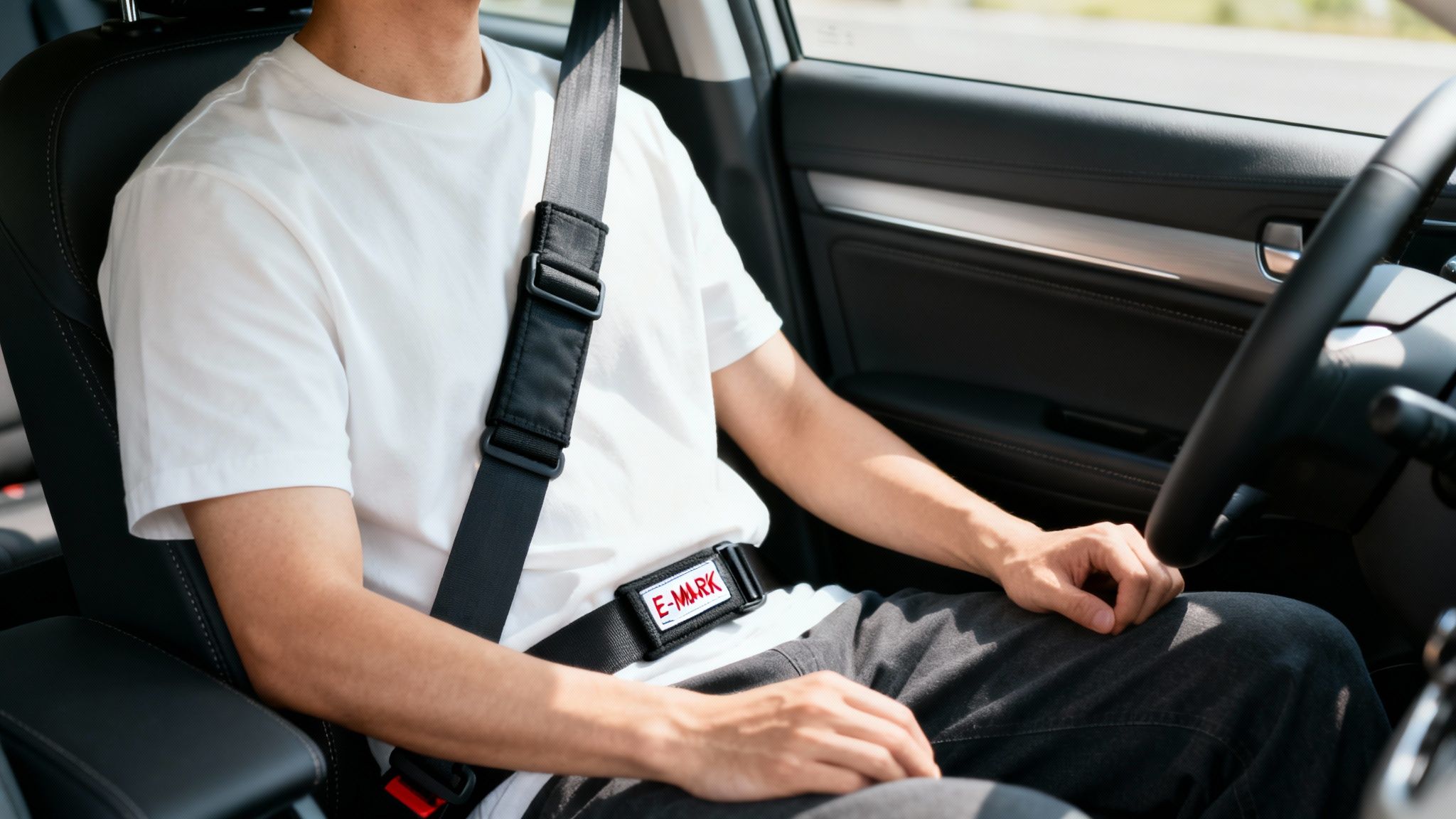
So, who are they designed for? Primarily, adults whose body size or a medical condition makes the standard seat belt too short. They're also a lifeline for people with limited mobility who physically can't reach the buckle. You might also see them used by professionals, like police officers, whose bulky equipment belts get in the way. For these folks, an extender is the only way to wear a seat belt at all.
Getting the Fit Right is Everything
Simply clicking an extender into place isn’t enough. The entire point is to mimic the vehicle’s original safety system, and that takes a bit of care.
First and foremost, the extender absolutely must be vehicle-specific. Those "universal" extenders you see all over the internet are a huge gamble. They haven't been crash-tested with your car's specific seat belt system and could easily fail in a collision. Your best bet is to get one directly from your vehicle's manufacturer or a trusted supplier who can match it precisely to your car's make, model, and year.
The perfect extender is just long enough to click the buckle, and no longer. You don't want any extra slack. A proper fit keeps the lap belt sitting low and snug across your strong hip bones and ensures the shoulder belt crosses your chest and collarbone—never your neck or stomach.
The Golden Rules of Extender Safety
If you need to use an extender, these rules are non-negotiable. They are the bright line between using this tool for its intended safety purpose and creating a dangerous situation.
- Adults Only: Never, ever use an extender with a child. This goes double for any child in a booster seat or other car seat.
- Get a Perfect Match: Only use an extender that was made specifically for your vehicle. What works in a Honda won't be safe in a Chevrolet.
- One is the Limit: Never chain multiple extenders together. Each connection point is a potential point of failure in a crash.
- Inspect It Often: Before you buckle up, give the extender a quick check for any cracks, fraying, or other signs of wear and tear. If you see any damage, it's time for a new one.
By understanding who should use an extender and how, it becomes crystal clear why it's a vital tool for some adults and a definite hazard for any child in a booster.
Your Top Questions About Boosters and Extenders, Answered
Even knowing the clear safety rules, parents still run into tricky "what-if" scenarios in the back seat. It's completely understandable. Let's walk through the most common questions to reinforce why using an extender with a booster is never the answer, and cover what you should do instead.
What if the Belt is Just an Inch Too Short?
This is a frustratingly common problem. You get the booster set up, your child hops in, and the latch plate is just shy of the buckle. It's tempting to look for a quick fix, but reaching for an extender is the wrong move.
That small gap is actually a big red flag. It's telling you there’s a fundamental incompatibility between that specific booster and that specific spot in your car. Before you do anything else, try moving the booster to a different seating position—sometimes that’s all it takes. If that doesn't solve it, the only truly safe option is to find a different booster seat that fits your vehicle correctly. Often, a narrower model does the trick.
Are There Any "Child-Safe" or "Booster-Approved" Extenders on the Market?
No. Full stop. There is no such thing as a "booster-approved" or "child-safe" seat belt extender.
This is one of the most important things to remember.
Every single major car manufacturer and child safety organization agrees: you should never, ever use an extender with a child’s car seat or booster. Any product you see marketed that way is dangerously misleading. Stick to the experts—your vehicle and booster seat manuals are your definitive guides.
My Child Can't Buckle Themself Next to Another Car Seat. Can an Extender Help?
We hear this one all the time. The kids are trying to be independent, but the buckle is buried between two seats, and it turns into a daily battle. While an extender seems like an easy solution to give them more room to work, it introduces serious risks like poor belt fit and buckle crunch. It’s a dangerous trade-off for convenience.
Thankfully, there are much safer ways to solve this. Try a simple, non-restraining device called a "buckle holder." It’s just a little piece of silicone or plastic that slips around the buckle stalk to keep it propped up and easy to access. In other cases, swapping the adjacent car seat for one with a narrower base is all it takes to free up that crucial couple of inches.
Does This Warning Apply to Backless Boosters, Too?
Yes, absolutely. The safety principles are exactly the same for all types of boosters, whether they have a high back or are backless.
A booster has one job: to position the car's seat belt perfectly over the strongest parts of your child's body—their hips and shoulder. Adding an extender throws that precise geometry completely off, creating the same life-threatening risks no matter what style of booster you're using.
At Seat Belt Extenders, our priority is safety. While our extenders are a crucial safety device for many adults, they are not designed or intended for use with any child restraint. If you're an adult who needs a safe, vehicle-specific extender, you can find the right fit for your car here.