
If you're a shorter adult, you've probably felt it: the standard car seat belt digging into your neck or slipping off your shoulder. A seat belt adjuster for short adults is a simple but vital tool that fixes this problem, guiding the shoulder strap to its proper, safe position across your collarbone.
Why Standard Seat Belts Are a Poor Fit for Short Adults

Think about trying on a suit made for someone a foot taller than you. It would hang off you, with the shoulders drooping and the waist hitting your thighs. That’s exactly what millions of shorter drivers experience every day with a piece of safety equipment designed for a so-called "average" person—a one-size-fits-all approach that fails a huge number of us.
A car's seat belt is engineered to spread the massive forces of a crash across the strongest parts of your skeleton. But when the belt doesn't fit correctly, this life-saving system can do more harm than good.
The Problem with the Shoulder Belt
For most shorter adults, the shoulder belt just doesn't land where it’s supposed to—flat across the middle of the collarbone. This usually leads to one of two dangerous situations.
First, it often slices right across the neck. This is more than just annoying; it’s a serious safety hazard. In a crash, the force on the delicate parts of your neck can cause catastrophic injuries. To get comfortable, many people will tuck the belt under their arm or even behind their back, which completely defeats the purpose of wearing it.
The other common issue is the belt slipping off the shoulder completely. When this happens, your upper body has almost no restraint, which dramatically increases the risk of your head and chest hitting the steering wheel, dashboard, or window in an accident.
The Danger of the Lap Belt
The bad fit doesn't stop with the shoulder strap. The lap belt needs to sit low and snug across your strong pelvic bones, which are built to handle the force of a collision.
Because shorter drivers often need to pull their seat forward to reach the pedals, the angle of the seat belt changes. This frequently causes the lap belt to ride up over the soft belly area instead of staying anchored on the hips.
In an accident, a lap belt riding over the stomach can crush internal organs like the liver, spleen, and intestines. This can lead to severe, life-threatening internal bleeding and damage.
This dangerous situation is sometimes known as "submarining," where your body slides under the lap belt because it wasn't positioned correctly to hold you in place.
How a Poor Fit Turns Safety into a Hazard
A seat belt’s only job is to manage the kinetic energy of a crash, but it can’t do that without proper positioning and tension. To really get the physics, it helps to understand how the belt's placement and the body's structure work together. For a deeper look at the engineering, you can learn more about proper seat belt tension and its role in occupant safety.
When a belt doesn't fit, it concentrates all that force on vulnerable spots, raising the risk of:
- Neck and Spinal Injuries: From the shoulder strap cutting into the neck.
- Internal Organ Damage: Caused by the lap belt pressing into the abdomen.
- Collarbone Fractures: When the belt sits too high and puts all the pressure on the clavicle.
- Head and Facial Trauma: Happens when your upper body isn’t held back and collides with the car's interior.
At the end of the day, a standard seat belt on a shorter person just can't do its job. It goes from being a reliable safety device to an unpredictable liability. This is exactly why a seat belt adjuster for short adults isn't just a comfort accessory—it's a critical tool for making sure you're actually safe on the road.
What Is a Seat Belt Adjuster and How Does It Work?
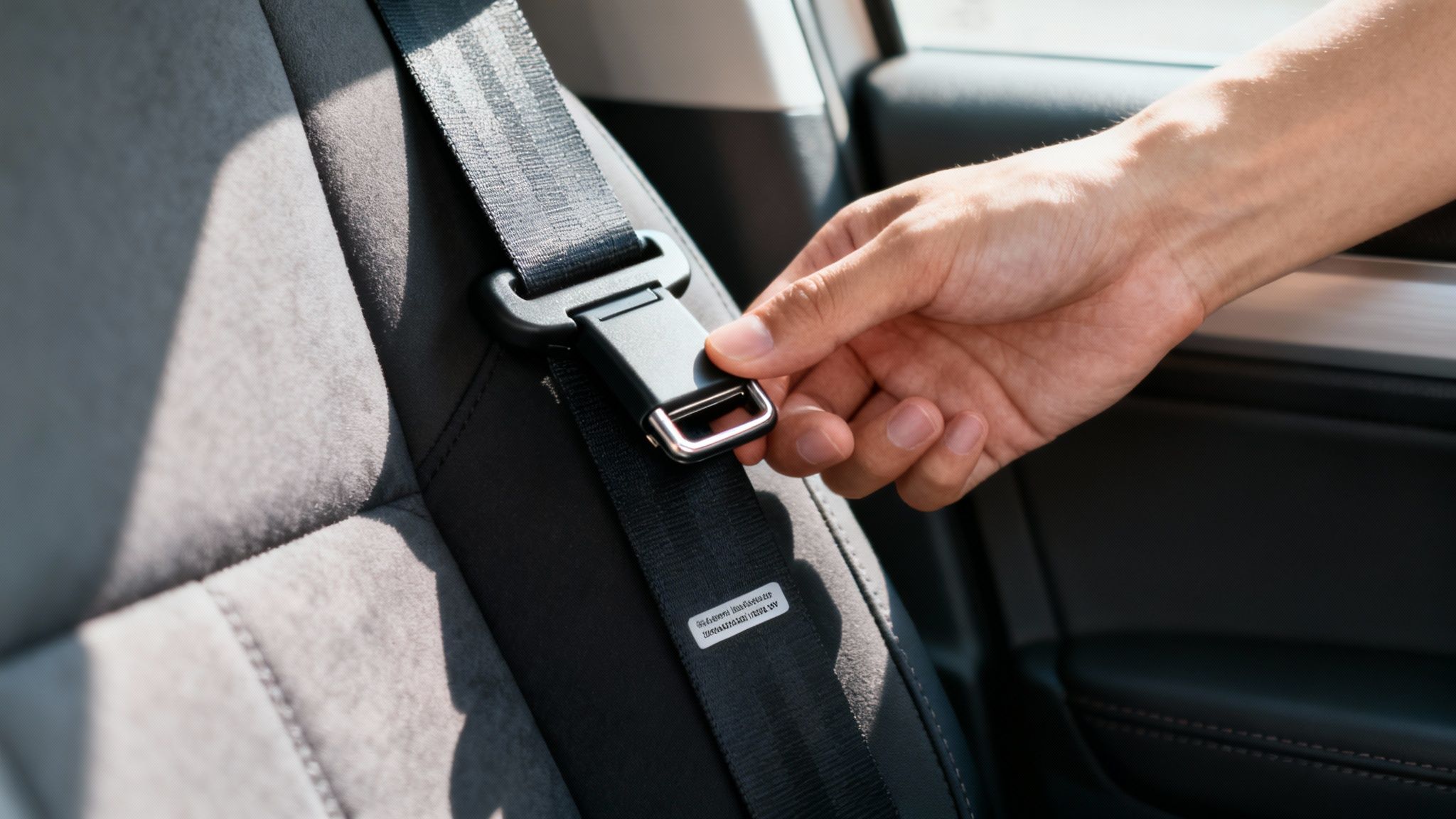
A seat belt adjuster for short adults is a simple but brilliant tool designed to fix a very common and dangerous problem: a seat belt that doesn't fit right.
Think about adjusting the straps on a backpack. If they’re too loose, the bag hangs low, feels awkward, and throws off your balance. When you tighten them, it pulls the bag into a secure, comfortable position. A seat belt adjuster does the exact same thing for the shoulder strap of your seat belt.
It’s a small device you attach to your car's seat belt that lets you reposition the shoulder portion. Instead of having the belt dig into your neck or constantly slip off your shoulder, the adjuster guides it down to a safer and more comfortable spot across your collarbone. Its entire job is to tailor the belt's fit to your body.
This small tweak makes a huge difference. It ensures the belt lays flat across the middle of your collarbone and chest—exactly where it’s designed to be to protect you in a crash.
Understanding the Mechanics
While you'll see a few different styles, most seat belt adjusters work on a very basic principle. They create a new, lower path for the shoulder belt to follow across your body. That's it. They don't mess with the belt's locking mechanism or how it connects to the car. They just change its route.
Getting familiar with the common types will help you figure out which one is right for you.
Here’s a breakdown of how the most common ones work:
- Clip-On Adjusters: These are usually made from tough plastic or metal and clip onto the lap belt. You then slide the shoulder belt through the adjuster, which pulls it down and away from your neck. Simple and effective.
- Fabric Sleeve Guides: These are often soft, padded fabric sleeves that wrap around both the lap and shoulder sections of the belt. A strong snap or velcro holds them together, which lowers the angle of the shoulder belt.
- Locking Metal Clips: For a more heavy-duty solution, some adjusters use a locking metal clip that clamps securely onto the belt webbing. This type gives you a really firm hold and stops the adjuster from shifting around while you drive.
No matter the design, the result is the same: the adjuster redirects the shoulder belt's pressure away from your vulnerable neck and onto your much stronger collarbone and sternum.
A correctly positioned seat belt is everything. Research has shown that improperly worn belts can cause severe neck, spine, and internal injuries in a crash—the exact injuries a seat belt adjuster for short adults is designed to prevent.
How Adjusters Enhance Your Safety
The real beauty of a seat belt adjuster is its simplicity. By making one small change to how the belt fits, it delivers a massive boost in safety. A properly fitted belt ensures that if you're ever in an accident, the immense forces are spread across the strongest parts of your body.
For a deeper dive into how these devices work, you can explore this comprehensive overview of seat belt adjusters for adults and the different options out there. Having this information is the first step to making a smart choice that protects you on the road.
How to Choose the Right Seat Belt Adjuster
Picking the right seat belt adjuster for short adults isn't just about comfort—it's a critical safety choice. With so many options on the market, it’s easy to feel a little lost. But if you focus on a few key areas, you can confidently find a device that gives you a safe, proper fit every single time you drive.
Think of it like buying a good pair of walking shoes. You wouldn't just grab the first box on the shelf. You'd check the fit, feel the materials, and think about where you'll be walking. The same idea applies here. Your goal is an adjuster that works well, is built to last, is simple to use, and, above all, is proven to be safe.
Prioritize Safety and Crash Testing
This is the big one. The single most important factor is proof of safety. Aftermarket car accessories aren't typically regulated by government agencies like the National Highway Traffic Safety Administration (NHTSA), so it's up to the manufacturer to prove their product is safe.
Steer clear of cheap, unbranded gadgets you might find online. Instead, look for adjusters from companies that are upfront about their independent crash testing. This testing should meet or exceed Federal Motor Vehicle Safety Standards (FMVSS). A company willing to invest in serious testing is showing you they care about your safety, and it ensures the adjuster won't break, slip, or fail when it matters most.
This focus on safety is a huge part of why the automotive seat belt height adjuster market is projected to hit $16.44 billion by 2029. Research has shown that shorter individuals can face a 15-20% greater risk of chest injuries from a poorly positioned belt, so the demand for reliable solutions is climbing. You can learn more about the trends in the automotive seat belt adjuster market.
Consider Material and Durability
The materials an adjuster is made from will tell you a lot about how long it will last and how well it will perform. The best ones are typically made from either strong metal or a tough, automotive-grade plastic.
- Metal Adjusters: These usually offer the most secure grip on the seat belt webbing. They're incredibly durable and won't crack under pressure.
- Plastic Adjusters: High-quality plastic adjusters can be just as effective. Look for ones made from high-impact polymers. They are often lighter and can feel more comfortable against your body.
- Fabric Adjusters: These are typically padded sleeves that wrap around the belt. They're comfortable, but make sure the stitching is heavy-duty and the closure (like snaps or Velcro) is industrial-strength so it won’t pop open.
A flimsy adjuster is a serious hazard. If it were to snap during a sudden stop, it would be completely useless, leaving you with a dangerous, ill-fitting seat belt. Always go for a product that feels solid and well-made.
Evaluate Ease of Use and Portability
Think about your daily routine. How and where you plan to use the adjuster should guide you to the right style.
Do you mostly drive your own car? A semi-permanent adjuster that you can "set and forget" could be the perfect solution. These types often have a more secure locking mechanism that stays put.
But if you’re constantly swapping cars, travel a lot for work, or often find yourself in rentals and rideshares, you’ll need something portable. Look for a design that’s a breeze to attach and remove, no tools required. A simple clip-on style is often the best bet for people on the move.
Key Takeaway: The best adjuster is one that fits your life. It needs to balance rock-solid safety with how you'll actually use it. A daily commuter's needs are different from a frequent flyer's, so find the product that matches your lifestyle.
Comparison of Seat Belt Adjuster Types
To help you narrow it down, here’s a quick look at the most common types of adjusters. This table breaks down what each is best for, how they install, and their main pros and cons.
| Adjuster Type | Best For | Installation | Pros | Cons |
|---|---|---|---|---|
| Metal Locking Clip | Daily commuters in a primary vehicle; provides the most secure, semi-permanent fit. | One-time setup; threads onto the lap belt and locks the shoulder belt in place. | Extremely secure grip; durable metal construction; "set and forget" convenience. | Not easily portable; initial installation can take a few minutes. |
| Plastic Clip-On | Frequent travelers, rideshare users, and people who switch cars often. | Clips directly onto the shoulder belt in seconds. | Highly portable and lightweight; very quick to install and remove. | May slip on some types of webbing; plastic may be less durable than metal. |
| Padded Fabric Sleeve | Those prioritizing comfort, especially for kids or adults with sensitive skin. | Wraps around the shoulder belt and secures with snaps or Velcro. | Adds a layer of soft padding; simple to attach and adjust. | Can be bulky; relies on the strength of the closure, which may weaken over time. |
Ultimately, the best choice aligns your personal needs with proven safety features. Whether you need the ironclad security of a metal clip or the grab-and-go convenience of a plastic one, there's a solution that will make every drive safer and more comfortable.
The Critical Difference Between Adjusters and Extenders
When you're trying to get a safer, more comfortable ride, it’s all too easy to mix up two very different products: seat belt adjusters and seat belt extenders. But this isn't just a simple mix-up. Grabbing the wrong one is a critical safety mistake that could have very real consequences, especially if you're a shorter driver.
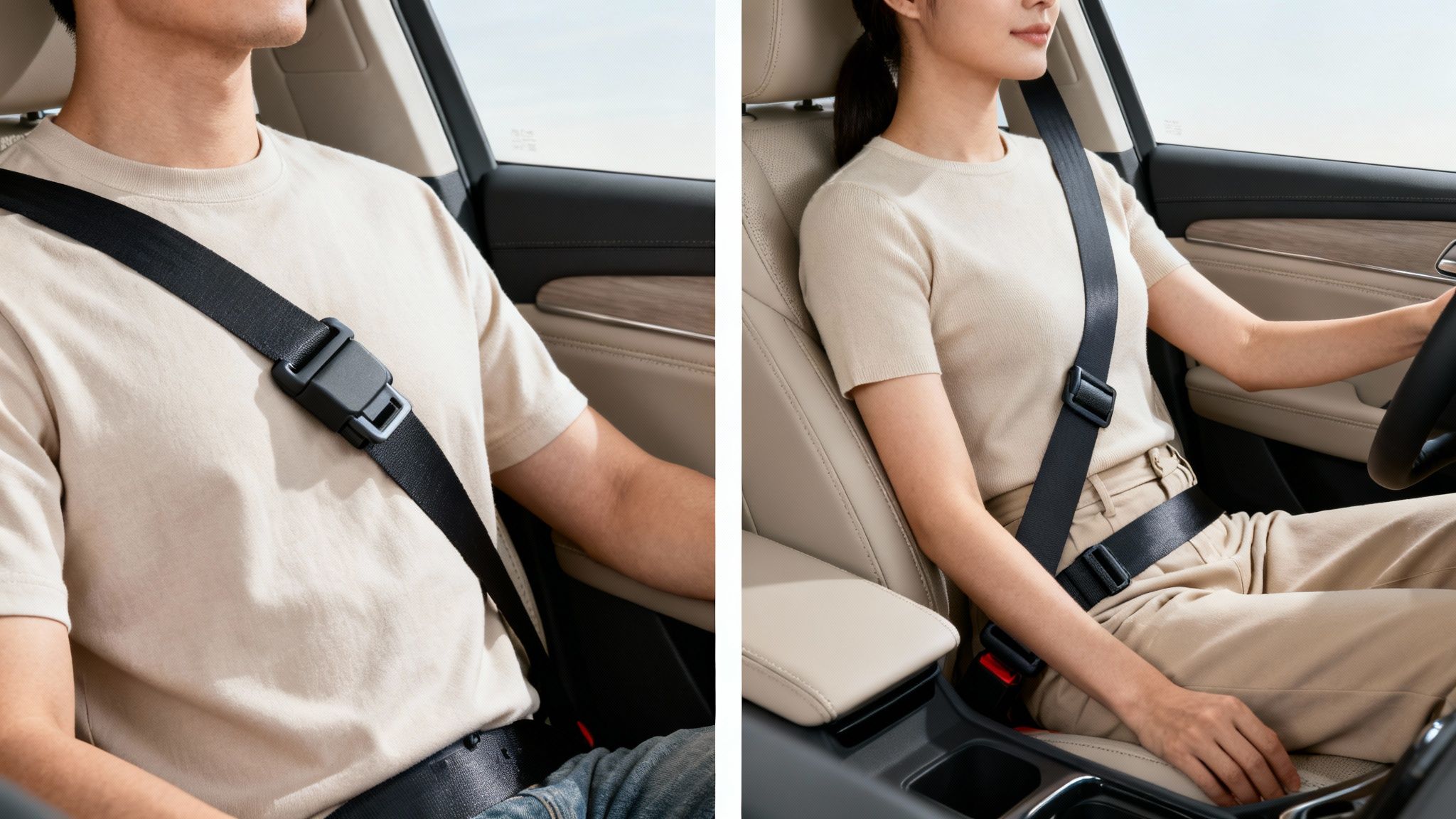
To stay safe, you have to understand what each one is designed to do. Think of it like tailoring a suit. A seat belt adjuster for short adults is like having the sleeves shortened—it changes the fit so it sits perfectly on your frame. A seat belt extender, on the other hand, is like adding a new panel of fabric to the jacket to make it bigger—it changes the size by adding length.
These two devices solve completely different problems. They are not interchangeable.
What an Adjuster Corrects
A seat belt adjuster is all about positioning. Its one and only job is to guide the shoulder belt so it rests safely across the middle of your collarbone, keeping it far away from your neck. This is the perfect fix for a belt that’s angled too high—a common frustration for shorter adults whose shoulders don't reach the car's built-in anchor point.
An adjuster is designed to:
- Reposition the shoulder belt to a lower, safer angle.
- Prevent the belt from cutting into your neck or rubbing uncomfortably.
- Ensure the belt engages with the strongest parts of your skeleton in a crash.
Getting the fit right is a huge deal. The global market for these devices is projected to double to $3.2 billion by 2034, and for good reason. Data shows that improper belt positioning increases the risk of head and chest injuries by 25-35% for the 40% of female drivers who are shorter than average. You can read more about the trends in the seat belt adjuster market.
What an Extender Provides
A seat belt extender, as the name suggests, is a lengthening tool. It’s for people who can't get the seat belt to buckle in the first place. This could be someone with a larger body type, a person with mobility issues, or even a parent trying to install a bulky car seat.
An extender adds inches to the seat belt's total length so the buckle can connect. It does not change the angle or position of the shoulder strap.
Using an extender when what you really need is an adjuster can make a bad fit even worse. It can create dangerous slack in the belt and cause the lap portion to ride up over your soft abdomen instead of staying low on your hips—a situation you absolutely must avoid. For a great breakdown of when to use these, check out this guide on the different types of seat belt extenders.
It all comes down to choosing the right tool for the job. If your problem is poor positioning and a belt that's digging into your neck, an adjuster is the only safe solution. If the belt is simply too short to buckle, then an extender is what you need.
Proper Installation for Maximum Safety and Comfort
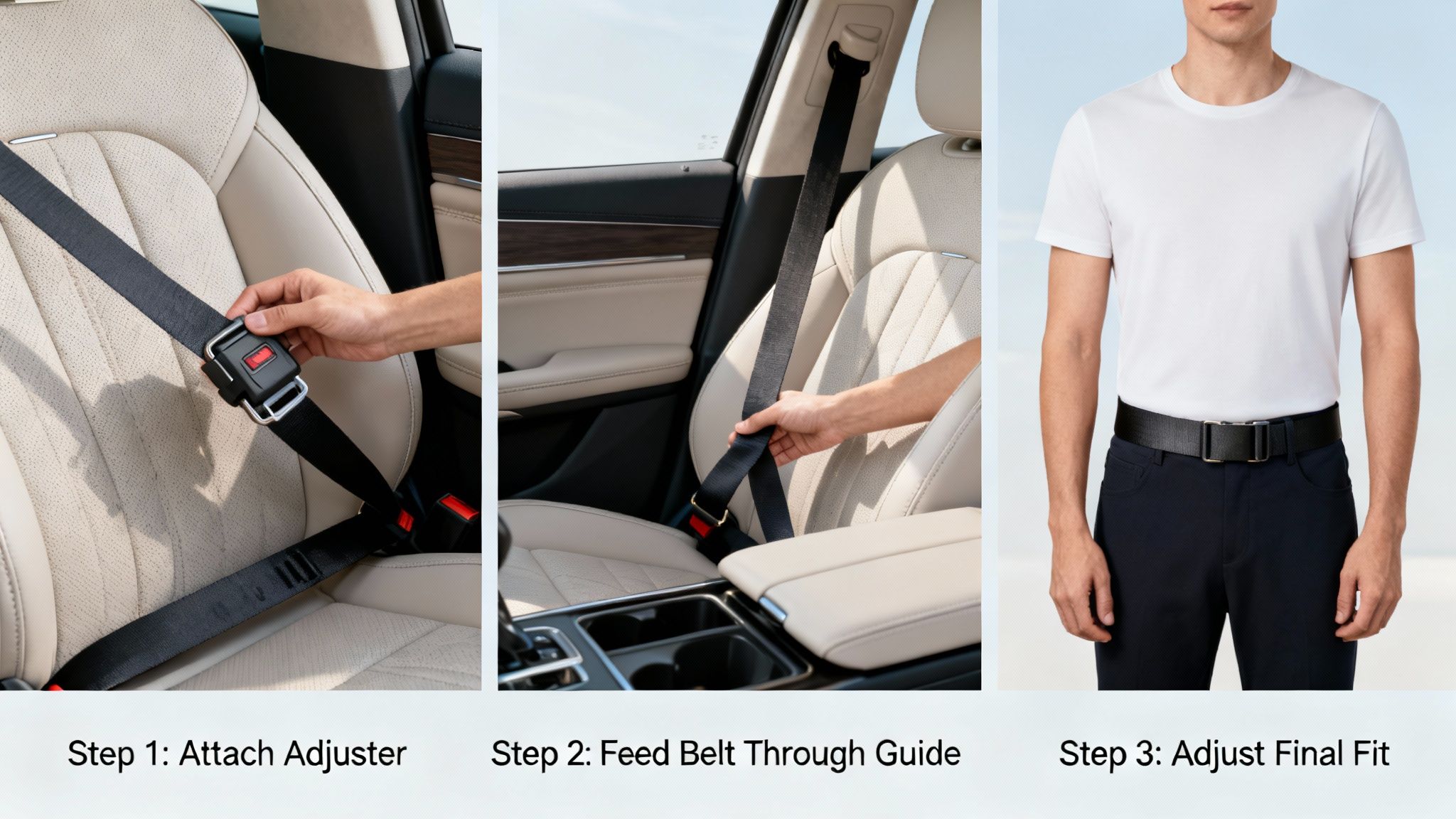
Having the right tool is only half the battle—knowing how to use it correctly is what truly makes the difference. A seat belt adjuster for short adults is a fantastic safety device, but its effectiveness hinges entirely on getting the installation right. A correctly fitted adjuster ensures the seat belt can do its job exactly as engineers designed it to during a sudden stop or collision.
Think of it like this: an improperly installed adjuster is like a perfectly good safety net just lying on the ground instead of being stretched taut. The potential for protection is there, but it’s not in the right position to help. Let's walk through the simple steps to get a perfect, secure fit every single time, so you can drive with confidence.
A Simple Guide to Installation
While the specific instructions might vary a little from one model to the next, the basic process for most adjusters is incredibly straightforward. The goal is always the same: to guide the shoulder belt away from your neck and securely over your collarbone.
Here’s a general rundown of how it works:
-
Attach the Adjuster to the Lap Belt: First things first, sit down and buckle up like you normally would. Now, take the adjuster and clip it onto the lap portion of the belt, keeping it close to the buckle. Most models just snap securely right over the webbing.
-
Guide the Shoulder Belt Through: Next, take the diagonal shoulder strap and thread it through the designated slot or clip on your adjuster. This is the key step that pulls the belt down into a safer position.
-
Adjust for the Perfect Fit: Finally, slide the adjuster along the lap belt until the shoulder strap rests comfortably across the middle of your collarbone, nowhere near your neck. The belt should lie flat against your chest with no twists or slack.
For a closer look at different models, you can find great information about various types of seat belt adjuster clips and how each one functions.
What the Perfect Fit Looks and Feels Like
So, how do you know you’ve nailed it? A correctly positioned seat belt feels secure without being uncomfortable. Once your adjuster is on, do a quick check to make sure everything is just right.
Here’s your checklist for a perfect fit:
- Shoulder Belt Position: The belt should cross the middle of your collarbone (clavicle) and run diagonally over your sternum. It absolutely should not be touching or rubbing against your neck.
- Lap Belt Position: The lap belt needs to stay low and snug across your strong pelvic bones—your hips. It should never creep up over your soft stomach area.
- No Twists or Bunches: Run your hand along the belt to make sure the webbing is completely flat and untwisted. A bunched-up belt can concentrate crash forces dangerously.
- Snug But Comfortable: The adjuster should hold the belt firmly in place, but it shouldn't introduce a bunch of slack. You want to feel secure, not uncomfortably pinned to your seat.
A correctly fitted seat belt is your first line of defense. Improperly worn belts are a leading factor in serious neck, spinal, and internal injuries during collisions, turning a safety device into a potential hazard.
Red Flag Checklist: Things to Avoid
Knowing what not to do is just as important as knowing what to do. A poorly installed adjuster can accidentally create new safety risks. Keep an eye out for these common mistakes to ensure your seat belt adjuster for short adults is helping, not hurting.
Avoid these red flags:
- A Loose or Sliding Adjuster: If the adjuster can slide around freely on the belt, it’s not going to hold the shoulder strap where it needs to be. It has to be secure enough to stay put.
- Creating Belt Slack: The whole point is to reposition the belt, not loosen it. Give the shoulder belt a sharp tug to make sure the locking mechanism still engages instantly.
- Placing the Adjuster Too High: The adjuster belongs on the lap belt, where it can pull the shoulder strap down. Attaching it high on your chest can interfere with how the belt works.
- Using a Damaged Device: Never, ever use an adjuster that’s cracked, frayed, or shows any signs of wear and tear. Its integrity could be compromised, meaning it could fail when you need it most.
Other Safety Solutions for Shorter Drivers
A good seat belt adjuster for short adults can be a real game-changer, but it’s only one piece of the safety puzzle. To create a truly safe driving setup, you need to look at the big picture of how you, as a shorter person, fit inside your vehicle. The end goal is to get you in the best possible position for visibility, control, and protection.
Before you even think about the belt, think about your seat. Can you see clearly over the dashboard without craning your neck? Can your feet comfortably press the pedals all the way to the floor without you having to scoot to the edge of your seat? Nailing this basic positioning is the foundation of safe driving, especially when you're not average height.
Complementary Tools for a Better Fit
Sometimes, the car’s built-in adjustments just don't cut it. That's where a few smart aftermarket tools can make a world of difference, working alongside your seat belt adjuster to get you into that perfect driving posture.
-
Pedal Extenders: If you're sliding your seat forward just to reach the gas and brake, you’re likely sitting too close to the steering wheel's airbag. Pedal extenders are a fantastic solution. They securely clamp onto your car's pedals, bringing them closer to you so you can sit back at a safer distance.
-
Ergonomic Seat Cushions: The right car cushion can give you that extra bit of height you need. I'm not talking about a fluffy pillow from your couch, though. A proper ergonomic cushion is firm and stable, boosting your eye level without collapsing. This prevents you from sliding forward and under the lap belt in a crash—a dangerous situation known as "submarining."
Built-In Features to Look For
If you’re shopping for a new car, keep an eye out for models that are already built with smaller drivers in mind. These factory-installed features are often the cleanest and most effective solution.
The global market for automotive seat belt height adjusters was valued at $1,286.9 million and is on the rise, which tells you the industry is finally paying more attention. Standard belts were often designed for a 5'9" man, which simply doesn't work for a huge portion of the population.
Pro Tip: When you test-drive a car, don't just take it for a spin. Spend a few minutes playing with all the adjustments. Can you get the seat, steering wheel, and pedals into a comfortable and safe spot without needing any extra gadgets? Prioritize cars that can.
Here are the key features to look for:
- Height-Adjustable Shoulder Belts: This is the most critical built-in feature. It's usually a little slider on the pillar right next to your shoulder that lets you move the belt's anchor point up or down.
- Adjustable Pedals: Once a luxury option, this is becoming more common. A button lets you move the entire pedal box closer to you or further away—it's a fantastic feature for getting your seating distance just right.
Beyond the big adjustments, don't forget the little things that contribute to a safer drive. Simple accessories like magnetic car mounts for hands-free navigation help keep your focus on the road. It's also vital to make sure every part of your seat belt system is in working order, right down to the little button that stops the buckle from sliding down the strap. We cover why those tiny parts matter in our guide on seat belt stop clips.
Got Questions About Seat Belt Adjusters? We've Got Answers.
It's completely normal to have questions before adding any new device to your car, especially one related to safety. A seat belt adjuster for short adults is a simple concept, but you’re right to wonder about things like safety, legality, and how it works with your car's existing features.
Getting straight answers is key to feeling confident behind the wheel. Let's tackle the most common questions we hear from drivers every day.
Are Aftermarket Seat Belt Adjusters Legal and Safe?
This is usually the first question on everyone's mind, and for good reason. The short answer on legality is: it depends, but generally, yes. Most regions permit adjusters because they don't actually modify the seat belt's core safety mechanism. They just reroute the shoulder strap for a better fit.
But safety is the real bottom line. The National Highway Traffic Safety Administration (NHTSA) doesn't individually certify aftermarket products like these, so the responsibility for proving safety falls squarely on the manufacturer. This is why you must only buy from reputable brands that can show you proof of independent crash testing that meets Federal Motor Vehicle Safety Standards (FMVSS).
A properly engineered adjuster guides the belt without damaging it or introducing dangerous slack. Steer clear of cheap, no-name knockoffs that come with zero safety data—they simply aren't worth the risk.
Will an Adjuster Mess with My Airbags or Pretensioners?
When designed and installed correctly, no, it shouldn't. An adjuster’s only job is to direct the shoulder belt so it rests safely on your collarbone, not your neck. It doesn't connect to the pretensioners (the system that yanks the belt tight in a crash) or interfere with the buckle's locking mechanism.
That said, if you install an adjuster incorrectly and it creates slack in the belt, it could disrupt the precise timing of your body’s interaction with the airbag in a collision. This is exactly why following the installation instructions to the letter is so incredibly important.
Crucial Insight: It all comes down to a snug fit. A high-quality, crash-tested adjuster maintains proper belt tension, allowing it to work in perfect harmony with your car’s built-in safety features.
My Car Already Has a Height Adjuster. Why Would I Need This?
It’s great that so many modern cars come with a built-in height adjuster on the side pillar! It's a fantastic feature that helps a lot of people. But the reality is, they don't always offer enough range for everyone.
For many shorter adults, even with the factory adjuster set to its lowest position, the belt still cuts uncomfortably across their neck. Think of an aftermarket seat belt adjuster for short adults as the final piece of the puzzle. It provides that extra bit of fine-tuning that the car's own system just can't offer, giving you that truly perfect, safe fit.
Can I Use a Seat Belt Adjuster for My Child?
Absolutely not. You should never, ever use a seat belt adjuster designed for an adult on a child. These devices are engineered for the specific anatomy of adults and some older teens who are big enough to be out of a booster but still too small for the adult belt.
Children's bodies are different, and they need the specialized, rigorously tested protection that only a federally-approved child safety seat can provide. Using an adult adjuster on a child is extremely dangerous because it completely bypasses the safety systems of a proper car seat or booster. Always follow the car seat manufacturer's height and weight rules without exception.
At Seat Belt Extenders, your safety is our mission. While adjusters solve positioning problems, we specialize in providing the extra length you need for a secure and comfortable fit. If you find your seat belt is too short to buckle, explore our E-4/E-8 certified extenders tailored to your specific vehicle. Find your perfect fit at https://seatbeltextenders.com.