
A seat belt adjuster is a deceptively simple device with a critical job: it helps your car's shoulder strap fit you correctly. Instead of letting the belt saw into your neck or slide off your shoulder, an adjuster gently repositions it to lie flat and secure across your collarbone.
Why a Comfortable Seat Belt Is a Safer Seat Belt

We’ve all been there. That constant, nagging feeling of a seat belt digging into your neck isn't just irritating—it's a dangerous distraction. When a shoulder strap fits that poorly, the temptation to tuck it under your arm or behind your back is huge. But doing that completely negates the belt's ability to protect you in an accident.
A seat belt is designed to distribute the massive forces of a crash across the strongest parts of your skeleton, specifically your pelvis and collarbone. If the belt is cutting across your neck or riding up on your stomach, it simply can't do its job. This is exactly where a seat belt adjuster for adults proves its worth as an essential safety tool.
Common Fit Issues and Adjuster Solutions
Many adults struggle with poor seat belt fit for reasons that have little to do with their car and everything to do with their unique body shape. Below is a quick look at some frequent problems and how an adjuster can fix them.
| Problem | Risk | How an Adjuster Helps |
|---|---|---|
| Belt cuts into the neck | Distraction, potential for neck/throat injury in a crash, temptation to misuse the belt. | Gently pulls the shoulder strap down so it rests securely on the collarbone. |
| Belt slides off the shoulder | The upper body is not restrained, increasing the risk of hitting the steering wheel, dashboard, or window. | Keeps the belt centered on the shoulder, ensuring it stays in the optimal safety position. |
| Lap belt rides up on the stomach | Can cause severe internal organ damage in a collision. Especially risky during pregnancy. | By correcting the shoulder belt's angle, it helps the entire system sit better, keeping the lap portion low on the hips. |
These simple clips make a world of difference, turning an uncomfortable, and therefore unsafe, seat belt into one you can wear correctly and confidently on every drive.
A correctly worn seat belt is one of the most effective safety devices ever invented. The goal is to make sure it can do its job without causing constant irritation that might tempt you to disable it.
The Clear Link Between Comfort and Correct Use
It’s a straightforward connection: if your seat belt is comfortable, you're far more likely to wear it correctly every single time you get in the car. It becomes second nature.
Study after study confirms just how vital this is. Properly worn seat belts can reduce the risk of death for front-seat passengers by 45% and slash the risk of serious injury by 50%. An adjuster eliminates the fidgeting and discomfort that leads to bad habits, ensuring the belt is always positioned to protect you as intended.
You can also learn more about why proper seat belt tension is so crucial in our detailed guide.
How to Choose the Right Seat Belt Adjuster
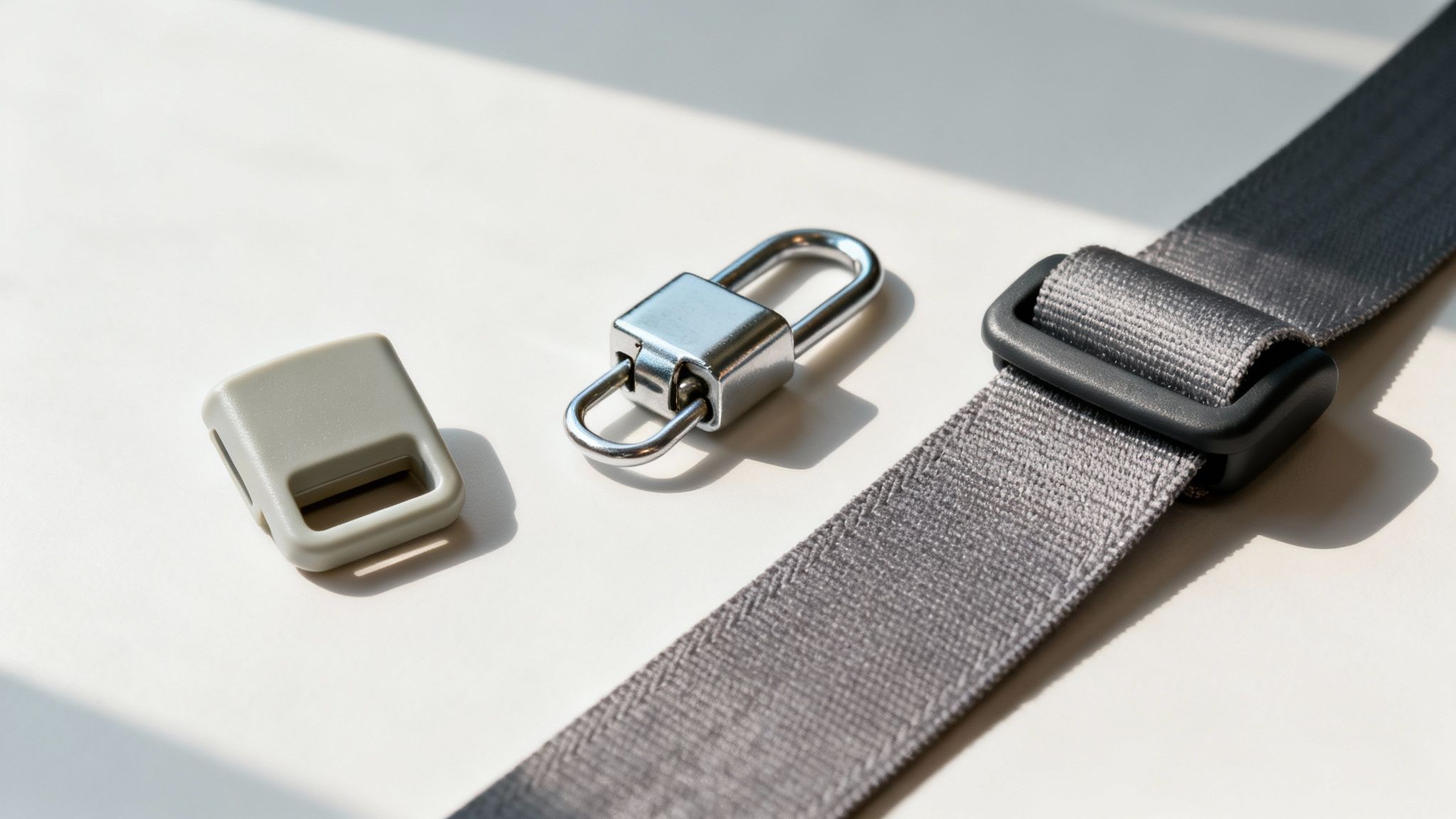
Choosing the right seat belt adjuster for adults is far more than a simple comfort upgrade—it's a critical safety decision. The market is full of options, but they aren't all created equal. They generally fall into a few categories, and knowing the difference is the key to finding one that works safely and effectively.
You’ll commonly see simple clip-on models. These are usually small plastic or metal clips that you slide onto the seat belt, letting you reposition the shoulder strap away from your neck. They're straightforward, but the quality can be all over the map.
Locking clamps provide a much firmer grip. These devices clamp down on the belt's webbing, so once you set the position, it stays put. Then there are fabric positioners, which are often padded sleeves that wrap around the belt to guide the shoulder strap into a more comfortable and effective spot.
Material and Durability
The material an adjuster is made of is non-negotiable. I've seen cheap, flimsy plastic ones that would absolutely shatter in a collision, making them completely useless when it matters most.
You want to look for adjusters made from one of two things:
- Durable ABS plastic: This stuff is tough and built to withstand impact.
- Smooth, coated metal: Metal is incredibly strong, but you have to make sure it has no sharp edges. The last thing you want is an adjuster that slowly saws away at your seat belt webbing.
This isn't just a niche product; it's part of a massive industry. The market for automotive seat belt height adjusters was valued at $1.29 billion back in 2021 and continues to grow. It’s a serious part of vehicle safety.
Safety Testing and User Feedback
Here’s the tricky part: most of these adjusters are aftermarket products. That means they don't have to meet the same strict federal safety standards as the seat belts that came with your car. This puts the responsibility on you to do your homework.
Look for brands that mention safety or stress testing. While official certifications for adjusters are uncommon, a manufacturer that has actually put their product through its paces is a much better bet. Be wary of any device that causes the belt to bunch up or create slack, as that could compromise the entire safety system. If you're curious about how other small components work, our guide on seat belt stop clips offers some great insights.
Prioritize function over aesthetics, every single time. The best adjuster is one that holds the belt securely, is made of tough materials, and doesn't mess with the belt’s ability to retract.
Finally, lean on the experience of others. Before you buy, spend some time reading through trusted auto parts reviews. Real-world feedback is where you'll find out about durability problems or design quirks that you’d never see in a product description. It’s the best way to make a choice you can feel confident about.
Installing Your Adjuster for Maximum Safety

So, you've picked out a quality adjuster. Now comes the most important part: setting it up correctly. This isn't just about getting comfortable. A poorly installed device can be just as dangerous as not using one, because it can interfere with how your seat belt is designed to work.
The whole point is to achieve a safe, secure fit that complements your car's safety system, not compromises it.
Thankfully, most adjusters are designed to be user-friendly. You won't need any tools, and installation usually just takes a minute. But where you place it is everything—that’s the detail that makes all the difference.
Proper Positioning for Clip-On Adjusters
Clip-on models are the most common type of seat belt adjuster for adults. The concept is simple: they gather the lap and shoulder straps together, letting you slide the clip to pull the shoulder strap down and away from your neck.
Your goal is to get that shoulder belt lying flat right across the middle of your collarbone. It shouldn't be digging into your neck or threatening to slide off your shoulder.
Here's how I always tell people to find that perfect spot:
- Start low. Clip the adjuster onto the belt down near the buckle, where the lap and shoulder sections meet.
- Slide it up. While you're sitting normally, slide the clip up along the belt. You'll notice the shoulder strap moving down and inward, off your neck.
- Find your balance. Stop sliding when the belt rests snugly over your collarbone. It should feel secure, but not uncomfortably tight.
If you want to get into the weeds on how these clips function, you can learn more about the nuances of seat belt adjuster clips.
Remember, the ideal position creates a straight, diagonal line across your torso. The adjuster's job is to stop the neck irritation without creating any slack in the belt. Slack is the enemy of seat belt safety.
Securing Locking Clamps and Positioners
Locking clamps and fabric positioners are a bit different because they offer a more fixed solution. Instead of sliding, these devices clamp onto the shoulder strap or wrap around it to lock it into a better position.
For a locking clamp, you'll open it up, position it on the shoulder strap at the right height (again, aiming for the collarbone), and snap it shut. Make sure it has a solid grip on the webbing, but check that it isn't pinching or damaging the belt fabric.
Fabric sleeves are even easier. Just wrap the sleeve around the shoulder belt, and its placement will guide the strap where it needs to go.
The All-Important Testing Phase
Getting the adjuster installed is only half the job. You have to be sure it will hold its ground when you need it most and that it doesn't mess with the belt's basic functions. A couple of quick checks will give you that crucial peace of mind.
The Tug Test This is a simple way to mimic the force of a sudden stop. Grab the shoulder strap just above the adjuster and give it a sharp, hard pull. A properly secured adjuster won't budge. If it slips down the belt, you need to either readjust it for a tighter fit or consider a different, more secure model.
The Retraction Check After you've done the tug test, unbuckle the seat belt and let it go. Watch it retract back into the wall of the car. The adjuster shouldn't snag, catch, or slow it down in any way. A belt that doesn't retract properly is a serious safety hazard, so this check is non-negotiable.
Navigating Safety and Legal Considerations
When you add an aftermarket accessory like a seat belt adjuster for adults, it’s smart to think about the rules of the road. It's perfectly normal to wonder about the legal side of things, especially since these devices fall into a different category than the original equipment that came with your car.
The main thing to remember is that any add-on can't mess with how your seat belt was designed to work. The systems installed at the factory go through a mountain of rigorous testing to meet strict Federal Motor Vehicle Safety Standards (FMVSS). While aftermarket adjusters aren't held to those exact same government certification standards, a reputable manufacturer will always do its own serious testing to make sure its product holds up under pressure.
Understanding Aftermarket Product Regulations
Legality often comes down to one simple question: does the device compromise the original safety system? A properly designed adjuster just repositions the belt for a better fit; it doesn't change the fundamental mechanics of the buckle or the retractor. That's a critical distinction.
On the other hand, a poorly made or incorrectly installed adjuster could absolutely create a new safety risk. This is precisely why it's so important to stick with reputable brands that are transparent about their materials and safety testing. For a deeper dive, you can explore detailed articles that ask if seat belt extenders and similar accessories are legal to get more clarity.
It also helps to have a basic grasp of concepts like product liability law, which can come into play if a product's design or quality is questioned after an accident.
Potential Insurance Implications
Your auto insurance is another piece of the puzzle. If you're ever in an accident, the insurance company will investigate every single factor involved, and that includes any modifications you've made to your vehicle.
If an aftermarket part is found to have failed or contributed to an injury, it could complicate your insurance claim. This is the single best reason to avoid cheap, untested adjusters and invest in a quality device.
The best way to protect yourself is to be a savvy consumer.
- Choose Wisely: Only buy adjusters from established companies that can show you proof of their safety testing.
- Install Correctly: Follow the manufacturer's instructions to the letter. No shortcuts. A proper installation is key to its performance.
- Inspect Regularly: Give your adjuster a quick check every now and then. Look for any signs of wear, cracks, or damage, and replace it immediately if you spot a problem.
Taking these simple, responsible steps helps ensure your seat belt adjuster does what it’s supposed to do—make you safer—without opening you up to legal headaches or financial risk. A little focus on quality upfront gives you peace of mind for every single drive.
Keeping Your Adjuster in Top Shape for the Long Haul
 Just like any other piece of safety gear in your car, a seat belt adjuster for adults isn't something you can just set and forget. To make sure it’s always ready to do its job, a little bit of routine care is all you need. Think of it as preventative maintenance that ensures the device stays effective and doesn't become a weak link.
The simplest thing you can do is keep it clean. Over time, spilled coffee, dust, and everyday grime can build up and potentially interfere with how well the adjuster grips or even cause the materials to break down. A quick wipe-down now and then is usually all it takes.
Simple Cleaning Techniques
You don’t need any harsh or specialized chemicals to clean your adjuster—in fact, those can do more harm than good by weakening plastic or damaging fabric. The best approach depends on what your adjuster is made of.
- Plastic Adjusters: Grab a soft cloth and dampen it with a simple solution of mild soap and water. Gently wipe away any dirt and make sure to dry it completely with a clean cloth afterward.
- Metal Adjusters: For these, a dry microfiber cloth is usually enough to handle dust and smudges. If it needs a bit more work, a slightly damp cloth will do the job, but it's crucial to dry it thoroughly to prevent rust.
- Fabric Positioners: You can treat these just like your car’s seat belt webbing. A gentle fabric cleaner or the same mild soap and water mix works well. Just be careful not to soak the material.
If you’re looking for extra comfort, you might also be using padded seat belt covers, which have the added benefit of being easy to take off and wash separately.
Your Monthly 30-Second Safety Check
Beyond cleaning, setting aside just a few seconds once a month for a quick inspection is the best way to catch small issues before they become big problems. It's a tiny time investment for a huge return in safety.
A safety device is only as strong as its weakest point. Regular inspection ensures that your adjuster's integrity is never compromised by hidden wear and tear.
Run through this quick checklist every month:
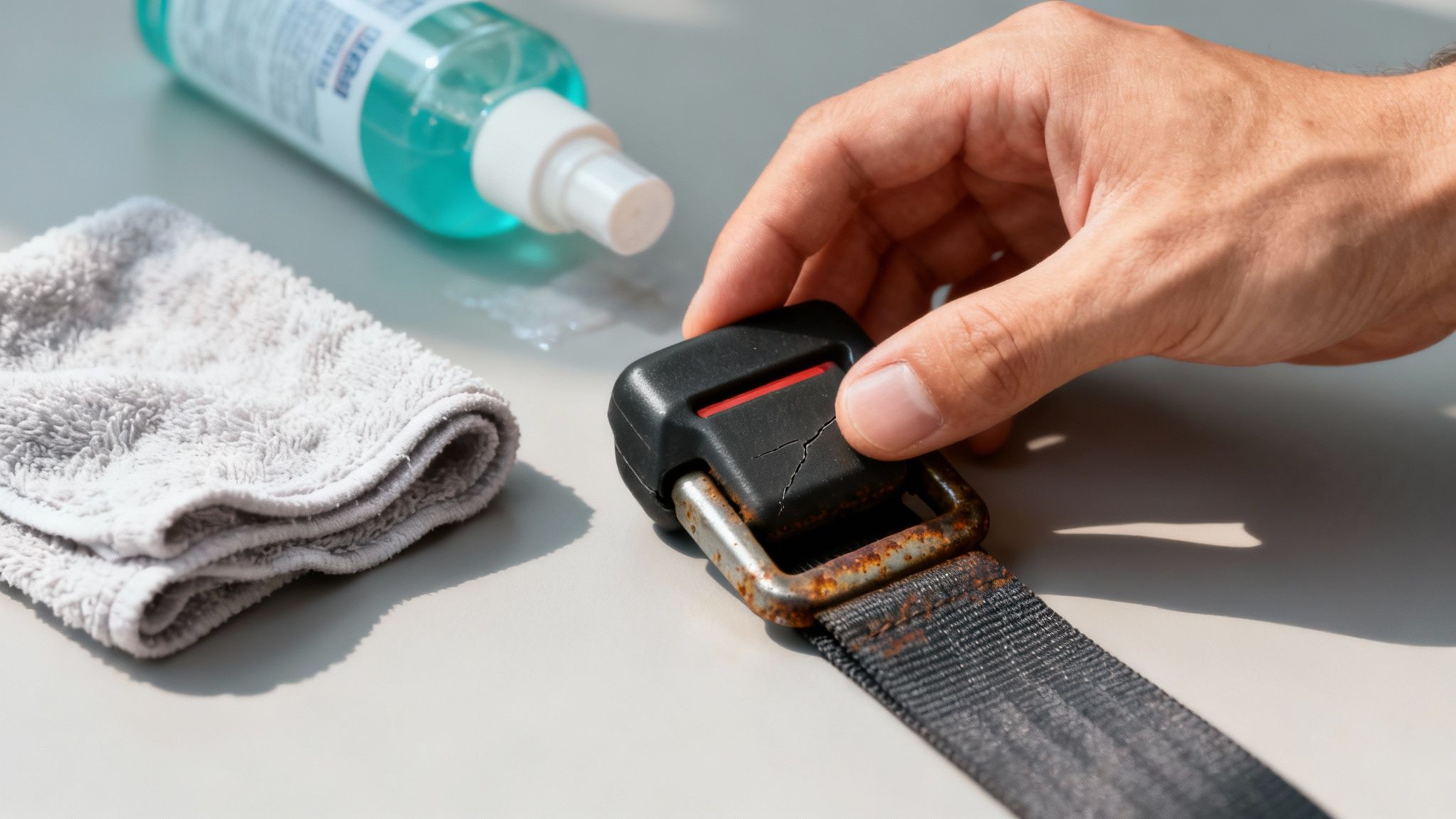
- Look for Cracks: Carefully check any plastic components for hairline fractures or stress marks. Even a tiny crack can seriously weaken the adjuster's ability to hold up in an impact.
- Check for Fraying: Run your fingers along the adjuster's edges to make sure they're smooth and not starting to fray or wear down your actual seat belt.
- Test the Grip: If your adjuster has a locking clamp or clip, open and close it a few times. Does the mechanism still feel tight and secure? A loose clip is a major red flag.
- Inspect Metal Parts: Give any metal pieces a close look for signs of rust or corrosion. This can weaken the structure and even stain your seat belt.
If you spot any of these problems, don't hesitate—replace the adjuster right away. Making this quick check a monthly habit gives you peace of mind that your adjuster is always ready to protect you.
Still Have Questions? Let's Clear Things Up
Choosing a device that works with your car's seat belt system is a big deal, so it's completely normal to have some questions. We get it. You want to be sure you're making the right—and safest—choice. Let's tackle some of the most common questions we hear.
Think of this as the final check-in to make sure you're feeling confident and secure with your decision.
Are These Adjusters Even Legal?
This is a fantastic question, and the answer isn't a simple yes or no. The legality of add-on seat belt adjusters can be a bit of a gray area. While the height adjusters built into your car are fully regulated, aftermarket devices are a different story.
Generally, if an adjuster just repositions the belt without creating slack or weakening the webbing, it's considered acceptable in most places. The key is to stick with reputable brands that have actually done their homework with safety testing. Be wary of uncertified, no-name products, as using one could complicate an insurance claim if it's found to have made an injury worse in a crash. It's always a good idea to check your local vehicle regulations, too.
Can I Use One of These for My Kid?
Let me be crystal clear on this one: absolutely not. A seat belt adjuster made for an adult should never, ever be used for a child. Their bodies are completely different from ours, with different proportions and bone structures that need specialized support.
There's a reason child passenger safety laws are so strict—they require car seats or booster seats designed and crash-tested for a child's specific age, weight, and height. Putting an adult adjuster on a child could place the seat belt in a life-threatening position over their neck or abdomen. Please always follow the official guidelines from safety authorities like the National Highway Traffic Safety Administration (NHTSA).
An adult adjuster simply shifts a belt made for a grown-up's frame. It can't offer the critical protection a growing child gets from a properly installed car seat or booster.
How Do I Know I've Got It On Right?
Getting the position just right is what makes an adjuster work safely. Your goal is simple: the shoulder belt should lie flat across the middle of your collarbone—smack dab between your neck and shoulder. It shouldn't be digging into your neck, nor should it be so far out that it could slip off.
At the same time, the lap belt needs to stay put. It should be snug and low across your strong hip bones or upper thighs, never creeping up onto your soft belly.
Once you have it installed, do a quick "tug test." Grab the shoulder belt and give it a sharp pull. The adjuster shouldn't slide or move. The belt needs to feel secure, with no slack, and it must still retract smoothly when you're done.
Will This Thing Wreck My Seat Belt?
A well-designed adjuster shouldn't cause any harm. The good ones are made with smooth, rounded edges and materials like tough ABS plastic or coated metal specifically to avoid damaging your seat belt's webbing.
What you want to steer clear of are adjusters with sharp plastic edges or flimsy clips that could pinch, snag, or fray the fabric over time. It's a smart habit to occasionally check the part of the belt that's in contact with the adjuster. If you see any signs of wear, thinning, or fraying, stop using the adjuster right away and get your seat belt checked out. Safety first, always.
Finding the right solution ensures every drive is a safe one. At Seat Belt Extenders, we offer E-4/E-8 certified extenders matched to your specific vehicle for a secure, factory-grade fit. Find your perfect match today.