
Ever buckled your seatbelt on a flight and found it surprisingly short? Or maybe a little too generous? You're not alone. While we often think of airplane equipment as standardized, seatbelt length can vary quite a bit.
Generally, you can expect a standard airplane seatbelt length to be somewhere between 31 and 51 inches (that’s about 78 to 129 cm). But there's no single, universal rule. The exact length you get depends on the airline you're flying, the age and model of the plane, and even where you're sitting.
The Real Story on Standard Airplane Seatbelt Length
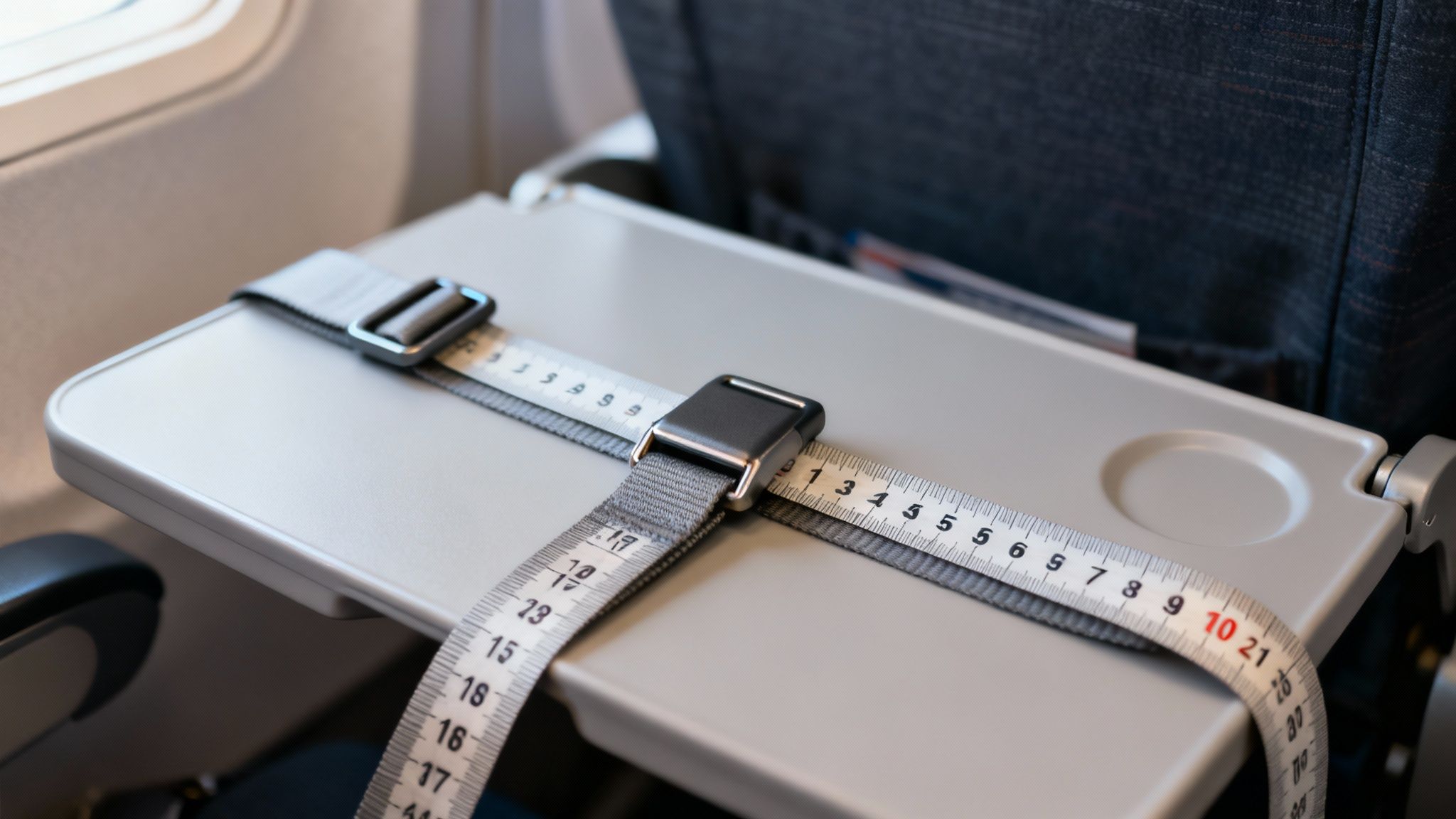
When you settle into your seat, the seatbelt is usually an afterthought—just click it and you're done. For a lot of travelers, though, the length of that belt is a real source of anxiety, making the difference between a comfortable flight and a stressful one.
It helps to think of it like clothing sizes. A "medium" shirt from one brand fits completely differently than a medium from another. Airplane seatbelts are the same way. An older Boeing 747 might have shorter belts than a newer Airbus A380, and a seat in first-class often has a bit more give than one back in economy. This isn't just random; it's the result of different manufacturing eras, airline choices, and aircraft designs.
Why Do Seatbelt Lengths Vary So Much?
So, why isn't there just one standard size? Airlines are constantly juggling costs, aircraft weight, and passenger needs, all while following strict safety rules from aviation authorities like the FAA.
This balancing act leads to a few key reasons for the differences you'll encounter:
- Aircraft Model and Age: Newer planes are generally designed to accommodate a wider range of passenger sizes, so they sometimes come equipped with slightly longer belts right from the factory.
- Airline Customization: When an airline orders a fleet of new planes, they can specify certain features, and that includes the length of the seatbelts.
- Seat Class and Design: It’s no surprise that premium economy, business, and first-class seats are wider. To match those roomier dimensions, the seatbelts are often longer, too.
For many passengers, this lack of consistency is a common frustration. You might fly one airline and have plenty of room, only to find the belt on your connecting flight is a tight squeeze. Some data gathered by travelers suggests certain airlines, like Aeroméxico and Hawaiian, often have belts on the longer end of the spectrum, reaching up to 51 inches.
The key takeaway is simple: never assume the seatbelt on your next flight will be the same length as your last. Knowing this ahead of time lets you plan and avoid any awkward surprises at 30,000 feet.
If you want to get a better idea of what to expect from specific carriers, our in-depth guide on airline seat belt sizes is a great place to start. A little prep work goes a long way in ensuring your journey is safe and comfortable from takeoff to landing.
Why Airplane Seatbelts Are Engineered for Extreme Force
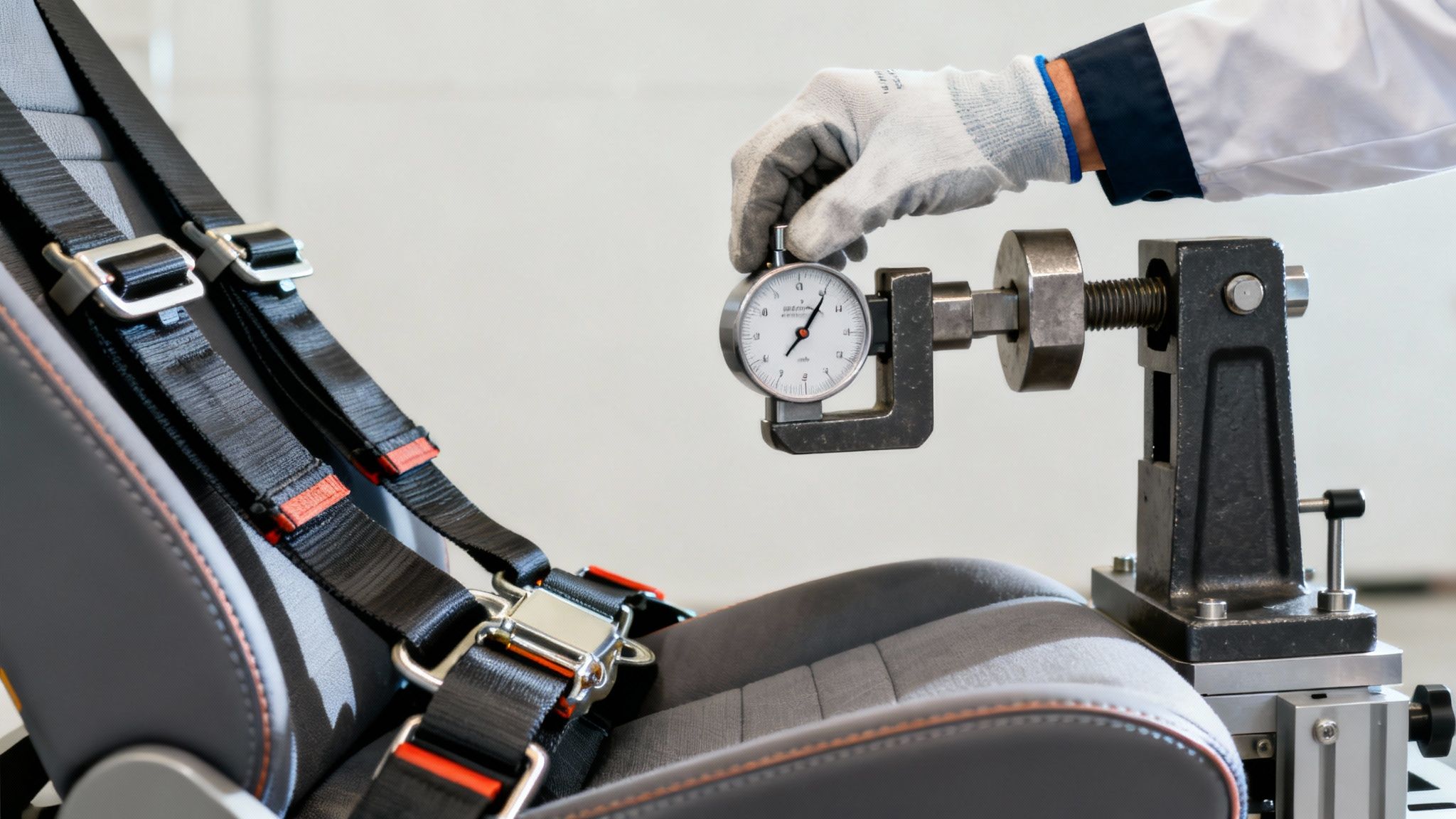
While most travelers think about the length of an airplane seatbelt, the real story is all about strength. This isn't just a simple strap to keep you in place; it's a critical piece of safety equipment, engineered from the ground up to handle incredible forces.
Think of it like a rock climber's rope. A climber's life depends on that rope, so they choose it based on its proven ability to hold fast under extreme, life-threatening stress—not its color. Airplane seatbelts are designed with that same mission-critical mindset.
Every single component, from the webbing to the buckle and the anchor points bolted to the aircraft's frame, undergoes brutal testing. This is all to meet the non-negotiable standards set by aviation authorities, ensuring the system protects you during severe turbulence or a high-impact emergency.
The Foundation of Modern Safety Rules
These strict rules didn't just appear out of thin air. They're the product of nearly a century of lessons learned in aviation safety.
The story starts with the Air Commerce Act of 1926, the first federal law that mandated safety belts for both pilots and passengers. By 1928, this became a requirement for all aircraft. Even back then, the core principle was the same: create an unbreakable link between the person and the plane. You can dive deeper into the history of aviation seat belt rules to see how far we've come.
This long, and sometimes difficult, history is what led to today's incredibly high safety benchmarks. It also explains why airlines are so meticulous about every piece of equipment on their planes.
Why Uncertified Extenders Are Prohibited
Because every part of a plane's seatbelt system is tested and certified together, introducing an unknown element breaks that critical chain of safety. An uncertified extender you bought online is a complete mystery to the airline. They have no way of knowing its material strength, manufacturing quality, or how much force it can actually handle.
Using an unapproved extender is like bringing a random, untested link to add to a heavy-duty industrial chain. It might look the same, but if it fails, the entire system is compromised at the worst possible moment.
This is exactly why you can only use extenders provided by the airline. Their extenders are manufactured to the same demanding standards as the seatbelts themselves, guaranteeing a continuous, certified loop of safety. The physics behind this is fascinating, and you can learn more about the importance of proper seat belt tension in our detailed guide.
At the end of the day, the strict rules around airplane seatbelt length and extenders aren’t about making your life difficult. They are a direct reflection of a powerful commitment to passenger safety, built on a hundred years of engineering and real-world experience. Every time you click that buckle, you’re connecting to a system designed for one thing: ultimate reliability.
How to Discreetly Ask for a Seatbelt Extender
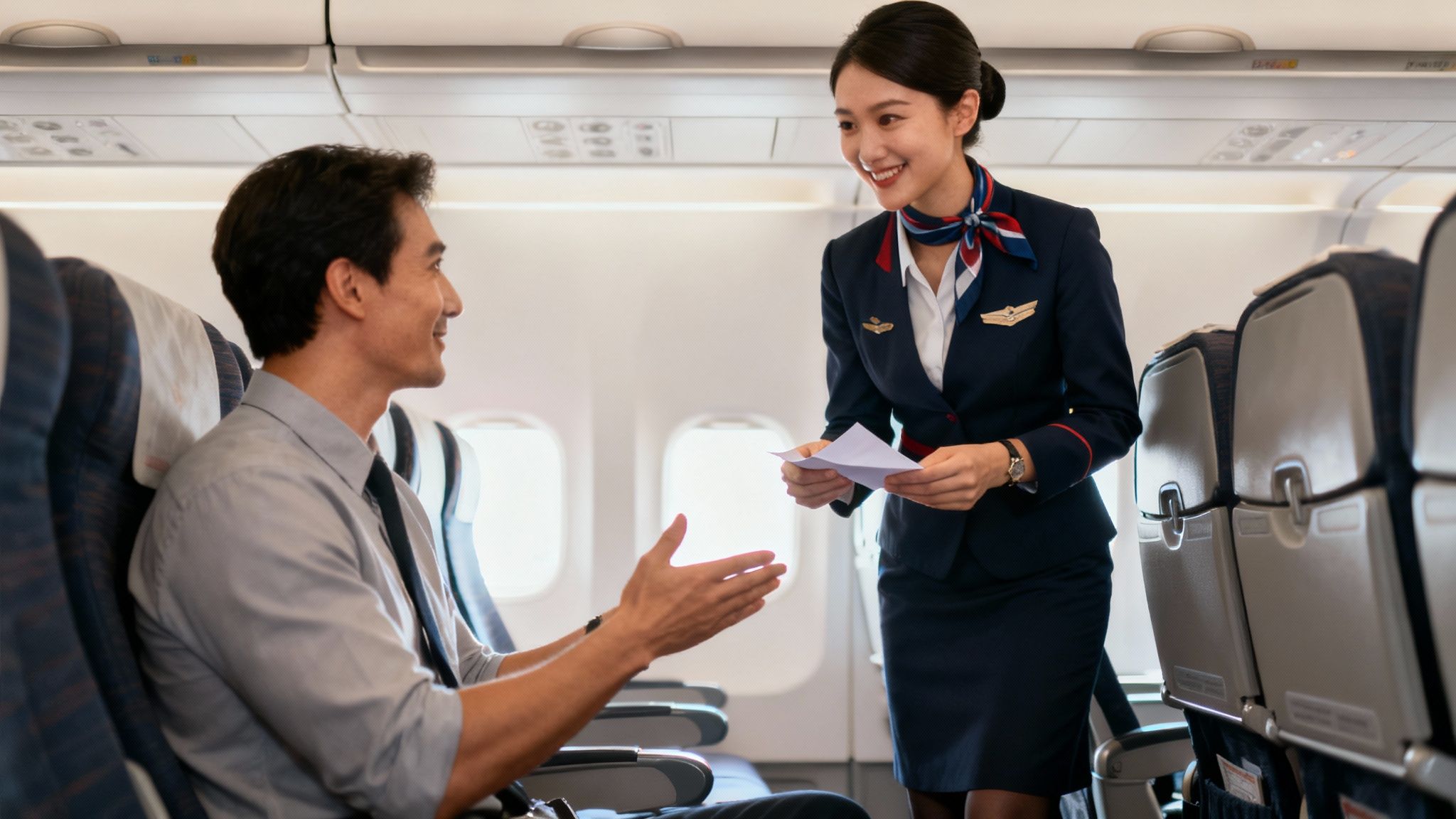
Let's get one thing straight: needing a little extra room in your seatbelt is completely normal. There's no reason to feel anxious about asking for an extender. Flight attendants handle these requests all day, every day. It's just another part of their routine safety check, and their main goal is simply to make sure you're buckled in safely.
The trick is knowing the best time and way to ask. A little timing can make the whole process quick, quiet, and totally stress-free.
The Best Times to Make Your Request
You want to catch a flight attendant when they aren't rushed off their feet. This helps them grab an extender for you without making a big deal out of it.
Here are the two best moments to ask:
- As you're boarding the plane. When a flight attendant greets you at the door, you can quietly ask them for an extender. They'll either bring one to your seat themselves or pass the message along to the crew member working your aisle.
- Right after you get to your seat. Get settled, try the belt, and if it's snug, just catch the eye of a passing flight attendant. A simple gesture or a quiet word is all you need.
Pro Tip: Try not to wait until the last-minute boarding rush or when the crew is arming the doors for takeoff. Asking early gives them plenty of time to help you without any pressure, which makes it a smoother experience for everyone involved.
Simple and Effective Ways to Ask
There’s no need for a big explanation. Keeping your request short, polite, and to the point is the best way to go. They know exactly what you need.
Any of these simple phrases will work perfectly:
- "Excuse me, could I please have a seatbelt extender?"
- "Hi, may I get a seatbelt extender when you have a moment?"
- "I think I'll need an extender for my seatbelt, please."
Airlines like United even have official policies on their websites about accommodating all passengers, which just goes to show how routine this is. Asking for an extender is no different than asking for a glass of water. It's a standard part of flying.
The Truth About Bringing Your Own Extender
With seatbelt extenders so easy to find online, it’s a fair question: why not just buy one and carry it with you? It feels like an easy fix to guarantee a comfortable fit without having to ask a flight attendant.
But here’s the reality: aviation authorities and airlines are united and strict on this. Passengers are not allowed to use their own personal seatbelt extenders on commercial flights.
This isn't just an arbitrary rule meant to make things difficult. It's a critical safety regulation, born from the same principles that govern every single component of an aircraft. Every part of a plane, down to the tiniest screw, has been rigorously tested, certified, and documented to ensure it works perfectly with every other part, especially under extreme stress.
Why Your Own Extender Isn't Allowed
Bringing your own extender is a bit like showing up to a NASA launch with a part you bought online. It might look the part, but it has no verified history, no material testing data, and none of the official certifications needed to be integrated into the system. The FAA and other aviation bodies have put out specific warnings about these unapproved extenders because they introduce a major unknown into a carefully controlled environment.
It all boils down to safety and accountability.
- No Certification: The only extenders approved for use are those that meet the FAA’s Technical Standard Order, specifically TSO-C22g. This certification is a guarantee that the device can handle the same incredible forces as the seatbelt it's attached to.
- Zero Traceability: The extenders an airline provides are tracked, inspected, and maintained just like any other aircraft part. A personal extender from Amazon has no maintenance log, no quality control records, and no verifiable manufacturing trail.
- Questionable Materials: That uncertified extender could be made with weaker webbing or have a faulty buckle that might fail during severe turbulence or, worse, in an emergency. There's simply no way to know.
- Liability: If something goes wrong, the airline is responsible for the safety of its equipment. They can't take on the liability for a device they didn't provide, inspect, or approve.
Think of it this way: an airline-issued extender isn't just a strap—it's a registered, certified aircraft part. Using your own is like bolting an unverified component to the plane's wing. It compromises the integrity of the whole safety system.
The Airline-Provided Advantage
When a flight attendant gives you an extender, you're getting a piece of equipment that is fully compliant and part of the aircraft's official inventory. AmSafe, the manufacturer behind roughly 95% of all commercial airline seatbelts, is also the only company that makes FAA-approved extenders. This is no coincidence; it ensures a perfect, seamless match in both fit and strength.
Their extenders are engineered to integrate flawlessly with the existing seatbelt, creating an unbroken chain of safety that has been tested again and again. You can dive deeper into the specifics of airplane seat belt extenders to understand why certified models are the only choice for air travel.
So, while bringing your own might seem like a practical shortcut, the safety risks are just too high. The best and only move is to rely on the free, certified extenders the airline provides. It’s the only way to ensure your journey is as safe as it is comfortable.
Why Are Airplane Seatbelts Designed This Way?
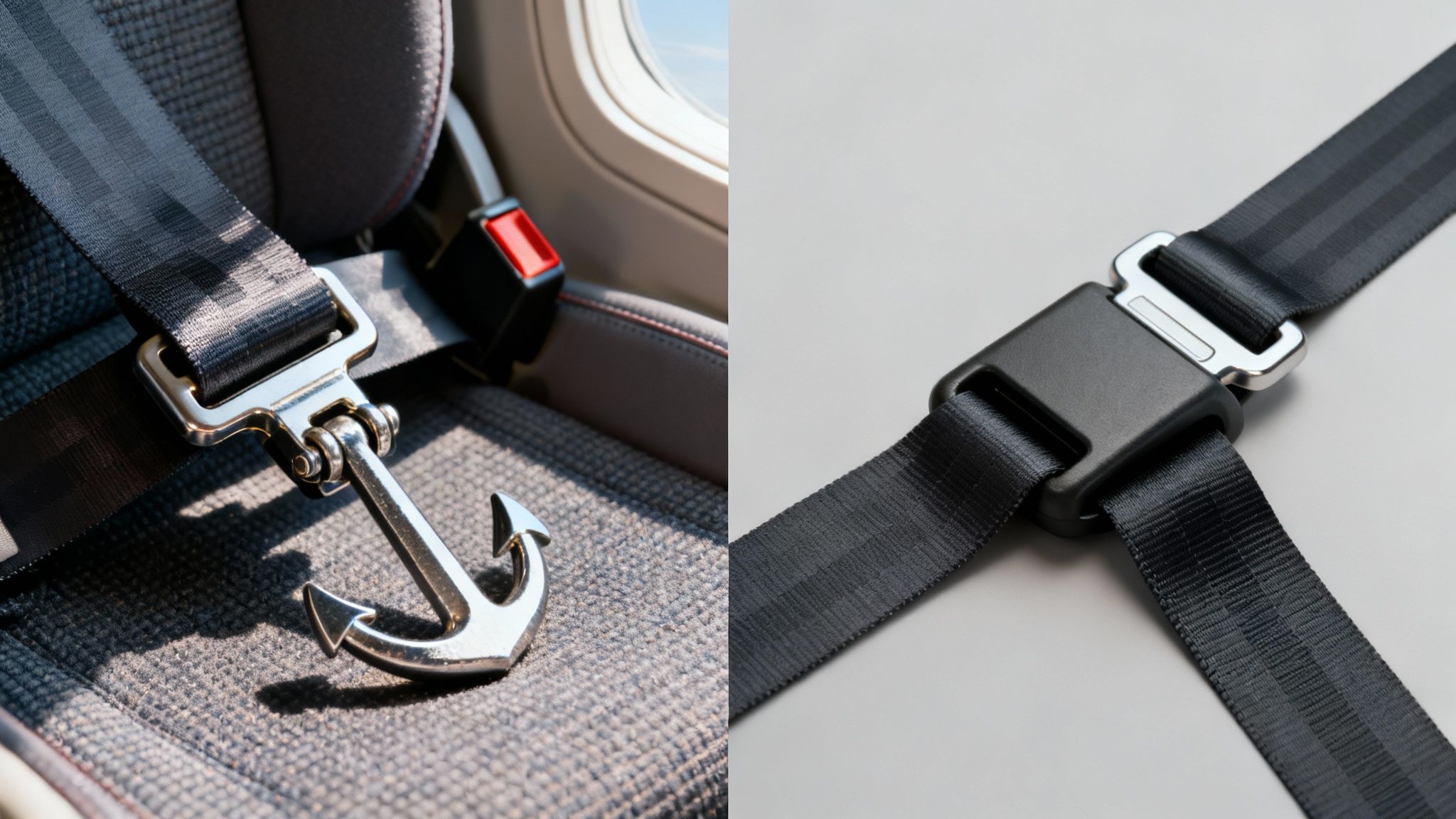
It’s easy to overlook the simple lap belt on an airplane, but there's some serious engineering packed into that strap. It’s not just a belt; it's a vital piece of safety gear specifically designed for the unique forces of air travel. From the tough webbing to the anchor points bolted directly to the plane's frame, every component is built to handle incredible stress.
This focus on strength isn't new. In fact, it goes way back to the early days of flying. Regulators in the 1930s already mandated that seatbelts and their anchors had to withstand a 1,000-pound load—a staggering figure meant to simulate the forces on a passenger's body during an incident.
That historical commitment to safety is why airlines and aviation authorities are so particular about the equipment allowed on their aircraft. Only certified gear that meets these rigorous standards can be used, which is something we cover in our guide to FAA-approved seat belt extenders.
Lap Belts vs. Car Shoulder Belts
So, why the simple lap belt in a plane when your car has a more complex three-point shoulder harness? The answer comes down to the fundamentally different physics of a car crash versus an airplane incident.
When you're driving, the main danger in a crash is hitting the dashboard or steering wheel. A shoulder belt is essential to restrain your upper body and prevent that. But airplane seats are designed as a complete safety system.
It helps to think about the differences side-by-side.
Airplane Lap Belts vs. Car Three-Point Belts
| Feature | Airplane Lap Belt | Automotive Three-Point Belt |
|---|---|---|
| Primary Goal | Prevents "submarining" and keeps the passenger anchored to their seat. | Prevents upper body from hitting the dashboard, steering wheel, or airbag. |
| Crash Dynamics | Designed for turbulence, hard landings, and forward deceleration. | Designed for frontal, side, and rear-impact collisions. |
| Seat Design | Works with high-back, energy-absorbing seats in front to cushion impact. | Works with airbags and the car's "crumple zone" to manage crash forces. |
| Movement | Allows controlled forward movement of the upper body into the seatback ahead. | Restricts both upper and lower body movement as much as possible. |
Essentially, the seat in front of you on a plane is part of the safety system. It's built to absorb impact and cushion you if the plane stops suddenly.
A three-point shoulder harness would actually work against this system. It would hold your upper body too rigidly, which could lead to more severe neck and spinal injuries, much like whiplash.
The lap belt has a very specific, and crucial, job.
Its main purpose is to keep your hips and pelvis locked firmly to the seat. This prevents a dangerous movement called submarining, where a passenger slides forward and down under the belt. That kind of motion can cause devastating internal and spinal injuries.
By anchoring you at the strongest part of your body—your pelvis—the lap belt ensures you stay put, allowing the seat and the rest of the cabin's safety features to protect you as they were designed to. It’s a classic case of a simple design doing a highly specialized job perfectly at 30,000 feet.
Your Pre-Flight Checklist for a Comfortable Trip
Okay, let's put all this information to good use. The single best way to make sure your flight is comfortable and free of any last-minute stress over airplane seatbelt length is to be proactive.
A little planning ahead can make a world of difference. It turns you from a passenger just hoping things work out into a savvy traveler who's already taken care of the details. Think of this as your simple checklist to get ahead of any potential snags long before you're even standing at the gate.
Before You Book Your Flight
Believe it or not, your prep work should start before you even pull out your credit card. This is your first, and best, chance to get the information you need.
- Dig Into Airline Policies: Head straight to the airline's website. Look for sections on "customers of size" or "special assistance." This is where you'll find the official word on their rules for seatbelt extenders and seating arrangements.
- Scout Out the Seat Maps: Websites like SeatGuru are fantastic for this. You can look up the exact aircraft you'll be flying on and get the scoop on seat width and pitch, which gives you a much better idea of the space you'll have.
- Choose Your Seat Wisely: An aisle seat can be a game-changer. It offers a bit more breathing room and makes it way easier to flag down a flight attendant if you need anything.
After Booking and Before You Fly
Once your ticket is booked, you're not done just yet. There are a couple more things you can do to ensure a smooth experience.
The real secret is communicating what you need early and politely. Flight crews are there to keep you safe, and giving them a heads-up makes everything run more smoothly for everyone involved.
Consider giving the airline’s customer service line a call a few days before your trip. You can simply let them know you might need a seatbelt extender and ask if they can add a note to your reservation. It isn't always required, but it can certainly give you some extra peace of mind.
And while you’re making sure your seatbelt will fit, don't forget about your overall comfort. You might want to enhance your comfort with a quality travel pillow, especially for those longer journeys. If you want to know more about the specifics of the extenders the airlines hand out, our guide on a seat belt extender for airplanes breaks it all down.
A Few Common Questions About Airplane Seatbelts
When you're getting ready to fly, the last thing you want to worry about is the seatbelt. Let's clear up a few of the most common questions travelers have about airplane seatbelt length, extenders, and safety.
Can I Just Use My Car's Seatbelt Extender on the Plane?
Absolutely not. It might seem like a simple solution, but car and airplane seatbelt mechanisms are worlds apart. A car seatbelt extender simply won't fit, and more importantly, it hasn't been designed or tested to handle the incredible forces involved in aviation safety scenarios.
For your safety, you can only use an extender provided by the airline or one that is specifically FAA-certified for aircraft use.
Will the Flight Attendant Make a Big Deal if I Ask for an Extender?
Not a chance. Flight attendants are pros, and their top priority is your safety. Asking for an extender is a routine part of their job, and they handle it with complete discretion.
They'll discreetly bring one to your seat without any fuss or announcement. Their only goal is to make sure you're buckled in safely and comfortably for the flight.
Is There a Weight Limit for Airplane Seatbelts?
This is a great question, but the answer isn't about weight. Airplane seatbelts aren't rated for a specific passenger weight. Instead, they’re built to withstand enormous amounts of force—we’re talking thousands of pounds.
The focus is entirely on the strength and integrity of the belt and its anchor points, ensuring it can hold you securely during severe turbulence or an emergency landing, regardless of the passenger's size.
What Happens if the Airline Runs Out of Extenders?
It's extremely rare, but it can happen. If the airline can't provide you with a seatbelt extender, they cannot legally let you fly without being properly buckled in.
In this unlikely event, the airline would have to book you on the next available flight that has an extender for you. This is why it can be a good idea to mention you might need one when you check in, just to be proactive.
At Seat Belt Extenders, we offer the only FAA-approved airplane seatbelt extender available for private purchase, ensuring you always travel with peace of mind. Find your certified travel solution today at https://seatbeltextenders.com.