
It’s more than just annoying when a seat belt digs into your neck—it's a genuine safety hazard. For shorter drivers and passengers, this is an everyday struggle, turning the car's most important safety device into a source of constant discomfort and potential danger. A seat belt adjuster for short people is the answer, designed specifically to reposition the belt so it protects you the way it was meant to.
The Real Dangers of an Improper Seat Belt Fit

When a seat belt doesn't fit right, its effectiveness in a crash plummets. A standard three-point seat belt is designed to distribute the incredible force of a collision across the strongest parts of your body—your rib cage and pelvis. For a shorter person, though, that geometry is often completely off.
The shoulder belt, instead of resting comfortably on the collarbone, cuts right across the neck or even the face. This isn't just irritating; it's a direct threat. If you have to brake suddenly or are in a collision, the belt can cause serious injury to the very areas it's supposed to avoid.
The lap belt is just as problematic. It can easily ride up over the soft abdomen instead of sitting low and snug across the hip bones. This is incredibly dangerous because the force of an impact would be concentrated on your vital internal organs, leading to potentially life-threatening injuries.
Understanding the Physics of a Crash
In a collision, your car stops violently, but your body wants to keep moving forward because of inertia. The seat belt is there to "catch" you, slowing you down with the car and spreading that massive force across your skeleton.
When the fit is wrong, this whole system fails. The consequences can be devastating:
- Neck and Facial Injuries: A shoulder strap across the neck can cause deep bruises, cuts, or even fractures to the neck and jaw.
- Internal Damage: A lap belt that rides up over the stomach can cause severe damage to the spleen, liver, or intestines.
- Spinal Cord Injuries: Incorrect belt placement can make your body twist or jerk in unnatural ways, which can easily lead to spinal injuries.
The number one job of a seat belt is to stop you from hitting the dashboard, steering wheel, or being thrown from the car. An improperly positioned belt can't do its job, which makes a seat belt adjuster an essential piece of safety equipment for shorter people.
Why Comfort Translates Directly to Safety
Let's be honest—when a seat belt is constantly rubbing your neck, it's tempting to find a "solution." Many people will tuck the shoulder strap behind their back or slip it under their arm. This is one of the most dangerous things you can do. It completely neutralizes the upper body restraint, essentially turning your three-point belt into a lap belt only and dramatically increasing the risk of severe head and chest trauma in an accident.
Properly managing seat belt tension is also a key part of the equation, as a belt that's too loose or twisted won't engage when you need it most. An adjuster ensures the belt sits correctly, which encourages you to wear it properly on every single trip. The data is clear: wearing a seat belt correctly reduces the risk of fatal injury by about 45%. Making sure that belt fits you is a critical part of staying safe on the road.
How to Choose the Right Seat Belt Adjuster
Let’s be honest, finding the perfect seat belt adjuster for short people isn't as simple as just grabbing the first one you see online. The best one for you really comes down to your car, your daily driving habits, and what you find most comfortable. The main goal is always the same: get that shoulder strap off your neck and securely onto your collarbone, where it can actually protect you in a crash.
To make a smart choice, you first need to understand the different types out there. Each style has its own pros and cons, and knowing the difference is key to getting a device you'll actually use.
Comparing Seat Belt Adjuster Types
You'll find a few different designs on the market, but most of them fall into two main camps. I've worked with both and can tell you they each serve a slightly different purpose.
-
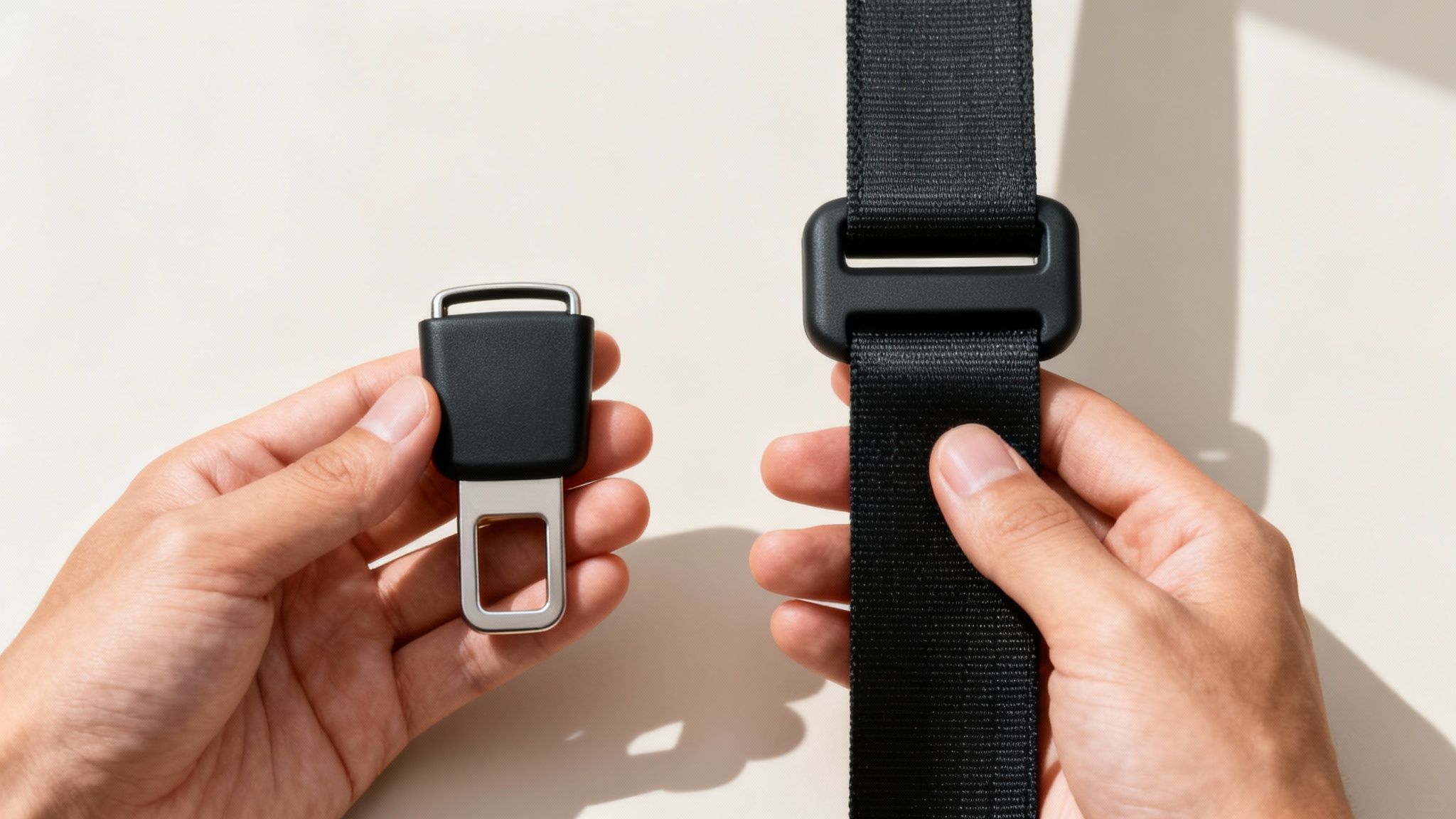
Locking Clips: Think of these as a simple, sturdy clamp. They're usually made of strong plastic or metal and clip directly onto the seat belt webbing itself. By holding the shoulder and lap belts closer together, they pull the shoulder strap down and away from your neck. They’re super straightforward.
-
Strap-Based Positioners: This type uses a short piece of webbing with a fastener on each end. One side connects to your lap belt, and the other grabs the shoulder belt, pulling it down into the correct position. It’s a slightly different mechanism for the same result.
So, which is better? Locking clips get points for being incredibly simple and having a low profile. But, I've seen cases where they can slip a bit on the webbing or be a pain to attach if you’re in a hurry. Strap-based positioners tend to stay put more reliably but can feel a little bulkier. For a deeper dive, this article on seat belt adjusters for adults is a great resource.
My Personal Takeaway: The best adjuster is the one you'll use every single time you get in the car. If it's a hassle to set up, it’s going to end up forgotten in your glove compartment.
What to Look for Before You Buy
When you're comparing your options, it's easy to get lost in the details. This table breaks down the most common types of seat belt adjusters to help you decide which one makes the most sense for your lifestyle.
Comparing Seat Belt Adjuster Types
| Adjuster Type | Best For | Installation | Key Feature |
|---|---|---|---|
| Locking Clip | Quick trips, people who don't share their car often, and those wanting something minimal. | Super fast—it just clips on. You might need to readjust it occasionally. | Its biggest selling point is simplicity and its small, compact size. |
| Strap-Based Positioner | Daily commuters, families sharing a car, and anyone wanting maximum stability. | Takes a little longer to loop around the lap belt, but it stays put much better once installed. | Its secure connection to the lap belt keeps it from sliding up the shoulder strap. |
Choosing the right adjuster really comes down to what feels right for you and your daily routine.
While you're focused on in-car safety, it’s also a good idea to think about the bigger picture, especially for older drivers. Being aware of other essential safety devices for seniors can make a huge difference in maintaining independence and safety at home.
Ultimately, if you’re the only one driving your car, a simple locking clip might be all you need. But if you're constantly swapping seats with a taller partner or family member, a strap-based adjuster that's easy to engage and disengage will probably save everyone a lot of frustration.
Getting Your Adjuster Installed for Maximum Safety
You've picked out a quality seat belt adjuster for short people, and now we're at the most important part: getting it installed just right. A poorly installed adjuster can be just as dangerous as a badly fitting seat belt, so taking a moment to get this right is a game-changer for your safety.
The goal is pretty straightforward. You want the shoulder belt to lie flat across the middle of your collarbone, right between your neck and your shoulder. At the same time, the lap belt needs to stay put—low and snug across your strong hip bones, not your soft stomach.
Finding the Sweet Spot for Positioning
From my experience, the single most common mistake people make is putting the adjuster way too high up on the shoulder belt. It seems logical, but it can actually pull the belt down so far that it slips off your shoulder in a collision, leaving your upper body with zero protection.
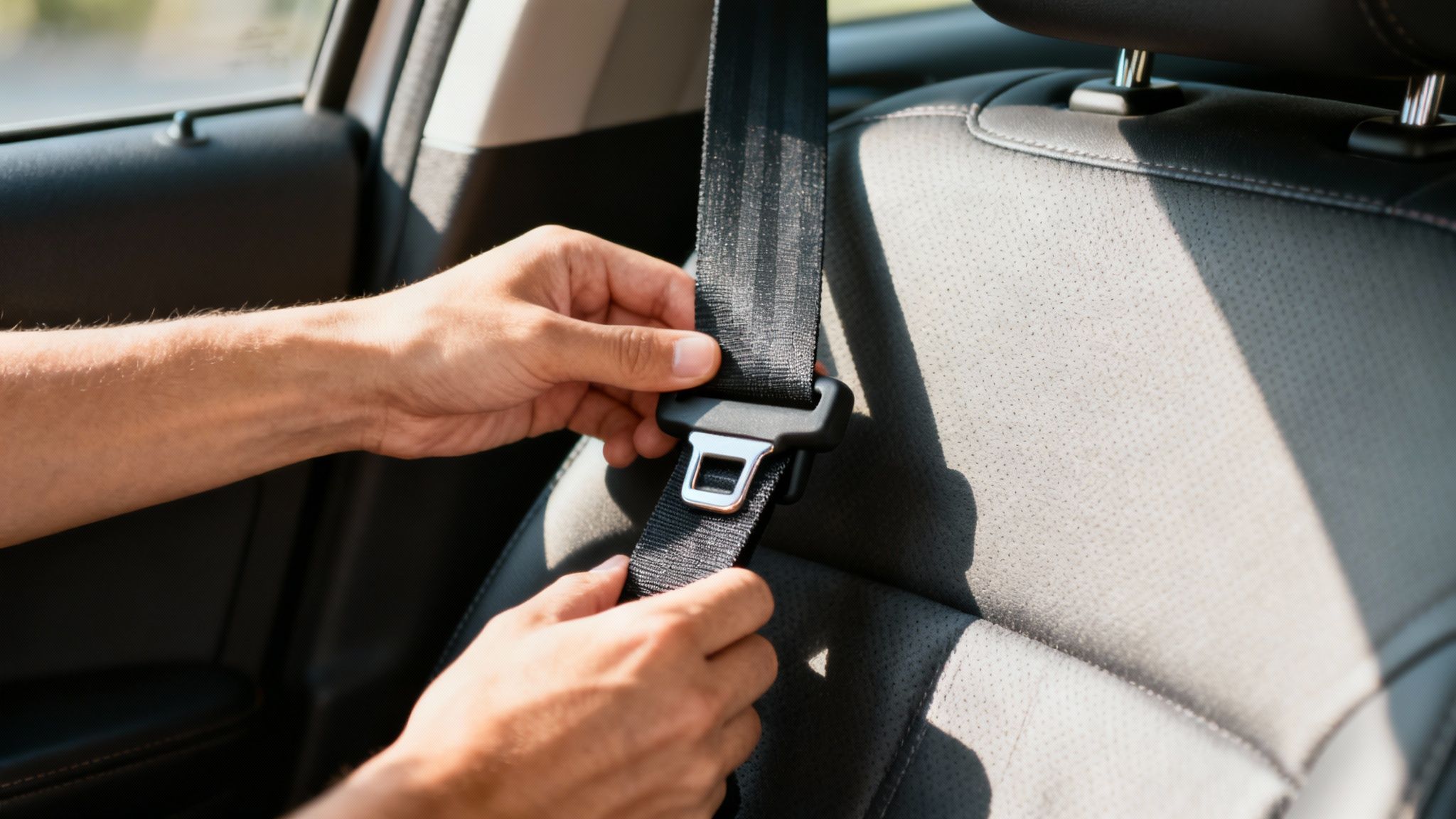
Here's what you do instead. Buckle up like you normally would. Now, slide your adjuster onto the shoulder part of the belt. Position it just above where the belt starts to cross your lap. This will gently pull the diagonal strap down and inward, away from your neck.
It's going to take a bit of trial and error to find what feels perfect for you. The final position should feel both comfortable and totally secure, with the belt making solid, confident contact with your collarbone. For a closer look at different adjuster styles and how to fit them, our guide on seat belt adjuster clips has some great visuals and tips.
Watch Out for Slack—Keep it Snug
The other big mistake is accidentally creating slack in the belt. A seat belt only works if it’s tight against your body. If your adjuster lets the belt get loose or billow out from your chest, it can’t do its job in a sudden stop.
Once you think you have the adjuster placed correctly, run through this quick mental checklist:
- Do a quick tug test. Gently pull the shoulder belt away from your chest. You shouldn't have much give at all—no more than an inch of space is a good rule of thumb.
- Check the lap belt. Make sure the adjuster hasn't pulled the lap belt up onto your stomach. It absolutely must stay low on your hips.
- Try the "jerk test." Lean forward quickly and sharply in your seat. The seat belt’s retractor should lock instantly, holding you tight. If it doesn't, the adjuster might be getting in the way.
A properly installed adjuster doesn’t mess with the seat belt's main job; it just redirects the belt's path. The belt should still pull out and retract smoothly and lock up tight when you jerk it. If it feels sluggish, loose, or sticky, you need to readjust.
Visual Cues That You've Nailed It
Once you’re done, grab a mirror or ask someone to take a quick look. A perfectly fitted seat belt adjuster creates a clean, straight diagonal line across your torso. There should be no twists, no bunching, and certainly no slack.
Here are the four signs of a perfect installation:
- The shoulder strap is resting on the middle of your collarbone.
- The lap belt is sitting low and snug across your upper thighs or hips.
- The entire belt webbing lies flat and straight against your body.
- There is no visible slack anywhere in the system.
Getting this right only takes a minute, but it pays off with peace of mind on every single drive. You'll finally be comfortable without a belt cutting into your neck, and more importantly, you’ll be confident that your car’s most critical safety system is positioned to protect you the way it was designed to.
Why Safety Certifications Actually Matter
It’s easy to think all seat belt adjusters are pretty much the same. You see dozens of them online, and they all promise to fix that annoying strap digging into your neck. But how can you tell which ones are genuinely safe and which are just dangerous gimmicks? The secret is in the safety certifications.
An uncertified seat belt adjuster for short people is a complete gamble. Sure, it might make the belt feel more comfortable, but it hasn't been tested to hold up in a crash. When a collision happens, those flimsy plastic clips can shatter on impact, leaving the seat belt right back in its original, unsafe position across your neck.
What to Look For: E4 and E8 Certifications
This is where real, official safety standards become crucial. Trustworthy manufacturers don't just sell a piece of plastic; they invest in serious, independent crash testing to prove their products will work with your car’s safety system, not against it.
When you're shopping, keep an eye out for certifications like E4 or E8. These aren't just random letters and numbers; they represent United Nations ECE safety standards recognized around the world. A product carrying one of these marks has been put through hell and back—tested for performance, material strength, and durability—and passed.
Choosing a certified product means you're trusting a device that has been scientifically proven to perform under the worst possible conditions. An uncertified adjuster, no matter how clever it looks, introduces a dangerous weak link into the most important safety feature in your car.
It’s no surprise that people are catching on. The market for automotive seat belt height adjusters was valued at around USD 1.29 billion back in 2021, and that number is only expected to grow. As more options flood the market, it’s on us as consumers to demand products that meet these critical safety standards.
Red Flags of Uncertified Products
Spotting a potentially unsafe adjuster is actually pretty simple once you know what to look for. Be wary of any product that:
- Is made from thin, cheap-looking plastic that feels like it could snap easily.
- Has zero mention of crash testing or safety standards on the packaging or in the online description.
- Uses vague marketing fluff like "improves safety" but offers no proof or certification numbers to back it up.
- Is sold for a rock-bottom price from a brand you’ve never heard of on a random website.
Putting your money into a quality, certified adjuster is just as important as checking your tire pressure or getting your brakes serviced. This idea of verified safety standards isn't unique to seat belt accessories, either. Think about the trucking industry—it’s just as vital for them to focus on understanding your DOT safety rating to ensure their vehicles are compliant and safe on the road.
If you want to dive even deeper into how these safety principles work with similar gear, check out our guide on seat belt extender safety. A little bit of knowledge goes a long way, ensuring you can drive with the peace of mind that your adjuster is a real safety tool, not just a comfort accessory.
Staying Safe in Taxis, Airplanes, and Beyond

The battle for a safe seat belt fit doesn't end when you leave your own car. Hopping into a taxi, a friend's SUV, or a rideshare often means facing that same old problem: the shoulder belt slicing right across your neck. Since you can't exactly install a permanent adjuster in a car you don't own, having a portable fix is a game-changer.
The best clip-style adjusters are small and lightweight enough to disappear into a purse, backpack, or even a coat pocket. Keeping your own seat belt adjuster for short people handy means you can get a proper, safe fit in just a few seconds, no matter whose car you're in. It's a small habit that makes a huge difference.
This simple preparation puts you back in control. It means you can stop tucking the shoulder belt behind your back—a common but terrifyingly dangerous move—and ride with the confidence that you're actually protected.
Navigating Air Travel with Confidence
Planes are a whole different story. While the shoulder belt isn't an issue, making sure the lap belt sits low and snug across your hips is crucial for staying safe during turbulence. Aircraft seat belts are pretty standard, and "one size fits all" rarely fits anyone perfectly.
Because aircraft seat belts fall under strict Federal Aviation Administration (FAA) rules, the car-specific adjusters we've been talking about are not permitted on flights. However, if the issue is that you need more length to buckle up securely, you can absolutely use an extender made specifically for airplanes.
It's worth knowing that flight attendants can always provide an extender. But if you fly often, bringing your own certified one can save time and offer some peace of mind. For a deep dive into the rules and how to pick the right one, check out our guide on seat belt extenders for airplanes.
Practical Tips for On-the-Go Safety
Beyond just carrying a portable adjuster, a few other habits can boost your safety in any vehicle that isn't yours.
- Pick the Best Seat: If you have a choice, grab a spot in the back seat that has an adjustable anchor point for the shoulder belt. You'd be surprised how many modern cars have this feature.
- Do a Quick Buckle Check: Before the driver even pulls away, make sure your buckle clicks securely and that the belt webbing pulls out and retracts smoothly.
- Don't Improvise: Never, ever use things like binder clips, scarves, or hair ties to reposition a seat belt. They aren't designed to withstand crash forces and create a false, and dangerous, sense of security.
When it comes down to it, being prepared is your best defense. A portable, crash-tested adjuster is a small investment that delivers consistent safety and comfort, wherever your travels take you.
Your Top Questions About Seat Belt Adjusters, Answered
It's completely normal to have a few questions before you trust a new device with your safety. After all, your seat belt is one of the most important pieces of equipment in your car. Let's walk through some of the most common questions we get, so you can feel confident you're making the right choice.
First, let's remember why this matters so much. The National Highway Traffic Safety Administration (NHTSA) has found that seat belts slash the risk of death for front-seat passengers by a massive 45%. That statistic hinges on the belt fitting correctly, which is exactly where a good adjuster comes in. It’s not just about comfort; it's a vital safety component. You can find more details on these life-saving stats over at Team Justice.
Are Seat Belt Adjusters Actually Legal and Safe?
Yes, they are—with a very important catch. You need to choose one that has been properly crash-tested and is made from high-strength, durable materials.
Be wary of those cheap, flimsy plastic clips you see online. They can easily shatter in a collision, failing when you need them most. A legitimate, well-engineered adjuster is designed to simply reposition the belt path without getting in the way of the seat belt's life-saving function. Always look for brands that are upfront about their safety testing and certifications.
Can I Use One of These for My Child?
This is a hard no. Never use a seat belt adjuster designed for adults on a child.
Children have specific safety needs due to their size, weight, and still-developing bodies. They belong in federally-approved car seats or booster seats until they are big enough for an adult belt to fit them correctly on its own. Using an adult adjuster on a child could dangerously misplace the lap belt over their abdomen, risking serious internal injuries in a crash. Stick to official child passenger safety guidelines, no exceptions.
Key Takeaway: A seat belt adjuster helps correct the belt's position for a shorter adult. It is never, ever a substitute for a proper child car seat or booster.
How Do I Know When the Fit Is Just Right?
This is the whole point, and thankfully, it’s easy to check. A perfectly adjusted seat belt feels secure, comfortable, and hits two critical marks:
- The shoulder belt should lie flat across your collarbone, about midway between your neck and your shoulder. It shouldn't be digging into your neck or constantly slipping off your arm.
- The lap belt needs to sit snugly across your upper thighs or low on your hips. It should never ride up onto your soft stomach area.
Take a moment to check. The belt should be flat against your body, with no slack or twists. If it's still bothering your neck or falling off your shoulder, you'll need to tweak the adjuster's placement until it sits just right.
At Seat Belt Extenders, we offer E-4/E-8 certified solutions to make sure every driver and passenger gets a safe, comfortable fit. Find the right adjuster for your vehicle and drive with peace of mind by visiting us at https://seatbeltextenders.com.