

Think of your seat belt latch as the specific lock for your car's most important safety feature. It’s the precisely engineered part that grabs the metal tongue of your seat belt, creating the life-saving connection that holds you in place during an accident. Getting to know this crucial component is the first step to making sure you're safe and comfortable every time you get in the car.
Getting to Know Your Car's Seat Belt Latch
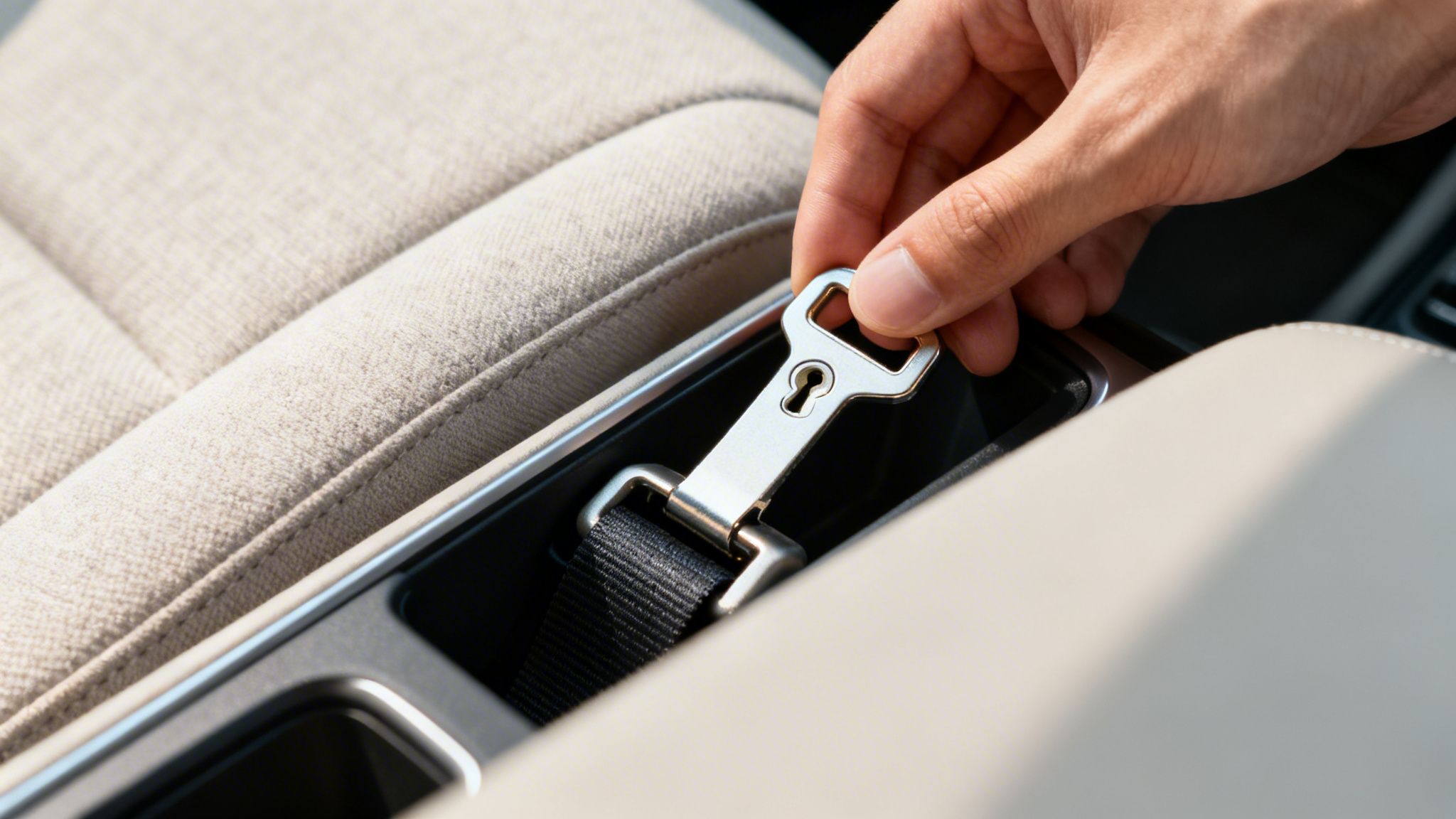
A seat belt latch is far more than just a buckle—it's a specialized locking mechanism. Every car manufacturer designs its latching systems with unique dimensions and internal mechanics. That’s why a latch from a Ford Explorer won't just click into a Hyundai Palisade, even if they look pretty similar at first glance.
It’s just like your house key. Your key has a specific pattern of ridges and grooves designed to fit only one lock. In the same way, the metal tongue on your seat belt is the "key," and the latch is the "lock." They’re designed to work together as a perfectly matched pair, ensuring a connection strong enough to handle the incredible forces of a sudden stop or crash.
Why the Latch Design Is So Important
This idea of a unique "latch language" is absolutely critical, especially when you're thinking about adding something like a seat belt extender. A generic, one-size-fits-all extender isn't just a bad idea—it's downright dangerous. An extender that isn't a perfect match might seem to click into place, giving you a false sense of security, but it could easily fail when you need it most. That’s because the internal locking parts won't align correctly, creating a major weak spot in your safety system.
To keep yourself safe, you have to identify the exact type of seat belt latch in your vehicle. Knowing this allows you to find products that work perfectly with your car's original design, keeping its safety integrity intact. The main things that make each latch unique are:
- The metal tongue's shape: Is it completely flat, slightly rounded, or some other distinct shape?
- The tongue's dimensions: The width and thickness are measured down to the millimeter.
- The buckle's design: This includes the style of the release button and how the lock works on the inside.
Understanding your vehicle’s specific seat belt latch is the most critical step toward finding a safe, comfortable, and reliable fit. It’s the foundation upon which your on-road safety is built, ensuring every "click" is one you can trust.
By treating the latch as the specialized component it is, you're putting your safety first. We're here to help you figure out your car's unique latch language so you can find the right fit for a secure connection on every single drive. This guide will walk you through how to identify your latch type, understand safety certifications, and make smart choices for you and your passengers.
How to Identify Your Seat Belt Latch Type
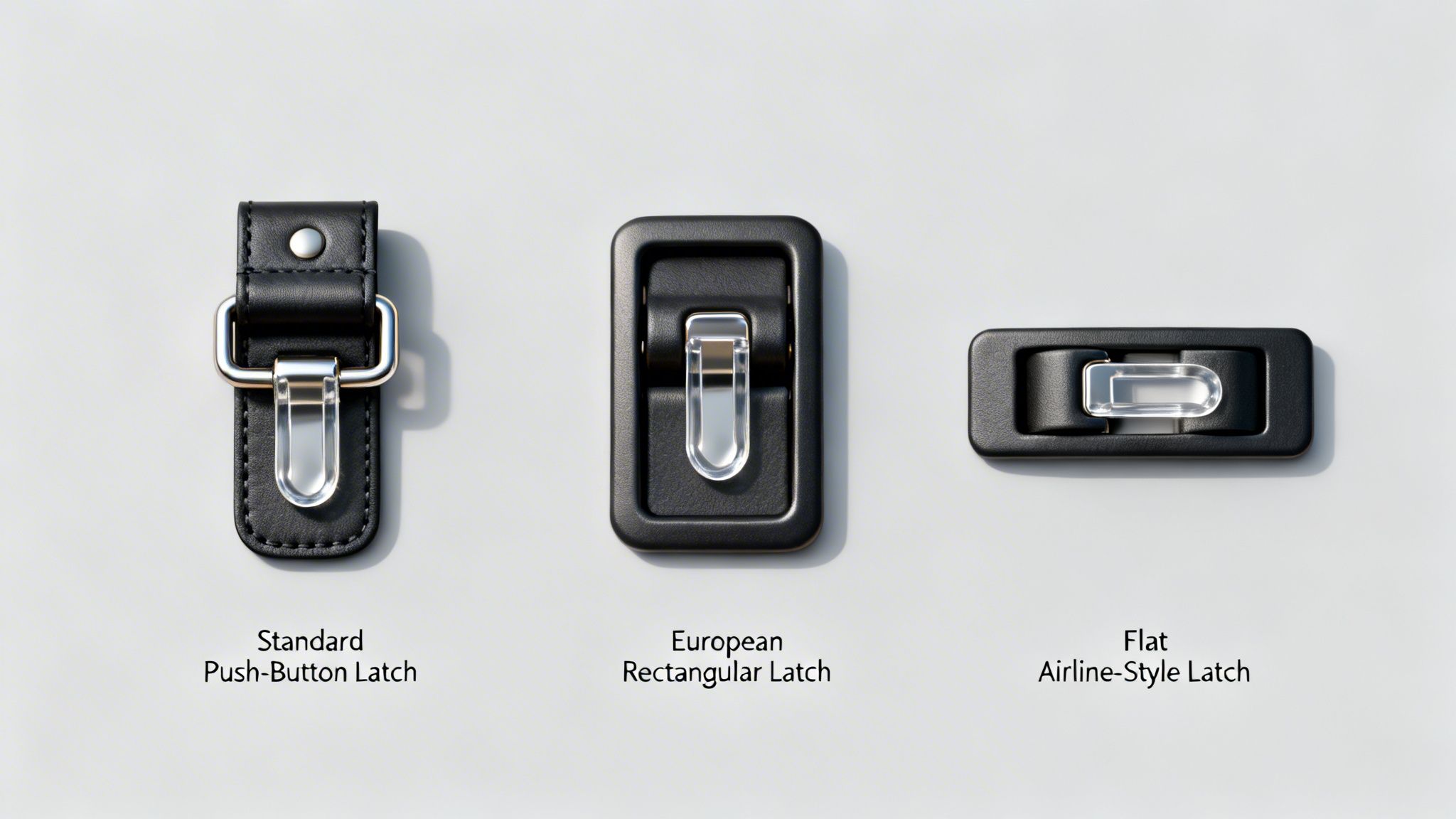
Feeling a bit lost trying to figure out which seat belt buckle you have? Don't sweat it. Identifying your car's seat belt latch is a lot easier than it sounds. Once you know what to look for, you'll be able to spot the differences in seconds.
Getting this right is crucial, especially if you're looking for a seat belt extender. The wrong match isn't just an inconvenience—it's a safety issue. So, let’s break down the common styles you'll find on the road today and turn you into a latch-spotting pro.
The Common Push-Button Latch
This is the one you probably see most often. The push-button latch is the workhorse of the automotive world, especially in North American vehicles like a Ford F-150 or a Honda Civic. Its defining feature is right there in the name: a big, easy-to-see push-button, which is usually bright red.
The metal tongue that clicks into it is just as recognizable—it's a flat, rectangular piece with a hole right in the middle. When you buckle up, the mechanism inside the latch locks into that hole with a solid click. To get out, you just press the button.
- Key Visual: Look for a colored (usually red) button on the top face of the buckle.
- Metal Tongue Shape: A flat rectangle with a hole in the center.
- Common In: The majority of cars, trucks, and SUVs built for the North American market.
Because it's so widespread, it’s easy to assume every car has this type. But that's a risky assumption, as other styles are gaining popularity. Always take a quick look to be sure.
The Distinctive European Latch
Next up is the European-style latch. You’ll typically find this sleek design in brands like BMW, Mercedes-Benz, Audi, and Volvo. It has a more modern, streamlined look and works a bit differently.
Instead of a button on top, the release mechanism is built into the side of the buckle housing. The metal tongue is the real giveaway, though—it’s a solid, flat piece of metal with no hole. The latching system cleverly grips the edges of the tongue to hold it in place.
The key takeaway here is to observe the entire system. Don't just look at the buckle's shape; pay close attention to the metal tongue. The presence or absence of a hole is one of the fastest ways to differentiate between latch types.
This is a critical distinction. An extender made for a push-button seat belt latch will absolutely not work with a European-style system, even if it looks close. For a deeper dive, you can learn more about different seat belt extender types and see some great visual comparisons.
Specialized Latch Styles
While those two cover most cars, you might run into a few other specialized latches, especially in back seats or on different types of vehicles.
ISO or Top-Button Latch: Think of this as a cousin to the standard push-button style. The main difference is that the release button sits on the top edge of the buckle, not on its face. You'll often spot these in the rear seats of some cars, where they're frequently used for securing child safety seats. The metal tongue looks just like the standard one.
Airline Latch: Just like the name says, you'll only find this style on airplanes. It uses a totally different lift-cover mechanism. You insert a flat, solid metal tongue and then flip a hinged cover down to lock it. To release, you just lift the cover. This system is never found in cars and is not interchangeable with any automotive seat belt latch.
Quick Guide to Common Seat Belt Latch Types
Still feeling unsure? This quick-reference table breaks down the key visual cues to help you identify your seat belt latch at a glance.
| Latch Type | Key Visual Feature | Common Vehicle Makes | Best Use Case |
|---|---|---|---|
| Push-Button | Red button on the face; tongue has a hole | Ford, Toyota, Honda, GM | Most North American passenger cars |
| European | Sleek design; solid tongue with no hole | BMW, Mercedes, Audi, Volvo | Common in European-manufactured vehicles |
| ISO/Top-Button | Button on the top edge of the buckle | Varies; often in rear seats | Child safety seat attachment points |
| Airline | Lift-to-release hinged cover | N/A (Airplanes only) | Commercial and private aircraft |
Taking a moment to identify your vehicle's "latch language" is the first step toward ensuring a secure fit. By understanding these subtle but important differences, you can confidently choose the right accessories and keep yourself and your passengers safe.
Why the Right Latch Match Is a Safety Non-Negotiable
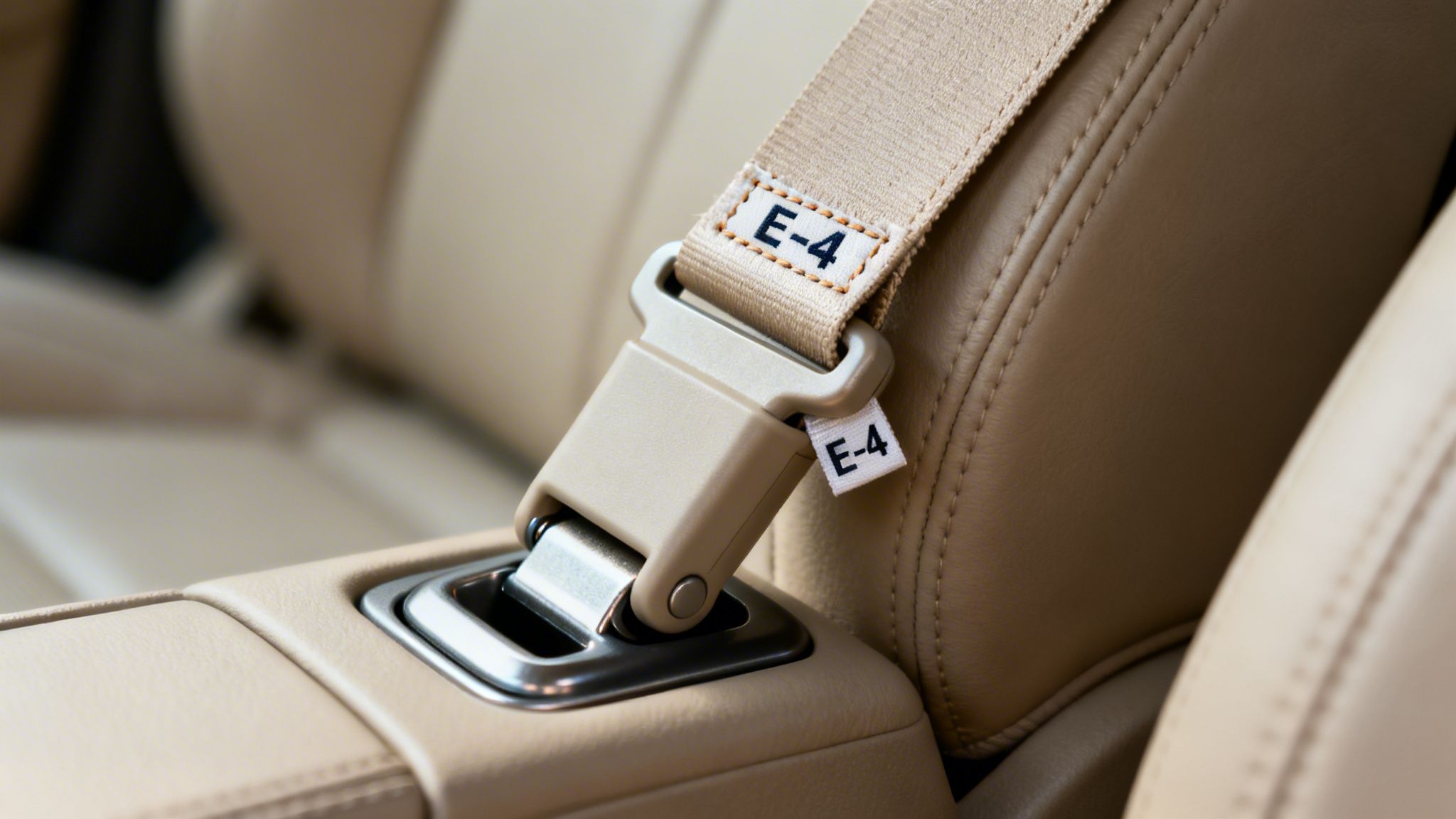 This is where we need to get serious about your seat belt latch. It’s incredibly tempting to think that if an extender clicks into your car’s buckle, it’s good to go. But that assumption creates a false sense of security that could have truly devastating consequences in a crash.
Hearing that audible "click" is not a guarantee of a secure connection. A mismatched seat belt extender might engage just enough to feel locked, but the internal locking mechanism won't be properly aligned with your vehicle's original parts. Under the immense G-forces of an accident, this weak link is almost certain to fail, releasing the belt precisely when you need it most.
The bottom line is that you can't compromise the integrity of your car's original safety system. Automakers pour millions into designing and testing these systems to meet strict federal standards. Introducing a generic, unverified component completely undermines all that engineering.
The Gold Standard of Safety Certifications
So, how can you actually be sure an extender is safe? The answer lies in internationally recognized safety certifications. The big ones to look for are E-4 and E-8 certifications. These aren't just marketing fluff; they represent the global gold standard for automotive parts, including seat belts and their accessories.
When you see that E-mark, it means the product has been put through the wringer by an independent lab to ensure it meets or exceeds the same safety criteria as the original parts in your car. This isn't a quick check—it includes rigorous tests for things like:
- Tensile Strength: Can it handle the extreme pulling forces of a crash without snapping?
- Durability: Will it still work perfectly after being clicked and unclicked thousands of times?
- Corrosion Resistance: Is it built to last, or will it degrade from humidity and temperature changes?
An E-4 or E-8 mark is your ultimate assurance that you're not introducing a weak link into your car's safety chain. It signals a factory-grade connection you can trust.
A mismatched connection is a gamble you should never take. The forces in a crash are unforgiving, and only a precisely engineered and certified product can be trusted to perform alongside your vehicle's original equipment.
Why a Model-Specific Approach Is Essential
This all leads to one crucial point: generic, one-size-fits-all extenders are a major safety risk. With so many different latch types across car brands and models, the only way to guarantee a secure fit is to use an extender specifically designed for your vehicle's unique seat belt latch. This model-specific approach ensures that every dimension, the locking mechanism, and the materials are a perfect match.
The global automotive seat belt market is growing fast—it's projected to hit USD 22,393.2 million by 2032, largely because of a stronger focus on vehicle safety. As cars get safer and technology improves, the demand for reliable components is higher than ever. Certified extenders, engineered for specific latch types, are a vital part of this ecosystem because they provide a secure solution without compromising the manufacturer’s original design.
The critical role of a properly working seat belt is even highlighted by regulations, where it’s a key part of any thorough TX State Inspection. Using a mismatched or uncertified extender isn’t just unsafe—it could cause you to fail an inspection.
For a deeper dive, be sure to check out our complete guide on seat belt extender safety. When it comes to your safety, settling for anything less than a certified, vehicle-specific extender is simply not worth the risk.
Who Needs a Seat Belt Extender?

It’s one thing to understand the technical side of a seat belt latch, but what really matters is how that knowledge applies to real people in real situations. The need for a seat belt extender isn't some niche issue; it's a daily reality for millions of people from all walks of life.
Whether you're a parent in a rush or a professional on the go, a seat belt that's just a few inches short can be a constant source of frustration. The right extender can change that struggle into a simple, confident click, giving everyone in the vehicle the safety and comfort they deserve.
Drivers and Passengers of Larger Stature
For many people, the standard-issue seat belt just doesn't cut it. When a belt is stretched to its absolute limit, it’s not only uncomfortable but also unsafe. It can dig into your neck or ride up on your stomach, which completely compromises how it’s supposed to work in a crash. This constant discomfort can even lead some people to skip wearing a seat belt altogether—a risk no one should take.
A seat belt extender provides that crucial extra length, allowing the belt to sit properly across the pelvis and shoulder where it belongs. This simple fix can make a world of difference, turning an uncomfortable ride in a Jeep Grand Cherokee into a secure and enjoyable trip. It’s all about making sure safety is never compromised for comfort.
Caregivers and Parents
Anyone who’s ever tried to buckle a kid into a bulky car seat knows the feeling. You’re leaning over, fumbling between the booster and the car’s seat cushion, trying to find that buried seat belt latch. It’s a frustrating task, especially when you’re trying to get multiple kids settled in the back of your Ford Explorer.
A rigid seat belt extender brings the buckle up to a much more accessible height, which makes the whole process faster and way less of a headache. This is also a huge help for those assisting elderly passengers or anyone with mobility issues. By bringing the latch forward, you eliminate the need for awkward twisting and reaching, making things easier for both the caregiver and the passenger.
Safety should never feel like a puzzle. By making the seat belt latch easier to access, extenders empower caregivers to secure their loved ones quickly and correctly every time, removing a significant barrier to safe travel.
This simple tool can be especially invaluable for expectant mothers, who need to ensure the lap belt rests low across the hips and below the belly. For more tips, check out our guide on using a seat belt extender during pregnancy.
Individuals with Limited Mobility or Medical Needs
For someone recovering from surgery, living with arthritis, or relying on mobility aids, the simple act of twisting to buckle up can be painful, if not impossible. The vehicle's seat belt latch is often recessed deep into the seat, making it tough to grab and click.
An extender brings the buckle right where you can reach it, dramatically reducing the physical strain. It's also a great solution for individuals with medical devices, like insulin pumps or ports, that might be irritated by a tight seat belt. The extra length lets you position the belt comfortably and safely, without interfering with the device. This boost in accessibility is a game-changer for maintaining independence.
Frequent Flyers and Rideshare Professionals
The need for a better fit isn't just limited to your own car. If you fly a lot, you know that seat belt lengths can vary wildly from one plane to the next. Carrying your own certified airplane extender means you'll always have a comfortable and secure fit, no matter the airline.
For taxi and rideshare drivers, passenger safety is everything. Keeping a few extenders on hand for different seat belt latch types shows you're prepared to accommodate anyone. In a crowded market, that small touch can make a huge difference in customer experience, leading to better ratings and loyal customers for drivers of popular vehicles like the Hyundai Palisade.
As more and more people buckle up, ensuring a proper fit is more important than ever. In 2023, front-seat belt use in the U.S. hit a record high of 91.9%, which is fantastic news. Still, usage gaps exist, often because of poor fit. Extenders help close that gap, making it easy for everyone to stay safe on the road.
Finding Your Perfect Extender Match
So, you've gotten familiar with your car’s seat belt latch and why it's so important. Great! Now, let's put that knowledge to work and find you a safe, reliable extender. The whole process is actually pretty simple once you know what you're looking for. It really just boils down to a few key things: knowing your latch type, demanding E-4 or E-8 safety certification, and picking a supplier that stands behind their product with a fit guarantee.
Gone are the days of just guessing and hoping for the best. With the right tools, you can find an exact match for your car in minutes. You'll want to look for a "Shop by Vehicle" feature that lets you plug in your car's make, model, and year. This is the best way to make sure the extender you get is built specifically for your seat's latch, whether you're in a family-hauling Ford Explorer or a sleek BMW.
Simple Steps to a Secure Fit
Getting that safer, more comfortable fit is just a few clicks away. Here’s a quick rundown of how to do it right:
- Pick Your Vehicle: Start by using a "Shop by Car" tool and entering your car's info. This immediately filters out everything that won't work.
- Pinpoint the Seat: Don't forget that the latches in the front seats can be different from the ones in the back. Be sure to specify exactly which seat you need the extender for.
- Confirm Your Match: The tool should then point you directly to the correct extender. This takes all the uncertainty out of the equation.
If you're a frequent flyer, you can use a similar "Shop by Airline" feature to find a compliant extender for your trips, making air travel a whole lot more comfortable.
Your safety is everything. When you choose an extender that's specifically made for your seat belt latch and backed by legitimate safety certifications, you're making sure your car's original safety system works exactly as it was designed to.
This direct, no-nonsense approach lets you fix any fit issues without ever having to cut corners on safety. If you're curious about how different extenders can work as adapters for various needs, you can learn more by checking out our detailed guide on finding the right seat belt adapter.
Common Questions About Seat Belt Latches and Extenders
Getting the right seat belt extender can bring up a few questions. That's perfectly normal. To help you feel completely confident, we’ve put together some straightforward answers to the things people ask us most often.
How Can I Be 100 Percent Sure I Have the Right Latch?
When it comes to safety, there’s no room for guesswork. While our "Shop by Vehicle" tool is a great starting point, the absolute best way to be 100% sure is to visually match your seat belt’s metal tongue to the product photos on our website.
For total peace of mind, just snap a couple of quick pictures: one of your seat belt's metal tongue and another of the receptacle it clicks into. Send those over to our expert support team, and they'll personally confirm the exact match for that specific seat.
Are All the Latches in My Car the Same?
That's a fantastic question, and you might be surprised by the answer: not always. It’s actually quite common for a single car to have different seat belt latch styles in various seats. The front seats might use one type, while the back seats—especially that middle one—could use a totally different kind.
A word of advice: never assume the latch in the front is the same as the ones in the back. Always double-check the exact seat where you'll be using the extender.
Taking a moment to check saves you the hassle of a return and ensures you get a secure, perfect fit right where you need it.
Can I Use My Car Extender on an Airplane?
Please don't. This is a crucial safety point. Car and airplane seat belts are designed as completely separate systems, built to meet very different safety regulations. A car extender simply won't work correctly on a plane, is unsafe to use, and goes against Federal Aviation Administration (FAA) rules.
We have dedicated airplane extenders that are FAA-compliant and specifically designed for the unique lift-cover latches you'll find on commercial aircraft.
What Does E-4 Safety Certification Mean?
Seeing that E-4 or E-8 stamp on an extender is your mark of quality and safety. It’s an internationally recognized certification for automotive parts, governed by strict European standards.
For a seat belt extender, this certification proves the product has been put through a battery of tough, independent tests for things like tensile strength and durability. It’s confirmation that the extender meets or exceeds the same safety standards as the seat belts that came with your car. Many people have questions about the regulations for these devices, and you can get the full picture by reading our article on whether seat belt extenders are legal.

