
Flying with Delta and need a bit more room in your seat? Don't sweat it. Delta's official policy is clear and passenger-friendly: they provide free, FAA-approved seat belt extenders to anyone who needs one. All you have to do is ask a crew member.
Everything You Need to Know About Delta’s Extender Policy
Let's face it, airline rules can be confusing. The good news is that Delta's approach to seat belt extenders is refreshingly simple, centered entirely on your safety and comfort. If the standard belt doesn't quite buckle, you are absolutely entitled to an extender at no cost. This simple accommodation ensures every passenger can stay securely fastened, which is critical during takeoff, landing, and any unexpected turbulence.
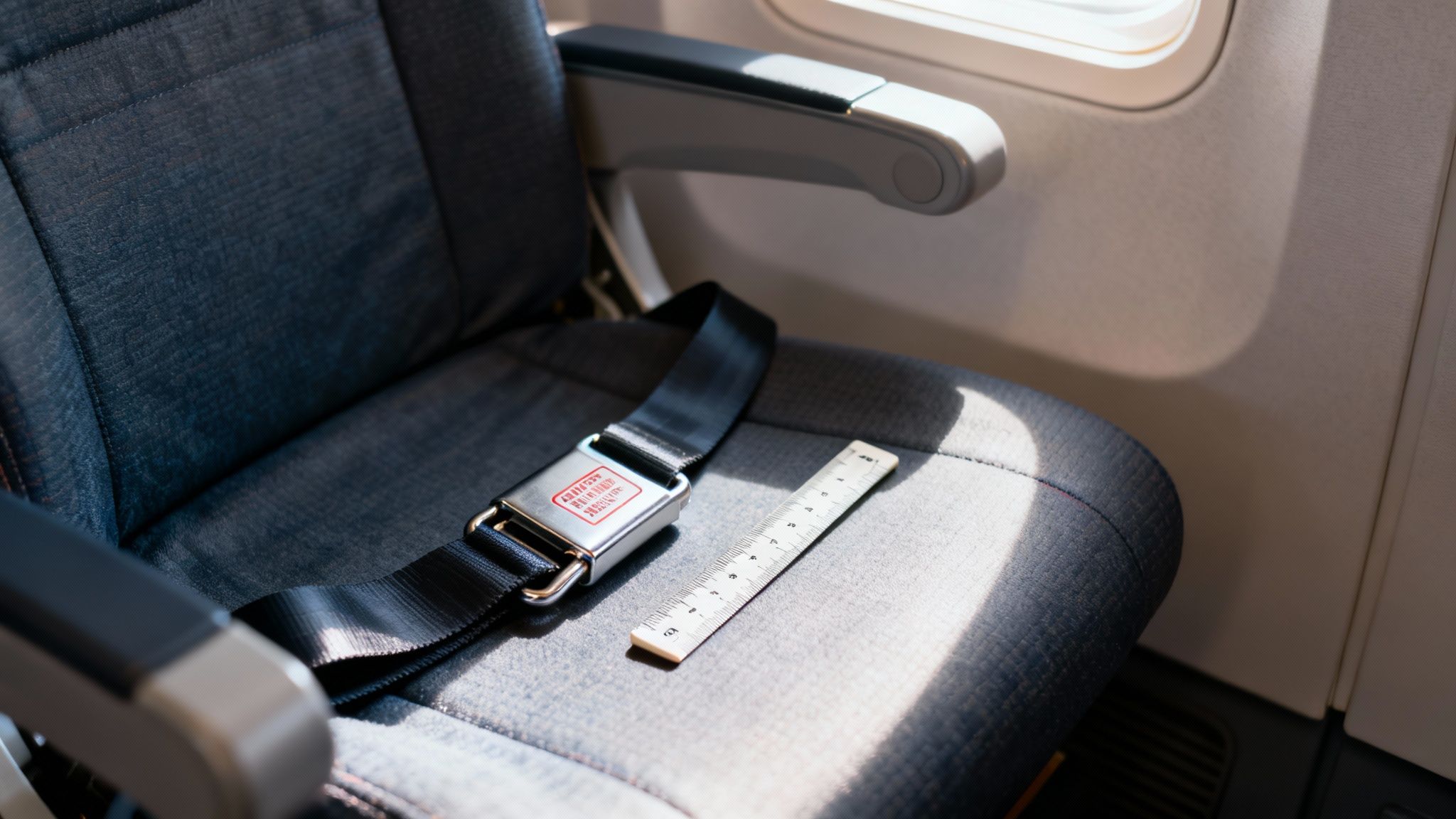
Knowing the numbers ahead of time can help you prepare. On most Delta planes, the standard seat belt measures between 40 and 45 inches. If that's not quite enough, the extenders they provide add an extra 24 to 25 inches of length, giving you plenty of slack.
Key Policy Points to Remember
To keep things simple, here’s a quick rundown of what you need to know:
- Always Available: Extenders are stocked on every single Delta flight. Just ask for one.
- Completely Free: There is never a charge for using a Delta-provided extender.
- Airline-Issued Only: This is a big one. For safety and liability reasons, you must use the extender provided by the airline. Personal extenders you might buy online are not permitted due to strict FAA regulations. To understand why this is so important, you can get more information on FAA-approved seat belt extenders.
A common question I hear is, "If I need an extender, do I have to buy a second seat?" The answer is no. Delta's policy is very clear that needing an extender doesn't automatically require you to purchase an additional seat, provided you can lower the armrest between you and the next passenger. The focus is on safety, not on adding financial stress to your trip.
Think of a seat belt extender as just another piece of standard safety equipment, like an oxygen mask or a life vest. It's on board for one reason: to keep you safe if you need it.
To help you visualize the measurements, here’s a quick summary of what you can expect on your next Delta flight. This should give you a good idea of whether you’ll want to request an extender for a more comfortable journey.
Delta Seat Belt and Extender Specifications at a Glance
| Item | Average Length |
|---|---|
| Standard Delta Seat Belt | 40–45 inches |
| Delta-Provided Extender | 24–25 inches |
| Total Length with Extender | Up to 70 inches |
Ultimately, Delta's straightforward and accommodating policy takes a lot of the guesswork and anxiety out of the equation for travelers. It’s one of the more passenger-first approaches in the industry, ensuring you can fly with confidence and peace of mind.
Why You Must Use the Airline's Extender
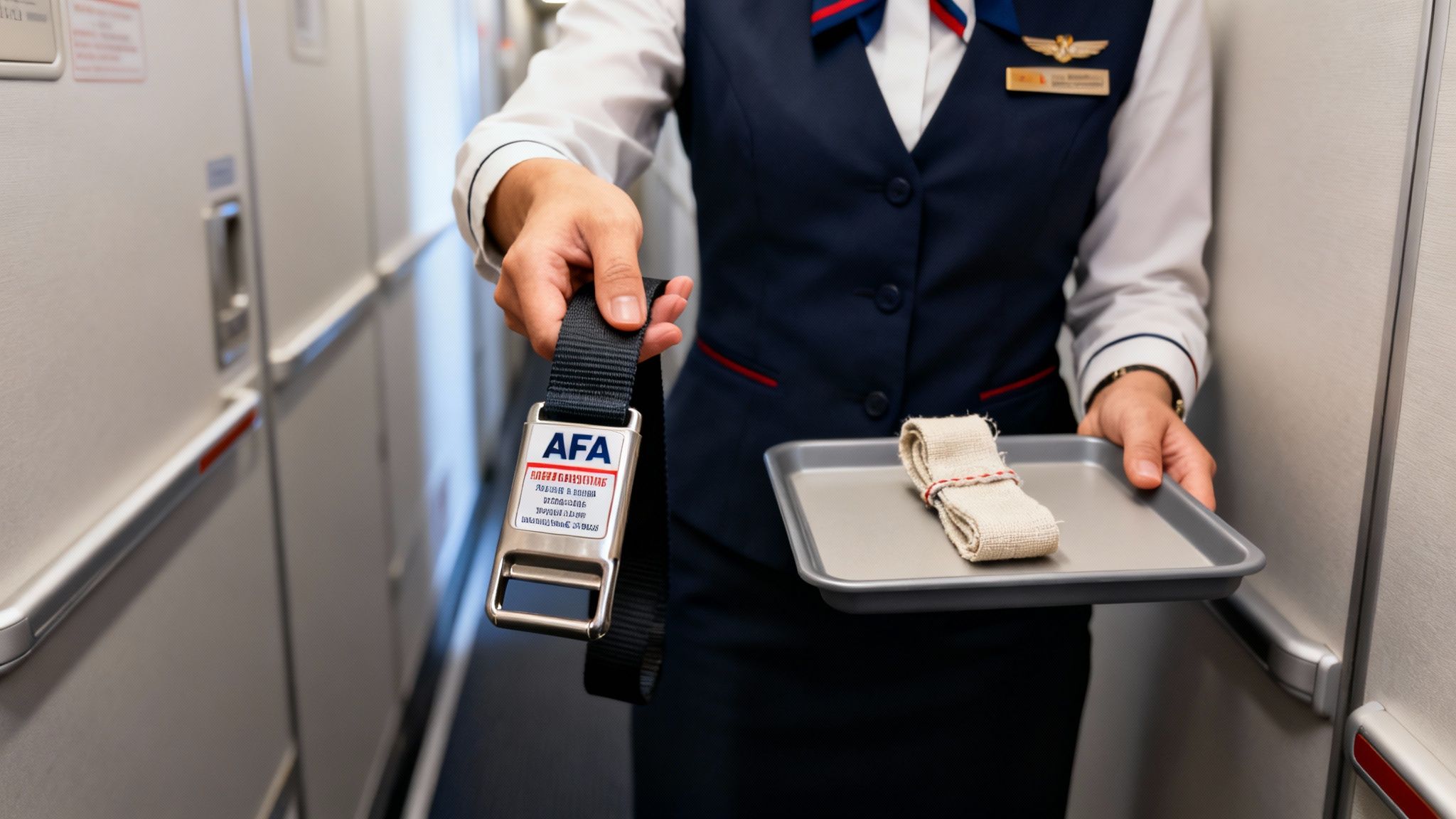
It seems so much easier to just buy your own seat belt extender and toss it in your carry-on, right? While the logic is understandable, bringing your own extender is strictly prohibited on Delta and every other U.S. airline. This isn't just an airline rule; it's a critical safety regulation enforced by the Federal Aviation Administration (FAA).
Every single component on an aircraft—from the engines down to the buckle on your seatbelt—has to go through a rigorous, expensive, and time-consuming certification process. Think of an airplane as a finely tuned system where every part is tested to work perfectly together under extreme stress. The extender Delta provides has been specifically designed, tested, and certified to integrate seamlessly with their seats.
A personal extender you buy online, no matter how well-made it seems, simply doesn't have that official FAA approval (E-4 or E-8). There's no way for the airline to verify its materials, manufacturing quality, or how it will perform under the immense force of severe turbulence or a hard landing. It's an unknown variable in a system that leaves nothing to chance.
The Real Dangers of a Personal Extender
So, what’s the worst that could happen? Using a non-certified extender isn't just against the rules—it introduces serious, tangible risks that the Delta seat belt extender policy is specifically in place to prevent. Flight attendants are trained to spot and confiscate these personal extenders for very good reasons.
Here are the main concerns:
- Failure Under Pressure: An uncertified extender could easily snap or break during severe turbulence, leaving you completely unsecured at the worst possible moment.
- Incompatible Buckle: It might click, but that doesn't mean it’s a secure fit. A slight mismatch in the buckle mechanism could cause it to release on impact.
- Delayed Evacuation: In a high-stress emergency, a non-standard buckle could jam or confuse you or a rescuer, wasting precious seconds when every single one counts.
"An aircraft is a system of interconnected, certified parts. Introducing an unknown variable, like a personal seat belt extender, compromises the integrity of that safety system. The airline-provided extender is the only one guaranteed to perform as expected."
Why Flight Attendants Are So Strict About This
When a flight attendant asks you to put away your personal extender and use the one they provide, they aren't just being difficult. They are enforcing federal law and following their primary training: to keep every single person on that plane safe.
Their job requires them to verify that all safety equipment is airworthy and correct. It’s nothing personal—it’s about a non-negotiable standard of safety.
The good news is that getting an extender is incredibly simple. Just ask for one during boarding, and they'll discreetly bring one to your seat. While it's helpful to know the general airline seat belt size for your own peace of mind, you should always rely on the equipment provided by the crew. It's the only way to ensure your safety is never compromised.
How to Ask for a Seat Belt Extender
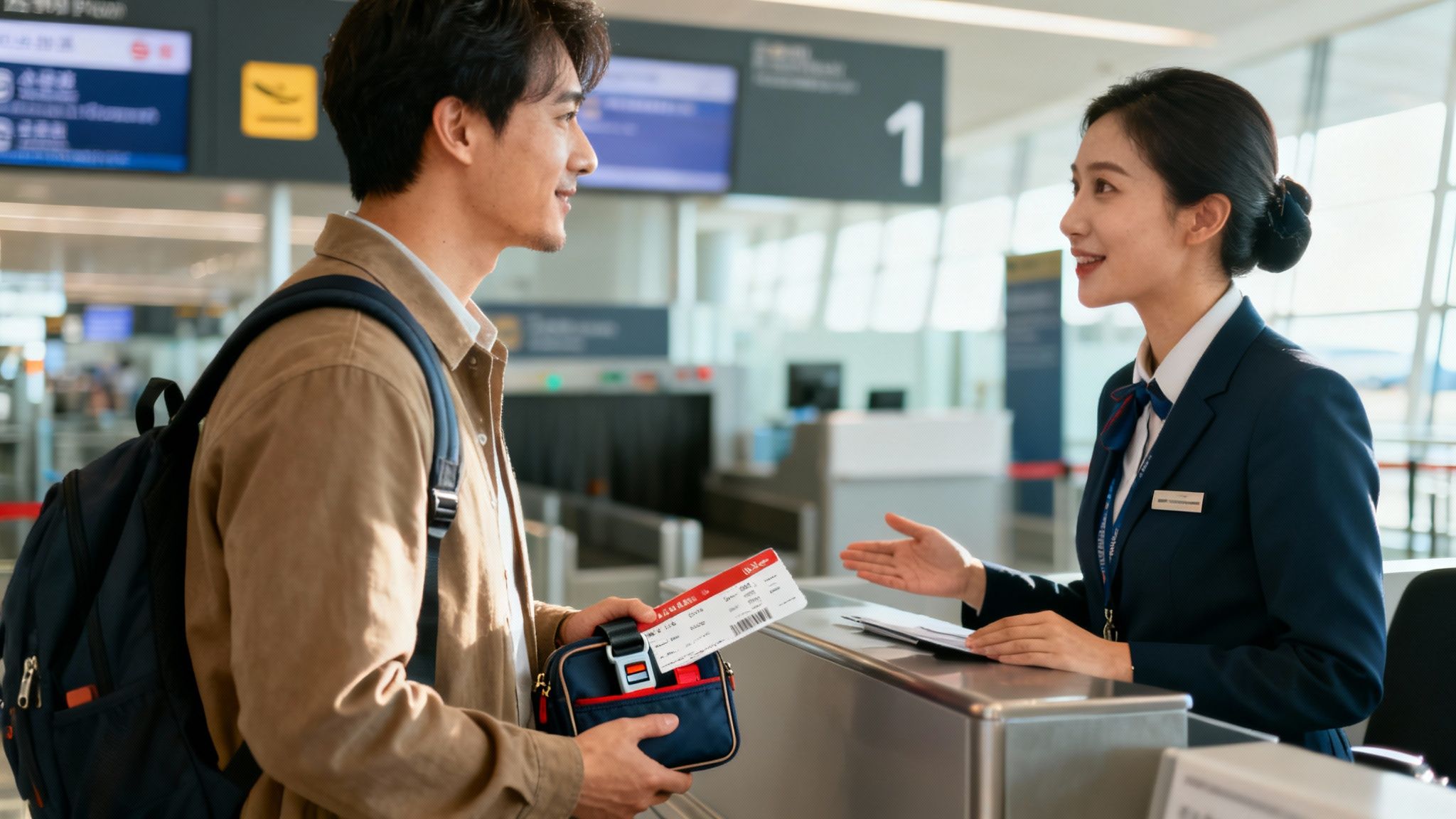
Knowing the official Delta seat belt extender policy is the first step, but a lot of travelers wonder about the best way to actually ask for one. Don't worry—the whole process is designed to be straightforward and private. The real key is knowing when and how to ask to make your travel day as smooth as possible.
Your first chance to get this sorted is usually at the gate, well before you board. As the gate agent is scanning your boarding pass, you can quietly let them know you’ll need an extender. This little heads-up allows them to give the flight crew a quick call, so they can have one waiting for you.
Asking During the Boarding Process
If you’d rather wait until you’re on the plane, that’s completely normal and what most people do. The perfect time is right as you step onto the aircraft and are greeted by a flight attendant at the door. A simple, low-key request is all you need.
This timing is great because the flight attendant can bring one to your seat while you're stowing your bag, often before the cabin even starts to fill up. It’s a seamless way to handle it without feeling like you’re in the spotlight.
Not sure what to say? Keep it simple. Here are a few phrases that work perfectly:
- “Hi, could I get a seat belt extender for seat 24A, please?”
- “Morning, I’ll need an extender when you have a moment.”
- “Excuse me, may I have a belt extender?”
Trust me, the cabin crew gets these requests on virtually every single flight. For them, it’s a routine safety check, no different than making sure your tray table is up for takeoff.
Think of it this way: asking for an extender isn't a special favor. It's a standard safety procedure. Flight attendants are focused on making sure every single passenger is securely buckled in, and providing an extender is a crucial part of that job.
What to Do if You Forget to Ask Early
It happens. You get to your seat, get settled, and then realize the belt isn't going to click. No need to panic.
Just press the flight attendant call button above your seat. When they arrive, or if one happens to be walking by, you can make the same quiet request right from your seat. They'll bring one over discreetly.
The crew's goal is to ensure you're safe and comfortable, and they're trained to handle these situations with professionalism. While it helps to understand the basics of using a seat belt extender for airplanes, always remember to use the specific equipment provided by Delta to meet FAA safety standards.
Planning Ahead for Pre-Boarding and Connecting Flights
A little bit of foresight can make a huge difference in how your travel day feels. When you know you'll need a seat belt extender, two moments in particular—boarding and layovers—can be made a whole lot easier with a simple plan.
One of the best things you can do for a stress-free start is to take advantage of pre-boarding. Delta allows passengers who need extra time or assistance to board first, and this absolutely includes anyone who needs to request and fit a seat belt extender.
Getting on the plane before everyone else is a game-changer. You'll have an empty aisle, plenty of time to get your carry-on stowed, and you can discretely ask the flight attendant for an extender without feeling rushed or crowded. It turns a potentially awkward moment into a calm, quiet one.
How to Get Pre-Boarding Access
It’s surprisingly simple and you don’t need to over-explain anything. All you have to do is talk to the agent at your departure gate.
- Step 1: Head to the gate desk before they announce general boarding.
- Step 2: Just say something like, "Hi, I'll need a little extra time to get situated on board, could I please pre-board?"
- Step 3: That’s it. The agent will almost always say yes and tell you when to line up.
There's no need to share any personal details. Gate agents handle these requests all day long and are there to help. This one small step can completely change the tone of your entire flight.
What About Connecting Flights?
So you’ve landed, but you have another flight to catch. What do you do with the extender? The answer is easy: you leave it on the plane.
Think of seat belt extenders like the life vests under your seat—they belong to that specific aircraft. When you get up to leave, just unbuckle it and leave it on the seat. The flight crew will take care of it.
Once you get to your next gate and board your connecting flight, you’ll simply ask the new flight attendant for another one.
Important: Never take a seat belt extender with you off the plane. Flight crews have to account for all safety equipment on board before they can take off again.
Of course, travel planning can get even more complex, especially when you have a furry friend in tow. For a comprehensive guide on how to travel with pets, it's worth checking out a dedicated resource.
Just remember this simple routine: pre-board, ask for an extender, fly, and leave it behind. Following these steps will help make your journey smooth from start to finish.
Understanding Your Passenger Rights
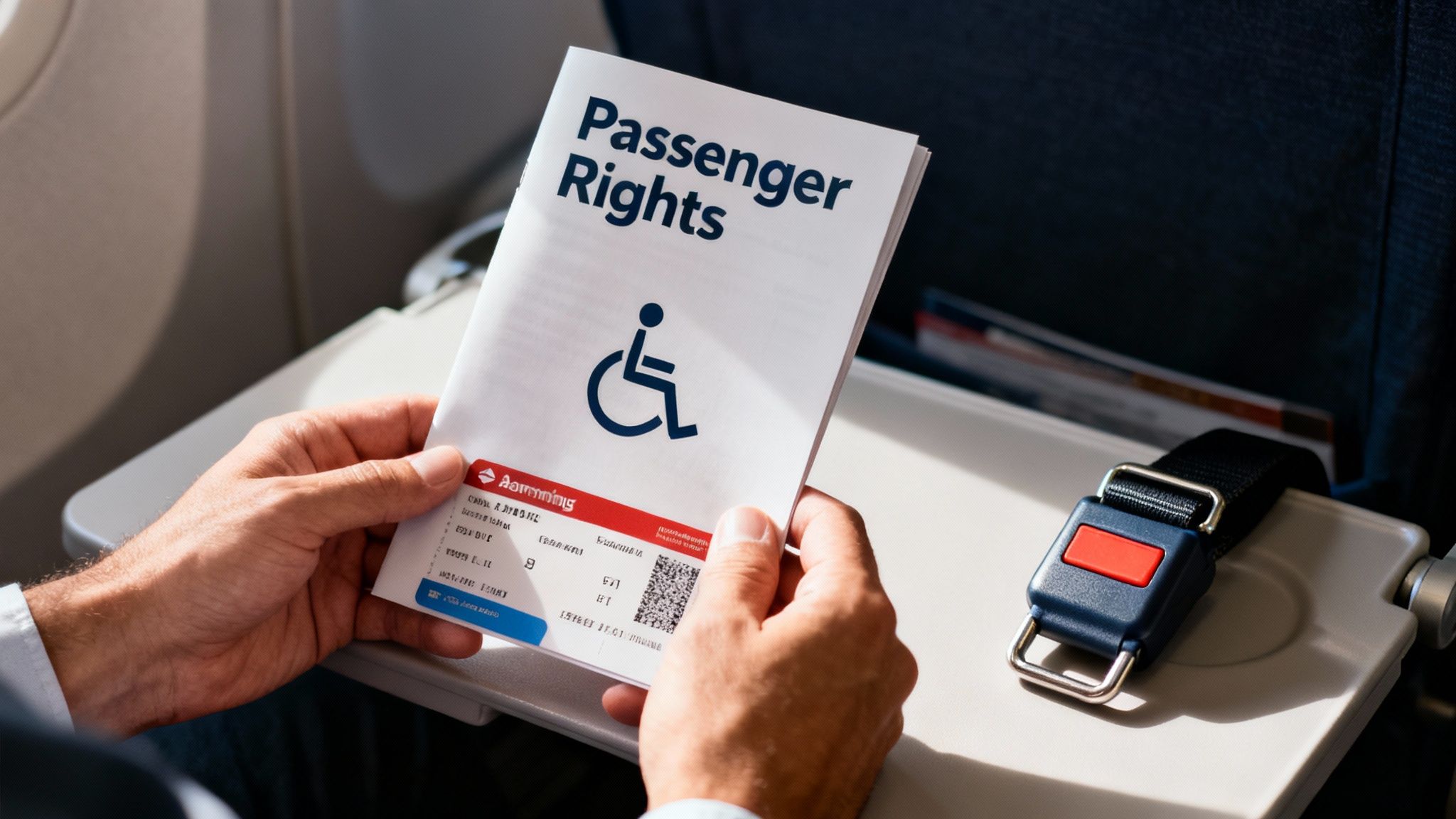
When you need a seat belt extender, it’s not just about getting comfortable—it’s about your safety and your right to accessible travel. As an air traveler, you're protected by federal law, which ensures you can fly safely and with dignity. Knowing these rights helps you become your own best advocate, so you can travel with less stress and more confidence.
The key piece of legislation on your side is the Air Carrier Access Act (ACAA). This is a powerful federal rule that stops airlines from discriminating against passengers with disabilities and requires them to provide the accommodations needed for a safe flight. In this case, needing an extender to be properly secured in your seat falls squarely under the ACAA's protection.
What the Air Carrier Access Act Means for You
The ACAA is precisely why airlines like Delta have to provide seat belt extenders to any passenger who asks, and they have to do it for free. The law frames the situation perfectly: an extender isn't a special favor, but a necessary piece of safety equipment.
The ACAA mandates that airlines provide assistance with seating accommodations to passengers with disabilities. This includes providing on-request, at no cost, an FAA-approved seat belt extender so that the passenger can be safely secured in their seat.
This legal backing is a game-changer. It means the Delta seat belt extender policy isn't just about good customer service—it's a legal requirement. Knowing this helps you stay calm and informed if you ever run into an airline employee who seems unsure of the rules. To get a deeper dive into the regulations and understand why only airline-provided extenders are allowed on planes, check out this guide on if seat belt extenders are legal.
Delta's Policy on Extra Seats
One of the biggest worries for passengers of size is whether needing an extender automatically means you have to buy a second seat. Delta's policy is pretty clear on this and lines up with the spirit of the ACAA.
You are not required to buy a second seat as long as two conditions are met:
- The airline-provided extender is enough to buckle you in safely.
- You can lower both armrests, keeping them down for the flight.
The airline’s main concern is that every passenger is safely buckled in and isn’t significantly encroaching on the space of the person next to them. If you meet those two requirements, a single seat is all you need. This policy helps lift a major financial and emotional weight off your shoulders, letting you focus on your trip instead of dreading a difficult conversation at the gate.
Common Questions About Delta's Extender Policy
Flying can bring up a lot of questions, especially when it comes to airline-specific rules. When you need a seat belt extender, you want clear answers, not confusing jargon. We've put together this FAQ to tackle the most common questions travelers have about the Delta seat belt extender policy. Think of it as your go-to guide for a smoother, more confident travel experience.
Let's dive into the questions we hear most often so you can feel fully prepared for your flight.
Will Delta Make Me Buy a Second Seat if I Need an Extender?
This is probably the biggest worry for passengers who need an extender, and the answer is refreshingly simple: No. Delta’s official policy for customers of size is not based on whether you need an extender.
Instead, the policy focuses on two straightforward physical requirements:
- Can the armrests stay down? The armrests on both sides of your seat need to be fully lowered and stay that way for the flight.
- Are you encroaching on the next seat? The goal is to make sure every passenger has safe and comfortable access to their own space.
If an extender helps you buckle in safely and the armrests are down, you’re usually all set. If space is still a bit tight, the flight crew will typically look for other solutions first, like moving you next to an empty seat if one's available, long before the conversation turns to buying an extra ticket.
How Much Longer Is a Delta Seat Belt Extender?
Delta's extenders add about 25 inches of extra length. A standard airline seat belt is usually around 45 inches, so with the extender, you get a total adjustable length of roughly 70 inches. That’s enough to comfortably accommodate the vast majority of passengers.
You'll notice that the extenders provided by the airline are often a distinct color, like a bright red. This isn't just for looks—it helps the flight attendants quickly confirm that everyone is buckled in securely during their safety checks. It’s a small but important part of keeping the cabin safe. For a deeper dive into why using the right equipment matters, check out our guide on seat belt extender safety.
What Happens if My Flight Runs Out of Extenders?
It’s extremely rare, but the thought of a flight running out of extenders is a valid concern. If you ever find yourself in this situation, the best thing to do is stay calm and let a flight attendant know you need one. They can't let the plane take off until you're safely secured, so they have to solve the problem.
The crew is trained for this. Their first step will be to double-check all the storage compartments and coordinate with each other to track one down.
Your safety is the airline's top priority. If an FAA-approved extender cannot be found on board, the crew must find an alternative solution to ensure you can be safely secured for the flight.
In the absolute worst-case scenario where there isn't a single extender on the aircraft, Delta has to accommodate you. This might mean moving you to a different seat with a longer belt or, if that’s not an option, rebooking you on the next flight at no extra cost.
Can I Use an Extender with My Child's Car Seat?
The answer here is a firm and absolute no. The Federal Aviation Administration (FAA) has a strict rule against using a seat belt extender to install a child's car seat (also known as a Child Restraint System, or CRS). This isn't just a recommendation; it's a critical safety regulation.
Extenders aren't designed or tested to secure a car seat, and using one could make the car seat dangerously unstable during turbulence or an emergency. The plane's lap belt must be threaded directly through the car seat's belt path and pulled tight to work correctly.
If you find the plane's seat belt is too short to install your car seat, don't reach for an extender. Let a gate agent or flight attendant know right away. They can often reseat you and your child in a row where the belts are a bit longer, making sure the car seat is installed safely.
At Seat Belt Extenders, we believe safety and comfort should never be a compromise. While our extenders are perfect for your vehicle on the ground, remember to always use the airline-provided equipment when you fly. Find your perfect, vehicle-specific fit today at https://seatbeltextenders.com.