

At their core, seat belt extenders are exactly what they sound like: simple, sturdy devices designed to add a bit of extra length to your vehicle's existing seat belt. Their purpose is to make buckling up possible for anyone who finds the standard belt just a bit too short, ensuring a secure and proper fit. This isn't just about comfort—it's about making sure everyone can follow the law and stay safe.
What Are Seat Belt Extenders and Who Needs Them
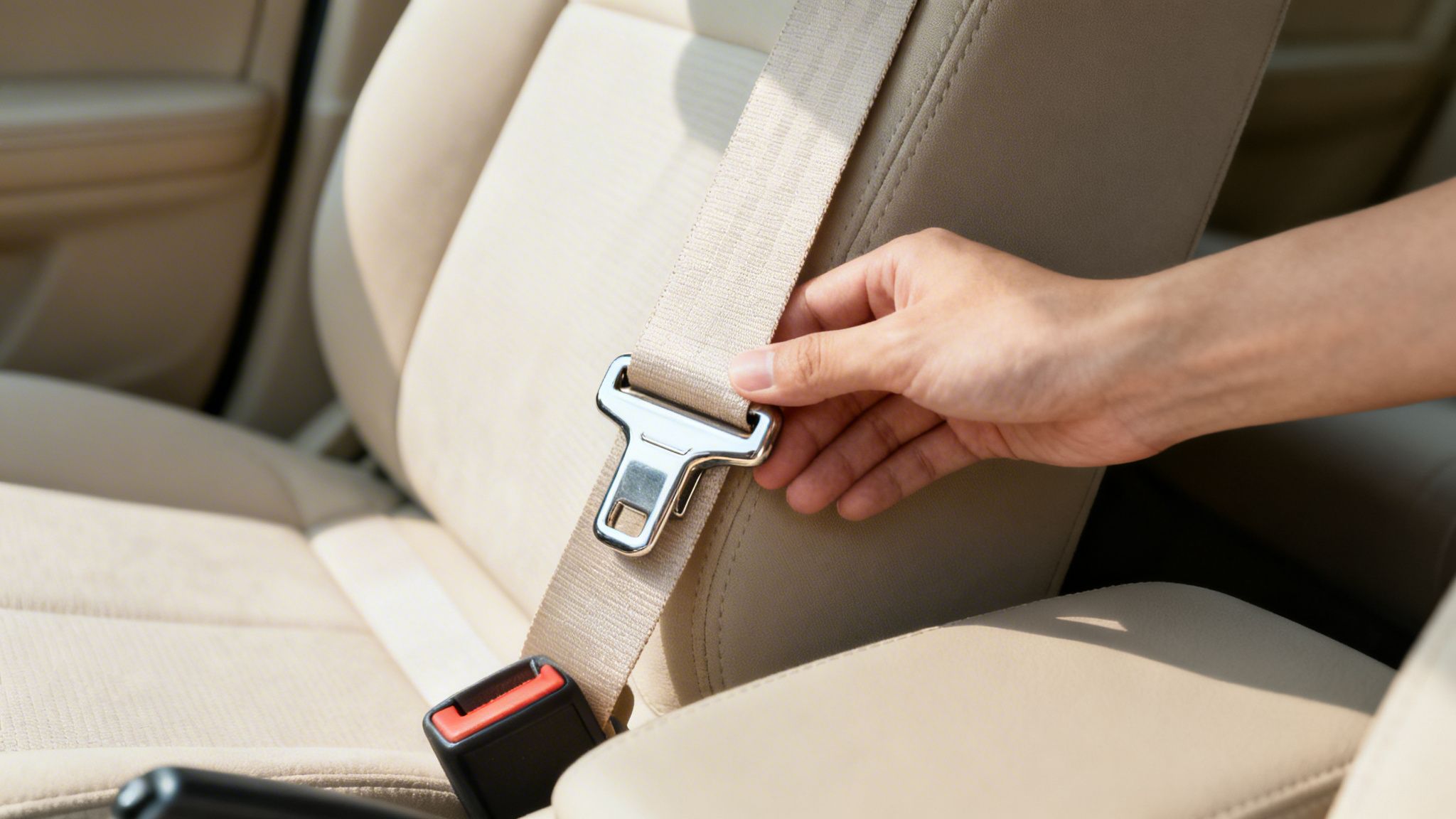
Most car manufacturers design seat belts with a "one-size-fits-most" approach. And for many people, that works just fine. But what happens when you're not in that "most" category? A seat belt extender acts as that crucial bridge, closing the gap so that anyone, regardless of their body type or specific needs, can buckle up safely.
This is a bigger deal than you might think. In fact, the global market for these devices hit USD 1.19 billion in 2024, which speaks volumes about how many people rely on them. With proper seat belt use proven to cut the risk of fatal injury by as much as 50%, extenders are a lifeline for those who wouldn't otherwise be able to buckle up at all.
Who Benefits Most From a Seat Belt Extender
The need for a little extra slack in a seat belt comes from all walks of life. From accommodating different body shapes to making the buckle easier to reach, these extenders serve a surprisingly diverse group of people. Getting familiar with the different types of seat belt extenders is the best way to find the right fit for your situation.
Here's a quick look at who benefits the most:
Who Benefits from Seat Belt Extenders
This table breaks down the primary users of seat belt extenders and why they are so essential for each group.
| User Group | Primary Need | Key Benefit |
|---|---|---|
| Plus-Size Individuals | Insufficient belt length | Enables a safe, comfortable, and legally compliant fit. |
| People with Mobility Needs | Difficulty reaching or latching the buckle | Brings the buckle closer, making it easier to fasten independently. |
| First Responders & Law Enforcement | Bulk from gear and utility belts | Allows the seat belt to fit securely over essential equipment. |
| Rideshare & Fleet Drivers | Accommodating diverse passengers | Ensures every passenger can be safely secured, regardless of size. |
Each of these scenarios highlights a different reason why a standard-issue belt might not be enough, underscoring the extender's role in making road travel safer for everyone.
A correctly fitting seat belt is non-negotiable for vehicle safety. An extender ensures the lap belt sits low across the hips and the shoulder belt rests snugly across the chest, which is critical for the system to work as intended during a collision.
Ultimately, an extender is for anyone who can't get a safe and secure fit with their car's built-in belt. By providing that essential extra length, these simple devices give more people the confidence that they're properly protected on the road.
Making Sense of E-4 and E-8 Safety Ratings
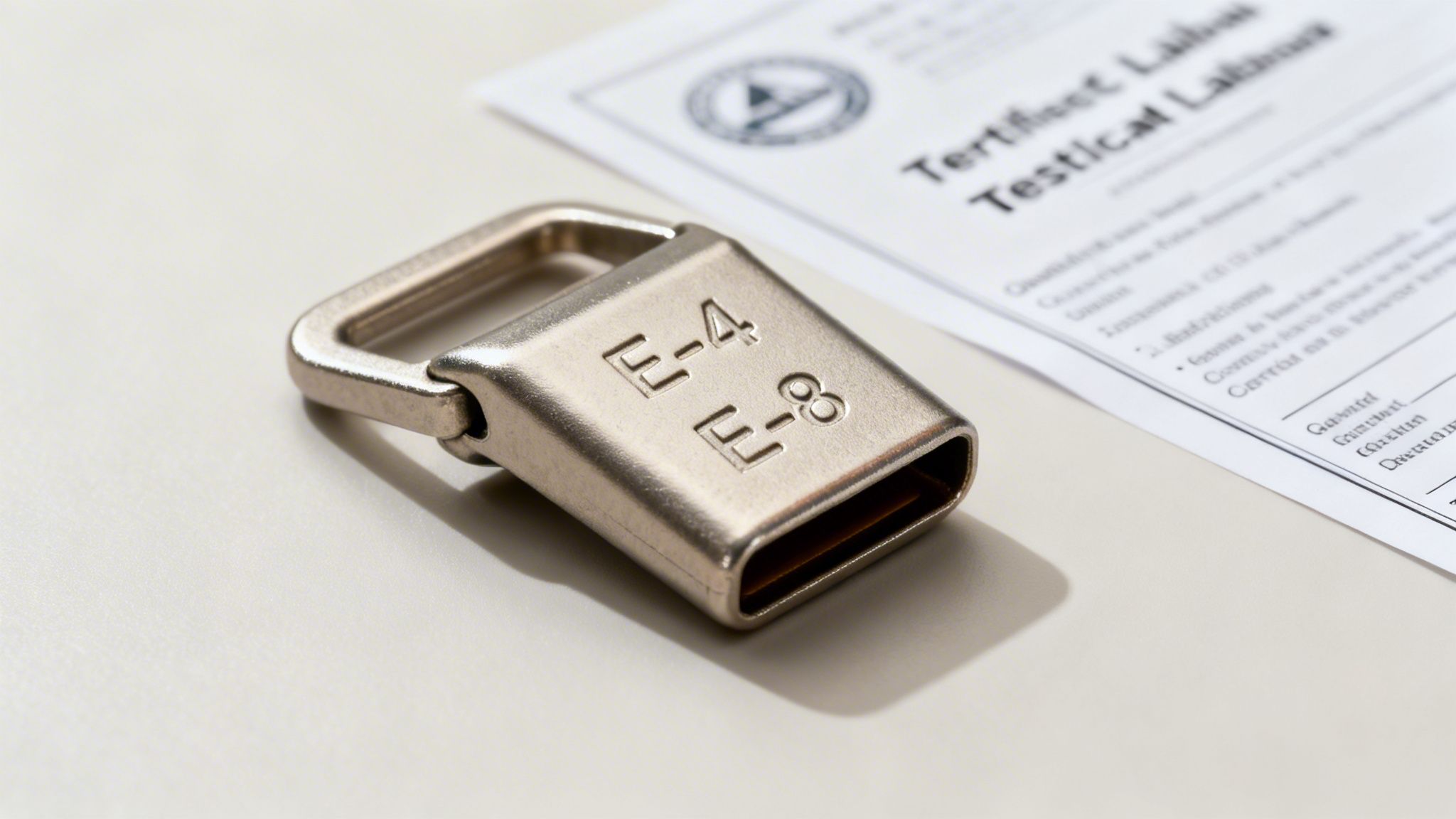
When you're shopping for a seat belt extender, you're not just buying a bit of webbing and a buckle. You're buying a piece of safety equipment, and understanding the certifications that go with it is the most critical part of your decision. It’s a simple fact: not all extenders are made the same. That little label on the side can be the difference between a properly tested safety device and a dangerous, unreliable accessory.
The gold standard for international safety in seat belt components are the E-4 and E-8 certifications. These aren't just fancy marketing terms. They are official designations from the United Nations Economic Commission for Europe (UNECE), signaling that a product has passed a whole battery of demanding safety tests.
Think of these certifications as a seal of approval from a globally respected authority. An extender with an E-4 or E-8 mark has been put through its paces by an independent lab to make sure it will hold up when it matters most. The entire process is designed to prove the extender meets or even exceeds the standards of the original belts installed in your car.
What Those E-4 and E-8 Labels Really Mean
So, what’s behind the "E" and the number? Each number just points to the country that issued the approval—E-4 comes from The Netherlands, and E-8 from the Czech Republic. But don't get hung up on the location; the testing standards, governed by UNECE Regulation 16, are the same for both.
This isn't a simple pass/fail test. It's a comprehensive evaluation covering several critical performance areas:
- Tensile Strength: They pull on the webbing and components with immense force to ensure they won't snap or tear during a sudden stop or, worse, a collision.
- Buckle Integrity: The latch gets clicked and unclicked over and over again to test its durability, and it's put under serious pressure to ensure it stays locked.
- Durability and Corrosion Resistance: The materials are checked to see how well they stand up to things like humidity and temperature swings, which ensures they’ll be reliable for years to come.
- Dynamic Crash Simulation: The whole extender is put into a simulated crash to see exactly how it behaves in a real-world emergency.
A certified extender is an engineered piece of safety gear. It's constructed from top-tier materials—like the same kind of polyester webbing used in commercial aircraft—and designed to work perfectly with your car's existing safety system, not against it.
An uncertified extender from a random online marketplace offers no guarantee of safety. It might look right, but without testing, there's no way to know if it can handle the forces of a crash. It's a massive, unpredictable risk.
Why Certification Isn't Just a "Nice-to-Have"
Choosing a certified extender gives you real peace of mind. You know the product has been independently verified and is up to the job. Uncertified knock-offs, on the other hand, often use cheaper materials and have never been formally tested. This can lead to total failure in an accident, with buckles shattering or webbing ripping apart.
Beyond safety, certification is also a big deal legally. While specific laws can differ, using a device that meets established international safety standards is your best bet for staying compliant with mandatory seat belt laws. We dive deeper into this in our guide on whether seat belt extenders are legal.
At the end of the day, that E-4 or E-8 mark is your assurance of quality and safety. It tells you the extension seat belt you’re about to click into place is a genuine safety component, not just a convenience item. When it comes to protecting yourself and your passengers, never leave it to chance.
How to Find the Right Extender for Your Car
Finding the perfect seat belt extender for your car isn’t about guesswork; it’s a simple matching process. But getting it right is absolutely critical. Seat belt latches are anything but universal.
Think of it like a lock and key. The metal tongue on your seat belt is the "key," and the buckle is the "lock." Every automaker uses a slightly different design, so a key for a Honda won't work in a Ford's lock.
This is exactly why grabbing a generic extender from an auto parts store is such a gamble. An extender that doesn't fit perfectly might click into place, giving you a false sense of security, but it could easily fail under the incredible forces of a collision. To be truly safe, you need an extender made specifically for your vehicle's unique "lock."
Start with Your Vehicle's Details
First things first, you need to know your car's exact make, model, and year. This is the starting point for finding a compatible extender. It's not uncommon for car manufacturers to change up their seat belt designs from one model year to the next, even on the same car. An extender that fits a 2022 model might not be right for the 2023 version.
Once you have those details, you can use a "shop by vehicle" tool online. This is the easiest way to cut through the clutter and see only the options that are guaranteed to fit your car, getting it right the first time.
The need for vehicle-specific parts is huge. North America, for instance, makes up about 36% of the global automotive extender market, a market valued at around USD 403 million in 2024. With over 280 million vehicles on U.S. roads and many standard belts still based on 1960s designs, it's no wonder millions of people need a better solution.
Measure and Match for a Perfect Fit
After you've narrowed things down by your vehicle, the next step is a quick visual check to confirm the fit. It only takes a minute and involves two simple actions: measuring the metal tongue of your seat belt and comparing its shape.
- Measure the Metal Tongue: Grab a ruler and measure the width of the metal tongue—the part that clicks into the buckle. Most are designed around a 21.5mm standard, but you absolutely want to measure yours to be sure.
- Visually Match the Shape: Now, take a close look at the tongue's shape. Is it perfectly straight? Does it have a slight curve or a unique notch? The extender you choose must have a receptacle that mirrors that shape exactly.
This two-step check is your guarantee that the extender will click in securely and perform just like the original buckle. To see some examples of what to look for, our guide on seat belt fasteners breaks down the different designs in more detail.
Choosing Between Rigid and Flexible Extenders
You've found the right fit—great! Now for the final choice: the style. Extenders generally come in two main types, rigid and flexible, and each one solves a different problem.
A rigid extender is built with a stiff, cable-like arm. Its job is to raise the height of the buckle itself, making it easier to reach. This is a game-changer if your car's buckle is buried deep in the seat cushions.
If you're tired of digging between the seat and the console just to find the buckle, a rigid extender is what you need. It brings the latch up to an accessible height, which is a massive help for anyone with mobility challenges or who just wants to buckle up without the hassle.
A flexible extender, on the other hand, is made from the same kind of woven webbing as your car's seat belt. Its only purpose is to add length, giving you those crucial extra inches for a safe and comfortable fit.
Here’s a quick comparison to help you decide which style is right for your situation.
Choosing Your Extender: Rigid vs. Flexible
| Feature | Rigid Extender | Flexible (Webbing) Extender |
|---|---|---|
| Primary Use | Raising a recessed or buried buckle. | Adding length to the seat belt. |
| Best For | Individuals with limited mobility. | Plus-size individuals or those wearing bulky gear. |
| Construction | Stiff, cable-like material. | Woven webbing similar to existing seat belts. |
| Benefit | Makes buckling easier and faster. | Provides a secure and comfortable fit. |
Choosing the right style is just as important as getting the latch type correct. By thinking about what you really need—easier access or more length—you can pick the extension seat belt that makes every single drive safer and more comfortable.
Navigating Air Travel with an Airplane Extender
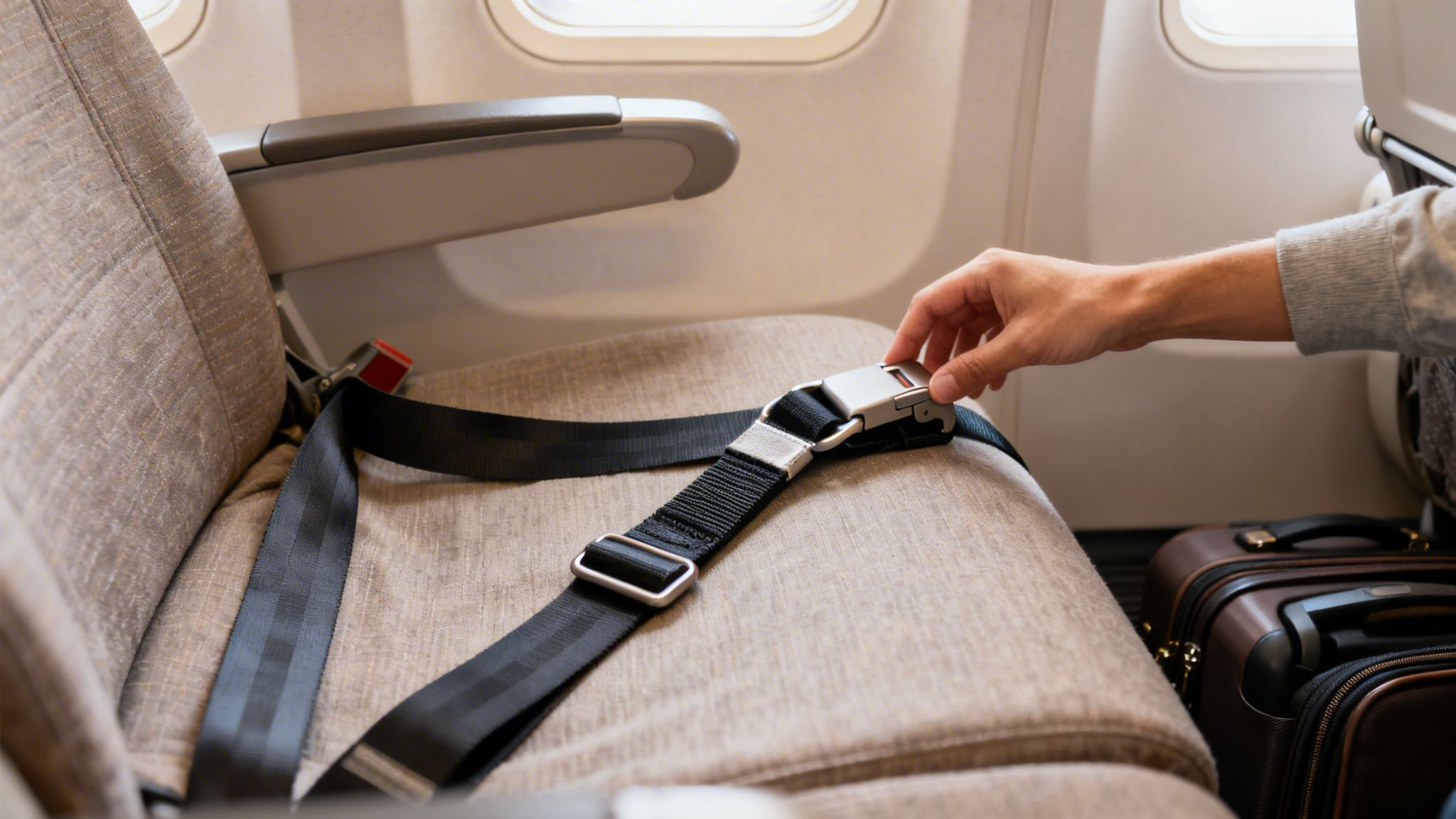
That familiar click of the seat belt is the universal sound of a journey beginning. But for a lot of travelers, this simple act is a source of real anxiety. Just like in cars, airplane seat belts are built for a one-size-fits-most model, which means many passengers can't buckle up safely—or at all.
This is exactly where an airplane seat belt extender becomes a travel game-changer. It gives you the extra length needed to stay securely fastened, transforming a potentially stressful flight into a comfortable one. The idea is simple, but knowing the rules of the sky is crucial.
A common mistake travelers make is thinking their car extender will work on a plane. It won't. While they do the same job, the buckle mechanisms are completely different. Most airlines use a Type A buckle, which is not compatible with any automotive latch. Trying to use your car's extender on a plane creates a major safety risk because it simply won't lock in place.
Your Options at 30,000 Feet
When you need a bit more slack on a flight, you really have two choices: ask the airline for one or bring your own. Airlines are required to have extenders on hand for passengers who need them, and they are always free of charge. You can just quietly ask a flight attendant as you're boarding or after you've found your seat.
While borrowing one works, there are some pretty compelling reasons to have your own.
- Guaranteed Availability: Airlines only carry a handful of extenders. On a packed flight, especially during the holidays, they can and do run out.
- Discretion and Comfort: Bringing your own lets you get settled and buckled in right away without having to flag someone down and wait.
- Consistency: You know the history and cleanliness of your own gear. It’s one less thing to worry about, giving you peace of mind from takeoff to landing.
Having your own just means you’re always prepared, cutting down on travel-day stress before you even get to the airport.
FAA Rules and Personal Extenders
The Federal Aviation Administration (FAA) has very clear guidelines for seat belt extenders. The most important rule? Any extender used on an aircraft must be FAA-compliant and have a label showing it meets safety standards. The flight crew has the final say and might ask to inspect your personal extender to check its condition and certification.
You are allowed to bring your own FAA-compliant extender, but the airline's policy always comes first. They may require you to use the one they provide. Be ready to comply if asked—their job is to ensure the safety of every single person on board.
This is precisely why buying a certified extender with clear labeling is so vital. A quality product will have the markings that flight attendants are trained to look for. To dive deeper into the specifics, you can learn more about FAA-approved seat belt extenders and make sure you're fully prepared.
In the end, it doesn't matter if you borrow an extender or bring your own—the goal is the same: to fly safely and comfortably. An extension seat belt made for air travel is a small, simple tool that can make a world of difference to your journey, letting you lean back and enjoy the view.
Getting It Right: How to Install and Use Your Extender Safely
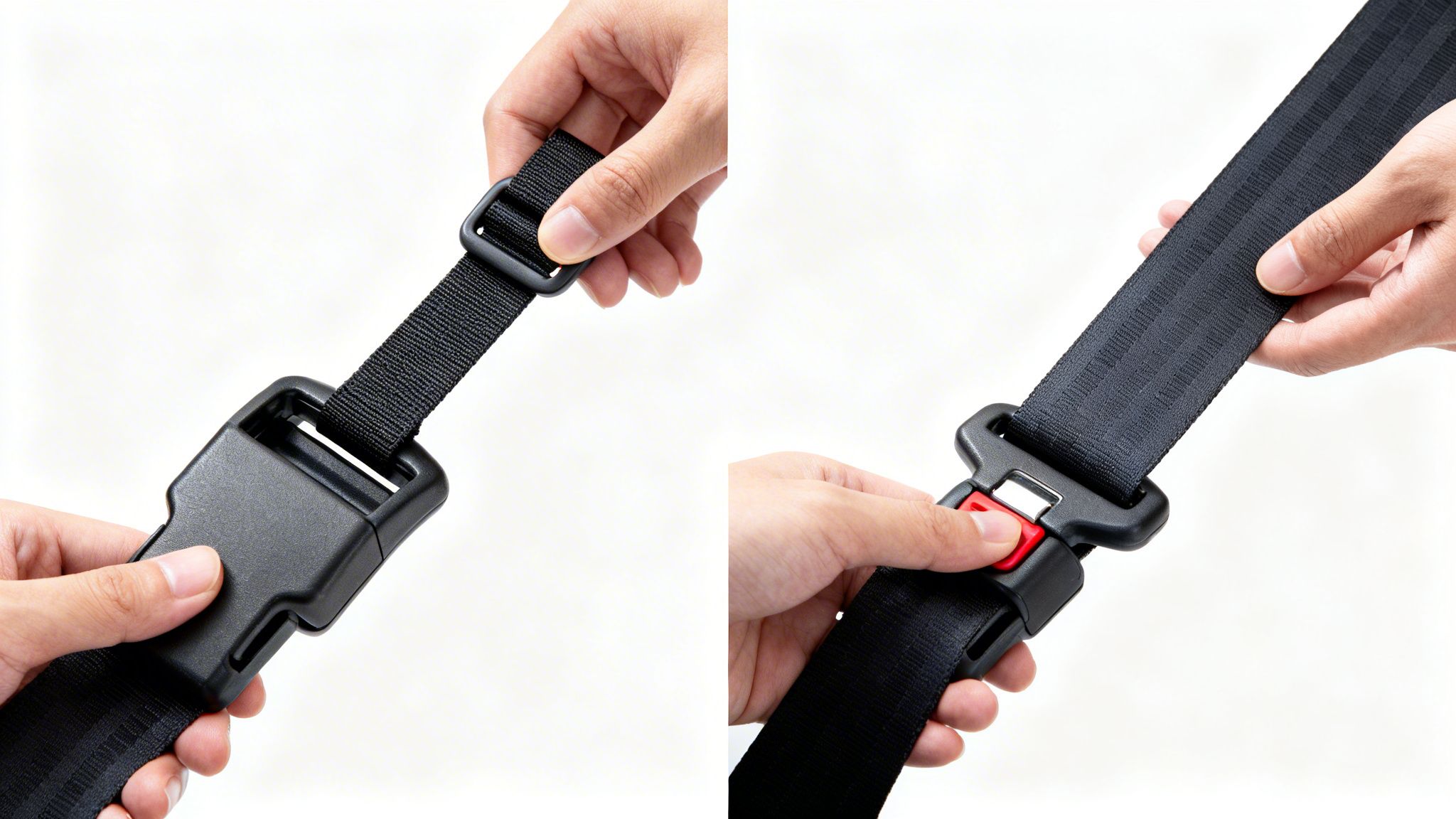
You've done the research and picked out the perfect, certified extender for your car. Great! But getting the right product is only half the battle. Now, let’s talk about using it correctly.
While it seems as simple as clicking two things together, proper installation is about creating a truly secure connection—one that performs just like your vehicle's factory-installed safety system.
The key is listening for two distinct clicks. The first "click" happens when you connect the extender to your car's seat belt receptacle. The second "click" is when you fasten your actual seat belt tongue into the extender. Hearing both is your confirmation that everything is fully locked in place.
Once you’re buckled, make it a habit to give the whole belt a firm tug. You shouldn't feel any looseness or give at the connection points. This quick check is the single best way to know your extension seat belt is secure and ready to do its job.
The Golden Rules of Using an Extender
With your extender installed, there are a few absolute, non-negotiable rules to follow. These aren't just helpful tips; they are critical for making sure your seat belt works exactly as intended during a sudden stop or, worse, an accident. Getting these basics right is at the core of seat belt extender safety.
Here’s what you absolutely must know:
- One Extender at a Time: Never, ever connect two or more extenders together. This is sometimes called "daisy-chaining," and it's incredibly dangerous. Each connection point is a potential failure point, and linking them compromises the entire system's strength.
- One Person, One Belt: This is a universal rule of car safety. A seat belt, whether you're using an extender or not, is only designed to restrain one person. Sharing a belt is a recipe for disaster and drastically increases the risk of severe injury to everyone involved.
- No Car Seats or Boosters: This is the most important rule, period. Never use a seat belt extender with any child restraint system, including car seats and booster seats. These devices have their own rigorous safety standards and are tested for use only with the vehicle’s original belt. An extender alters the geometry and fit, which can lead to catastrophic failure in a crash.
Keeping Your Extender in Tip-Top Shape
Just like any other safety device in your car, your extender needs a little bit of care to stay reliable. A few simple maintenance habits will ensure it works perfectly for years to come.
Give it a quick visual check before you use it. Look over the webbing for any fraying, cuts, or fading from sun damage. Check the plastic and metal parts for any cracks or signs of unusual wear. If anything looks off, it's time to replace it. Don’t take chances.
Cleaning is easy. Just use a bit of mild soap and water on the webbing. Gently scrub any dirty spots and let it air dry completely before using it again. Steer clear of harsh chemicals or bleach, which can break down the webbing fibers and weaken the material.
Finally, make sure the buckle itself stays clean. Crumbs, lint, or other gunk can get inside and prevent it from latching securely. A quick puff of compressed air is usually all it takes to clear out the mechanism so you always hear that solid, satisfying click.
Answering Your Legal and Safety Questions
It's completely normal to have questions when it comes to any piece of safety equipment in your vehicle. In fact, it's a good thing. Let's tackle some of the most common concerns about seat belt extenders head-on, so you can feel confident in your decision.
The biggest question we hear is always, "Are seat belt extenders actually safe?"
The short answer is yes, but with a very important condition. They are only safe if they are E-4 or E-8 certified and are the correct match for your specific vehicle. Think of these certifications as a promise—a guarantee that the extender has been through punishing tests for strength and durability. It proves the device can handle the same extreme forces in a crash as the seat belts that came with your car.
An extender without that certification? That's a serious risk. It's an unknown quantity with no proof it will hold up when you need it most.
Are They Legal to Use?
This is another major point of confusion. In most places, the law is simple: you have to be buckled up. A seat belt extender is a tool that helps you obey that law.
If the belt in your car is too short, you can't buckle up safely or legally. A properly fitted, certified extender fixes that problem, allowing you to follow the rules of the road. It isn't some shady modification; it’s an accessibility device.
At its core, a seat belt extender is about enabling compliance with seat belt laws. When you use a certified, correctly fitted device, you're making it possible to be legally and safely secured in your vehicle.
For those interested in the broader context of vehicle safety rules, you can find more information about general UK transport law.
Will an Extender Void My Car Insurance?
This is a smart question, and it comes right back to certification. Insurance policies operate on the assumption that your vehicle's safety features are all working as the manufacturer designed them. If you add an untested, uncertified accessory, an insurance company might have grounds to dispute a claim if you're in an accident.
But an E-4/E-8 certified extension seat belt is a different matter entirely.
These devices aren't just random parts; they are engineered safety components proven to meet the same high standards as your car's original equipment. They're designed to work as a seamless part of your car's safety system.
By choosing a certified product that allows you to use your seat belt correctly, you're actually reinforcing your vehicle's safety—not compromising it. This responsible choice aligns with what insurance providers value, protecting your peace of mind from both a safety and a liability perspective.
Your Questions Answered
When you're looking into seat belt extenders, a few questions almost always pop up. Let's tackle the most common ones with some straightforward, practical answers.
Can I Use the Same Extender in Different Cars?
It's a great question, but the answer is almost always no. Think of your car's seat belt buckle as a key, and the metal tongue as the keyhole. They are designed to match perfectly. Car manufacturers use dozens of different buckle designs, even changing them between model years.
An extender made for a Honda isn't going to click securely into a Chevrolet. For the extender to be safe, the connection needs to be rock-solid, and that only happens when you use one specifically matched to your vehicle's make, model, and year.
What if I Accidentally Order the Wrong One?
It happens! Finding the exact match is crucial, but sometimes mistakes are made. That’s why a good supplier will always have a hassle-free return and exchange policy. If you get the wrong one, or even if you sell your car and get a new one, you should be able to swap it out for the correct model.
The top priority is your safety. A flexible return policy isn't just good customer service; it's a commitment to ensuring you end up with the right, safe product for your car.
How Should I Care for My Extender?
Keeping your extender in top shape is easy. For the webbing, just a bit of mild soap and water will do the trick. Gently clean it and let it air dry completely. The most important thing to remember is to never use harsh chemicals or bleach, as they can seriously weaken the fabric fibers over time.
A great habit to get into is quickly checking the buckle for crumbs, lint, or anything else that might have fallen inside. Keeping the mechanism clear ensures it will latch properly every single time.
A little bit of care goes a long way in making sure your extender is always ready and reliable.
When Should I Absolutely Not Use an Extender?
This is the most critical rule of all: never, ever use a seat belt extender with a child's car seat or booster seat. There are no exceptions to this.
Child safety seats are engineered and crash-tested to work with the vehicle's standard seat belt system. Adding an extender changes the angles and the way the belt distributes force in a crash, which could cause the car seat to fail catastrophically. Always stick to the car seat manufacturer's installation guide—it’s the only way to keep your little one safe.
At Seat Belt Extenders, we take the guesswork out of finding the right fit. Our click-and-go extenders are E-4/E-8 certified and guaranteed to match your specific vehicle for a secure, comfortable ride. Shop by your car today and get free 3-day shipping on orders over $35. Find your perfect fit at https://seatbeltextenders.com.

