
It’s a simple fact: a seat belt only works if you can buckle it. For millions of people, the standard belt in a car just isn't long enough. This isn't a matter of convenience—it's a critical safety issue. That’s where auto seat belt extensions come in, bridging a dangerous gap in vehicle safety.
What Are Auto Seat Belt Extensions and Who Needs Them?
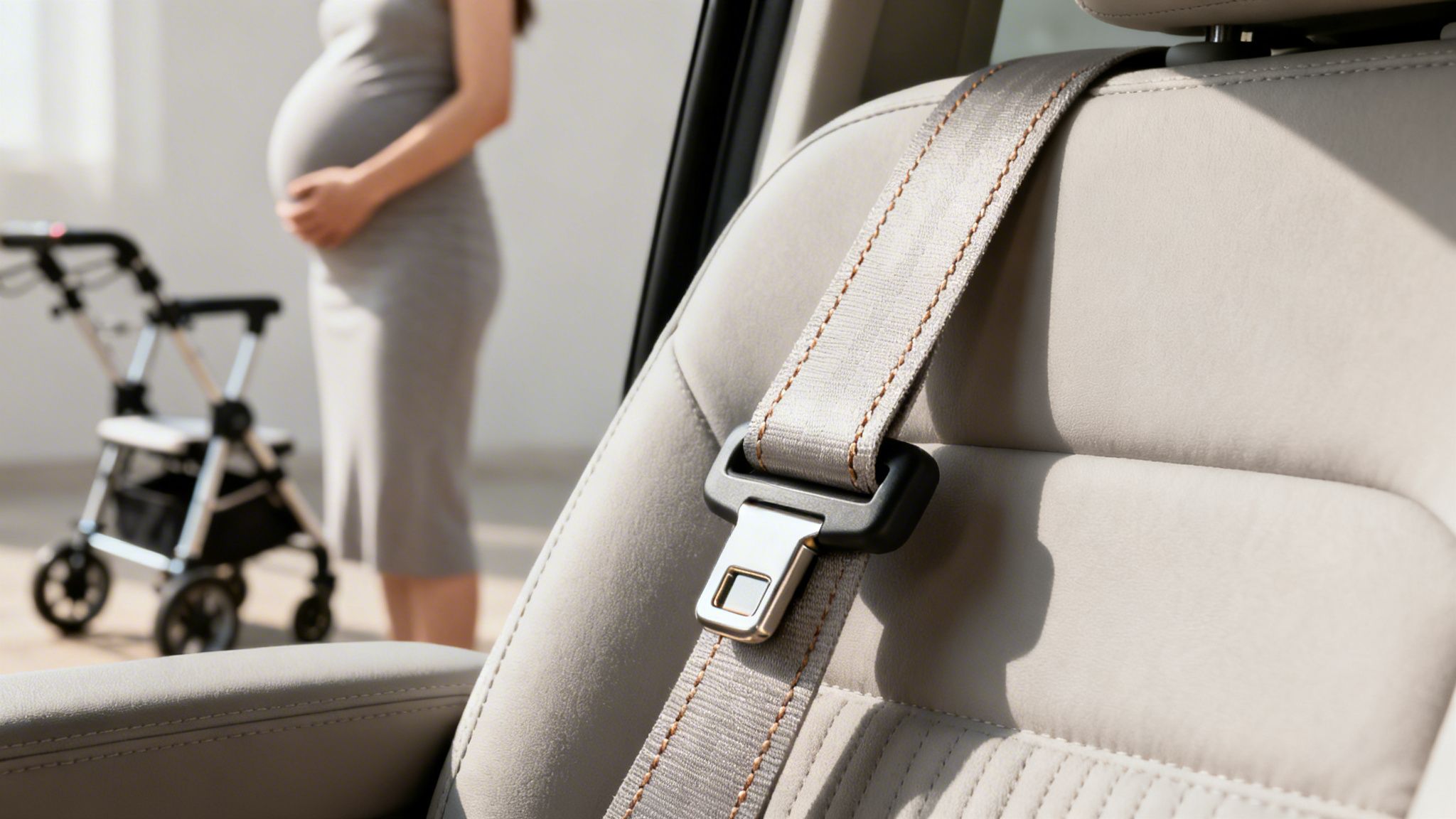
Think of a seat belt extender as a short, sturdy bridge. It connects your existing seat belt to the buckle when there just isn't enough slack to do it on your own. Most extenders add between 6 and 12 inches of length, giving you the room you need to click in safely and comfortably.
One end of the extender clicks directly into your car's seat belt buckle. The other end provides a new buckle for you to connect your seat belt's metal tongue into. The goal is simple but vital: make it possible for the seat belt to do its life-saving job correctly.
A seat belt that’s stretched too tight, worn improperly, or not worn at all offers little to no protection in a crash. An extender ensures everyone can buckle up the right way, without compromising the vehicle’s original safety system.
More Than Just a Fit Issue
It’s easy to assume extenders are only for plus-size individuals, but their use is far more widespread. All kinds of people depend on them for a safe and comfortable ride.
The table below breaks down who benefits most from an extender and why.
Who Benefits From a Seat Belt Extender
| User Group | Primary Challenge | Key Benefit |
|---|---|---|
| Plus-Size Individuals | The standard seat belt is too short to reach the buckle. | Provides the extra length needed for a secure and safe fit. |
| Expectant Mothers | A tight belt puts uncomfortable pressure on the abdomen. | Allows the lap belt to sit low across the hips, safely beneath the baby bump. |
| People with Mobility Needs | Limited reach or flexibility makes buckling difficult. | Brings the buckle forward to an easier-to-reach position. |
| Law Enforcement | Bulky equipment on a duty belt gets in the way. | Creates clearance around gear, ensuring the officer can stay buckled. |
As you can see, the need for a bit of extra room is a common and important one.
Making Safety an Easy Habit
At its core, a seat belt extender does more than just add length—it removes a major obstacle to being safe. If buckling up is a struggle, it’s understandable that people might skip it altogether. But in a collision, an unbuckled person not only faces immense personal risk but also becomes a danger to everyone else in the car.
An extender turns a moment of frustration into a simple "click." It makes buckling up effortless, encouraging the kind of consistent use that saves lives. To figure out which one is right for your vehicle, you can explore the different seat belt extender types available. This small device empowers people to take control of their safety, making every trip a safer one.
Understanding Safety Certifications for Extenders
When you're looking for an auto seat belt extension, safety isn't just a feature—it's everything. Online marketplaces are flooded with uncertified products that might look the part, but they carry a serious risk. Using one is a bit like putting the wrong type of oil in your engine; it might seem fine at first, but it can lead to catastrophic failure when it matters most.
A properly certified extender isn't just a strip of fabric with a buckle. It’s an engineered safety device that has been put through its paces to ensure it can handle the incredible forces of a collision. After all, this small component becomes a critical link in your vehicle's entire restraint system.
Demystifying E-Mark Safety Standards
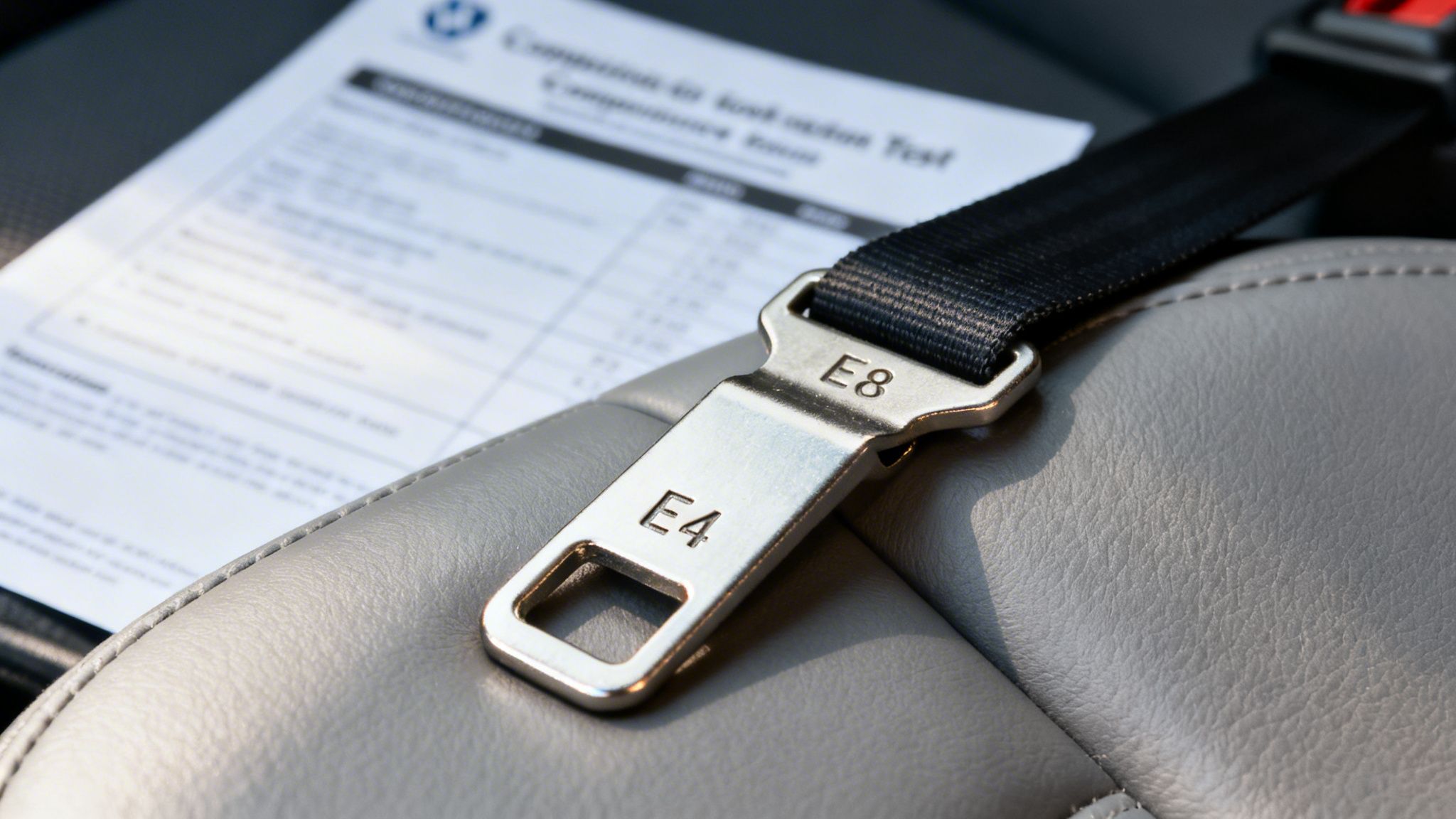
The gold standard for safety in the world of seat belt components is the E-Mark certification, specifically E-4 (from the Netherlands) and E-8 (from the Czech Republic). These aren’t just brand names; they are official seals of approval from European regulators, and they’re recognized worldwide for their incredibly high standards.
To earn an E-Mark, an extender has to survive a brutal series of tests that mimic real-world crash scenarios. This includes:
- Tensile Strength Testing: The extender is pulled with thousands of pounds of force. This ensures the webbing, stitching, and buckle won’t snap under the immense strain of an impact.
- Durability and Cycle Testing: The buckle is clicked and unclicked thousands of times to make sure it won’t wear out from everyday use.
- Environmental Testing: The materials are subjected to extreme heat, cold, and humidity to confirm they won’t degrade and lose their strength over time.
A certified auto seat belt extension is engineered to work in harmony with your car’s existing safety systems, like pretensioners and load limiters. An uncertified product can actually interfere with these systems, stopping them from deploying correctly when you need them most.
This focus on component safety is part of a much larger trend. The global automotive seat belts market is expected to hit $19.45 billion by 2030, showing just how seriously manufacturers and consumers are taking road safety. It underscores why every single part, including an aftermarket extender, must meet rigorous E-4/E-8 standards.
How to Identify a Certified Extender
So, how can you tell a safe, certified extender from a dangerous fake? Thankfully, it’s easier than you might think once you know what to look for.
A genuine E-Mark certified extender will have specific information printed on a tag that is permanently sewn into the webbing. You won't find this on a flimsy piece of cardboard or a sticker that can be peeled off.
Here’s what to look for on the tag:
- The Capital 'E' in a Circle: This is the non-negotiable symbol of E-Mark certification.
- The Number: Right next to the 'E', a number like 4 or 8 tells you which country issued the approval.
- The Regulation Number: This is a unique code that specifies the exact safety standard the product has met.
If an extender is missing these permanent, professional markings, you should assume it has never been properly tested. These products are often made with cheap, substandard materials that can fail dramatically in a crash, making your seat belt completely ineffective.
Making sure your extender meets these standards is essential, as they often align with broader UK automotive regulations. For a deeper dive into the rules, our article on whether seat belt extenders are legal has more information. In the end, choosing a certified product is the only way to be sure you're adding a safe, reliable component to your car's most important safety system.
How to Find the Perfect Extender for Your Vehicle
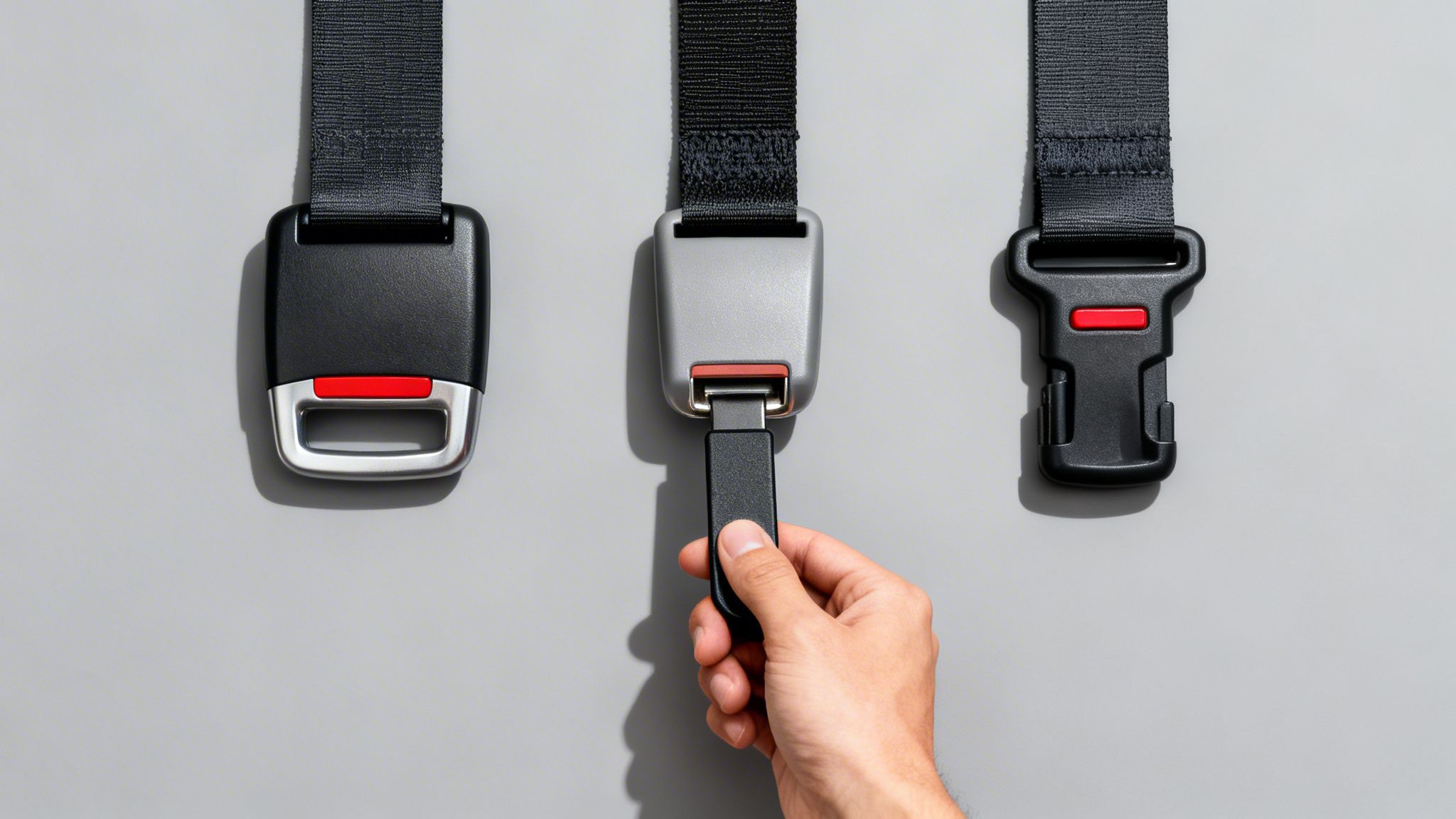
It seems like choosing an auto seat belt extension should be a straightforward task. But here's a critical detail that trips up a lot of people: car seat belt buckles are not universal. Not even close.
In fact, the variety is staggering. They don’t just change between different car brands—they often vary between models and even specific seats inside the very same car.
Think of it like trying to use your house key on your neighbor's front door. Even if the keys look almost identical, the tiny differences in the grooves and cuts mean it won't work. Seat belt latches are the same. A metal tongue from a Ford F-150 has almost no chance of clicking safely into the buckle of a Honda Accord.
This is exactly why "one-size-fits-all" extenders are such a dangerous myth. A poor fit might give you a false click, making you think you're secure when the latch could fail under the immense pressure of a sudden stop. The only way to get a safe, factory-tight connection is to find an extender made specifically for your vehicle.
Identifying Your Vehicle’s Latch Type
So, how do you find the right one? The first step is to pinpoint the unique design of your car's seat belt. Manufacturers engineer these parts with incredible precision, and your extender needs to match those specs perfectly. To skip the guesswork and ensure your safety, you have to shop by your car’s make, model, year, and the exact seat you plan to use it in.
For example, the driver's seat belt in a 2023 Kia Telluride might have a completely different latch than the one in the third-row middle seat of the same vehicle. When it comes to safety, precision is everything.
Here’s what you’ll need to know to get started:
- Make and Model: The basics, like "Toyota RAV4" or "Tesla Model 3."
- Year of Manufacture: A 2019 model can have different parts than a 2024 model.
- Seating Position: Be specific. Is it for the front passenger, rear driver's side, or center seat?
Providing this level of detail ensures the extender you buy has the correct metal tongue, buckle design, and locking mechanism to become a seamless part of your car’s safety system.
The most common mistake people make is assuming all auto seat belt extensions are interchangeable. A truly secure "click" demands a perfect match, and the only way to get that is by shopping for your specific vehicle.
The Critical Difference Between Car and Airplane Extenders
Another common point of confusion is the difference between extenders for your car and those for an airplane. They might look similar and serve the same basic function, but they are absolutely not interchangeable. They're built to meet completely different safety regulations, and using the wrong one is both unsafe and prohibited.
A car seat belt extender is built to meet strict E-4/E-8 automotive safety standards. These tests are designed to ensure it can withstand the forces of a car crash.
An airplane extender, on the other hand, is regulated by the Federal Aviation Administration (FAA). While most airline buckles are standardized, they are a totally different design from anything you'll find in a vehicle. Trying to use a car extender on a plane simply won't work, and it could put you in a dangerous situation.
Comparison of Extender Types
| Feature | Car Seat Belt Extender | Airplane Seat Belt Extender |
|---|---|---|
| Primary Use | Personal vehicles (cars, trucks, SUVs) | Commercial aircraft |
| Certification | E-4 / E-8 (Automotive Standards) | FAA-Compliant |
| Compatibility | Vehicle-specific (by make, model, year) | Universally fits most airline buckles |
| Interchangeable | No, cannot be used on airplanes | No, cannot be used in cars |
Ultimately, finding the right extender comes down to precision. By matching it to your vehicle's exact details and understanding that car and airplane extenders live in different worlds, you can make a choice that gives you both safety and peace of mind. To see how these components fit together, you can learn more about the role of a seat belt adapter and how it functions. Taking these simple steps ensures your extender will be there for you when it counts.
Getting Your Seat Belt Extender Set Up and Ready to Go
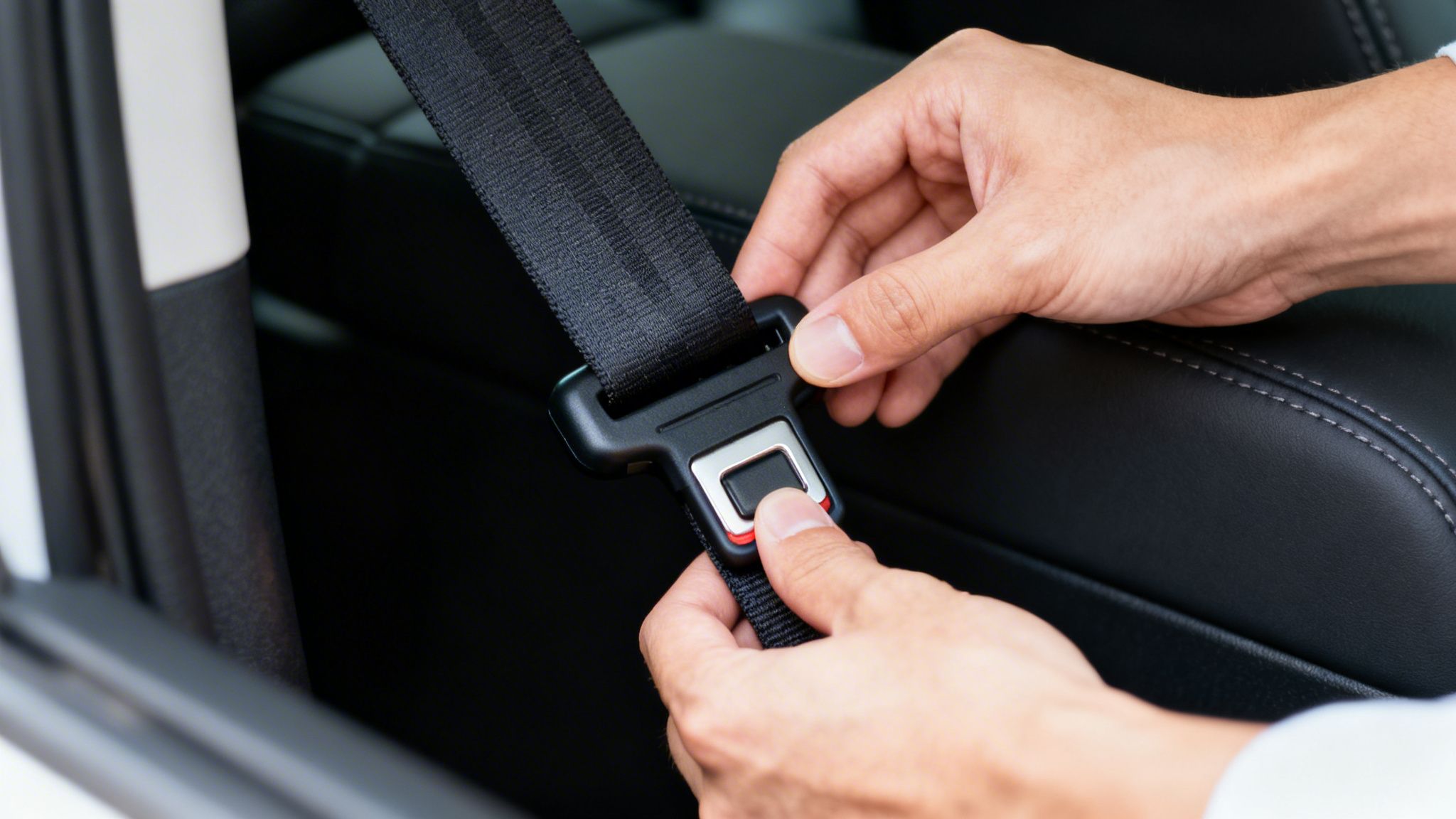
One of the best things about a quality auto seat belt extension is just how simple it is to use. You don't need a toolbox, complicated instructions, or any modifications to your car. The entire process is designed to be a "click, click, done" action that takes mere seconds, making it a seamless part of your car's existing safety system.
The key to proper installation isn't about mechanical skill—it's about listening. That audible "click" is your all-clear signal that the connection is solid and the locking mechanism has fully engaged. It’s a simple sound, but it gives you the confidence you need to know you're buckled in safely for the drive ahead.
A Quick Step-by-Step Guide to Installation
Using your extender correctly is incredibly straightforward. Just follow these steps to ensure a secure fit every single time, without compromising your vehicle’s safety features.
- Connect the Extender: Take the metal tongue on your seat belt extender and insert it directly into the car's built-in seat belt buckle. Push it in firmly until you hear that very distinct, satisfying "click."
- Give It a Tug: To be absolutely sure, give the extender a firm upward pull. If it's locked in correctly, it won't budge. This little test confirms the first connection is secure.
- Buckle Up: Now, grab your vehicle's original seat belt tongue and click it into the buckle of the extender. Again, listen for that same solid "click" to know it has latched properly.
- Check the Fit: The final step is to make sure the belt is sitting correctly on your body. The lap portion should be low and snug across your hips and upper thighs—never your stomach. The shoulder belt needs to lie flat across the middle of your chest and shoulder.
Following this process ensures the extender acts as a direct, secure link, letting your factory seat belt do its job exactly as it was designed to.
The Do's and Don'ts for Safe Use
While installation is a breeze, using an extender safely means sticking to a few non-negotiable rules. Think of these as less of a suggestion and more of a requirement for making sure the extender enhances your safety, not compromises it.
The golden rule is this: only use an extender when you actually need it. Its purpose is to solve a length problem, not to introduce a bunch of slack for a little extra comfort. A seat belt that’s too loose can be just as dangerous as not wearing one at all.
Never use a seat belt extender with a child's car seat or booster seat. These safety systems go through rigorous crash testing with the vehicle's original seat belts. Adding an extender changes the fit and geometry, which can drastically alter how it performs in a crash and put a child at severe risk.
To make it easy, here’s a quick rundown of best practices:
- DO listen for that audible "click" at both connection points.
- DO make sure the lap belt sits low across your hips, not your belly.
- DO use an extender only for the specific person who needs the extra length.
- DO inspect your extender for wear and tear now and then, and replace it if you see any damage.
And on the flip side, here’s what you should absolutely avoid:
- DON'T use an extender to create a loose, sloppy fit.
- DON'T ever chain more than one extender together to add more length.
- DON'T let other passengers who don’t need it use your extender.
- DON'T swap extenders between different cars unless you've confirmed they are compatible and certified for both.
By keeping this simple advice in mind, your auto seat belt extension becomes a reliable tool that delivers both safety and peace of mind every time you hit the road.
Real-World Scenarios Where Extenders Make a Difference
The true value of an auto seat belt extension clicks into place when you see it solving real problems for real people. Forget the technical specs for a moment. These devices provide safety, dignity, and independence in countless everyday situations. For many, they’re not just an accessory; they're an absolute necessity for safe travel.
Let's look at some of the most common scenarios where an extender is more than a convenience—it's a critical safety tool. These stories show how a simple, well-designed device can change everything.
Enhancing Safety for Plus-Size Drivers and Passengers
For many plus-size people, a standard-issue seat belt is simply too short. This creates a constant source of stress and, more importantly, a huge safety risk. A belt that digs into your body is not only uncomfortable, but it's also dangerously ineffective. Even worse is when the belt can't be buckled at all, leaving you completely unprotected.
An extender adds the crucial length needed to ensure the lap belt sits low and snug across your hips, while the shoulder belt crosses your chest correctly. This isn’t just about feeling comfortable. It's about letting the car's entire restraint system do its job during a collision, giving you the same level of safety and confidence as anyone else in the vehicle.
Supporting Expectant Mothers Through Pregnancy
Pregnancy brings a lot of changes, and one of them is figuring out how to wear a seat belt safely. A standard belt can put uncomfortable, and even unsafe, pressure on a growing baby bump. The correct and safest way to wear a seat belt during pregnancy is with the lap portion positioned low across the hips, well below your belly.
An extender makes this a whole lot easier. It provides the extra slack you need to position the lap belt safely, removing direct pressure from your stomach and ensuring both you and your baby are properly protected. We cover this in much more detail in our guide on using a seat belt extender for pregnancy.
The goal is to secure the mother without compressing the abdomen. An extender allows the vehicle’s safety system to protect the strongest parts of the body—the pelvis and chest—while keeping the baby safe from direct belt forces.
Assisting Individuals with Limited Mobility
If you’re dealing with arthritis, recovering from surgery, or have other mobility challenges, the simple act of twisting and reaching to buckle up can be painful, if not impossible. An extender brings the buckle forward to a much more accessible spot. No more painful stretching or contorting.
This small change can be a game-changer, restoring independence and making car travel far less of a chore. It allows people to buckle themselves in without help, preserving their dignity and promoting consistent seat belt use.
A Solution for Every Body and Every Ride
Extenders solve all sorts of other problems you might not have thought of. It's about making safety accessible to a wider range of people in different situations.
To see just how versatile these devices are, let's look at a few common challenges and how an extender provides a straightforward solution.
How Seat Belt Extenders Solve Common Challenges
| Scenario | The Challenge Without an Extender | The Solution with an Extender |
|---|---|---|
| Rideshare & Fleet Drivers | Passengers of varying sizes may not fit the standard belt, creating liability and poor customer experience. | Keeping an extender on hand ensures every passenger can be buckled safely and comfortably. |
| Parents with Car Seats | Bulky car seats in the back row bury the vehicle's buckles, making them nearly impossible to reach. | The extender brings the buckle out from between the seats, making it easy for an adult or older child to buckle up. |
| Law Enforcement & First Responders | Duty belts and bulky gear often prevent the standard seat belt from latching securely. | Provides the extra length needed to buckle up over equipment without compromising mobility. |
At the end of the day, these examples highlight a bigger issue. While passenger vehicles make up 70-80% of the automotive market, their one-size-fits-all belts often fail to fit 20-30% of adults. With the average car on US roads now 12.5 years old, the need for reliable, safe aftermarket solutions is more important than ever.
Certified extenders bridge this gap. And they work. Studies show a proper fit can boost a belt's effectiveness by an incredible 45-60%. You can explore more about the automotive seat belt market and how it’s evolving to meet these needs.
Got Questions? We've Got Answers
When you're looking into auto seat belt extensions, a few questions always come up. Getting the right information is the first step to feeling confident and safe on the road. Let’s clear up some of the most common questions people have.
We’ll walk through these points one by one, so you can make a smart, informed decision.
Are Auto Seat Belt Extensions Legal to Use?
Absolutely, as long as they are certified. Certified auto seat belt extensions are legal to use in most regions, but there's a big catch: they must meet strict safety standards, like E-4 or E-8 certification. They also need to be designed specifically for your vehicle’s make, model, and year.
The legality all comes down to maintaining the original safety system's integrity. A generic, uncertified extender from an unknown online seller might not be legal, and worse, it could fail in a crash, rendering your entire seat belt useless.
Can I Use a Car Seat Belt Extender on an Airplane?
That’s a firm no. You should never use a car seat belt extender on an airplane. The two are not interchangeable. The buckle mechanisms are completely different, and they are tested to meet entirely separate safety regulations.
An extender built for your car is designed to handle the unique forces of a vehicle collision. Airlines require FAA-compliant extenders designed for air travel. Using a car extender on a plane is a serious safety risk and is strictly forbidden by all airlines. We cover this in-depth in our guide on using seat belt extenders on airplanes.
For your safety and the safety of those around you, always get an extender specifically made for air travel. A car extender simply won't work and isn't safe in the air.
Do I Need Different Extenders for My Front and Back Seats?
More often than not, yes. It's very common for car manufacturers to use one type of seat belt buckle in the front seats and a completely different one in the back. Sometimes, even the rear middle seat has its own unique latch.
This is why it's so important to identify the exact seat where you'll be using the extender. To get that secure, factory-like connection, you need to shop by your car's make, model, year, and the specific seat you need it for.
How Do I Clean and Maintain My Seat Belt Extender?
Keeping your extender in good shape is easy. Just treat it like your car’s original seat belts. A little mild soap and water on a soft cloth is all you need. Stay away from harsh chemicals or bleach—they can weaken the webbing and compromise its strength over time.
Every so often, give the buckle a quick look-over. Check for any debris, damage, or signs of wear and tear. If anything looks off, stop using it right away. A good seller will stand behind their product with a lifetime policy, giving you one less thing to worry about.
Find the perfect, certified extender for your vehicle at Seat Belt Extenders and enjoy the peace of mind that comes with a secure fit. https://seatbeltextenders.com