
You buckle up every time you get in the car—it's second nature. But have you ever wondered how your car knows you've buckled up? The answer lies in the seat belt sensors, the unsung heroes of your vehicle's safety system.
These sensors are the critical communication link between you and your car's brain. They perform two key jobs: figuring out if someone is in a seat and confirming that their seat belt is securely fastened. This information is absolutely vital for your car's airbags to work properly in a crash.
Understanding Your Car's Silent Guardians
Think of your car’s entire safety network as a highly-trained team, with the central computer—the Electronic Control Unit (ECU)—acting as the coach. In this scenario, the seat belt sensors are the key players on the field, constantly feeding the coach real-time updates. Without their input, the coach can't make the right split-second decisions to protect everyone.
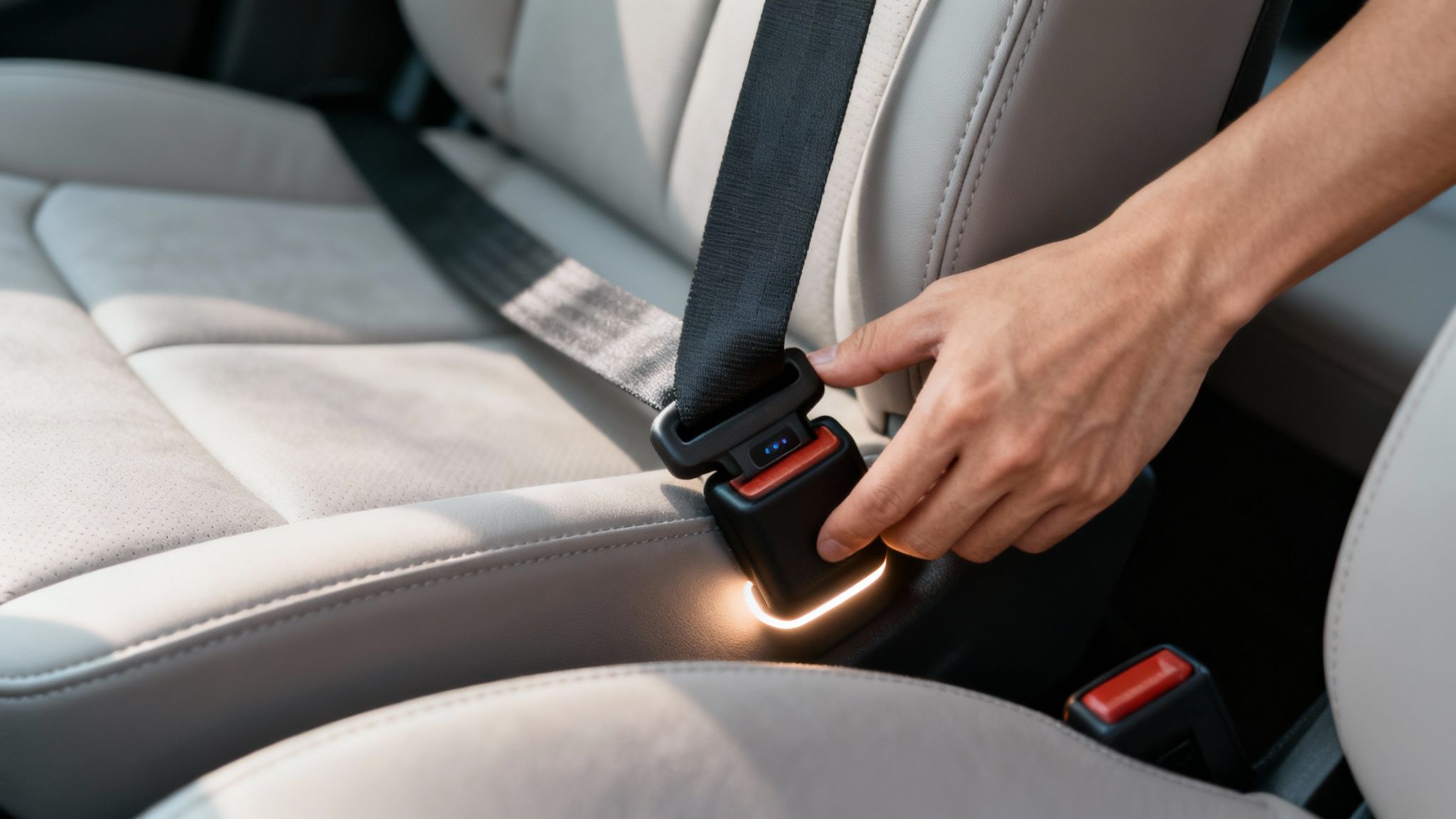
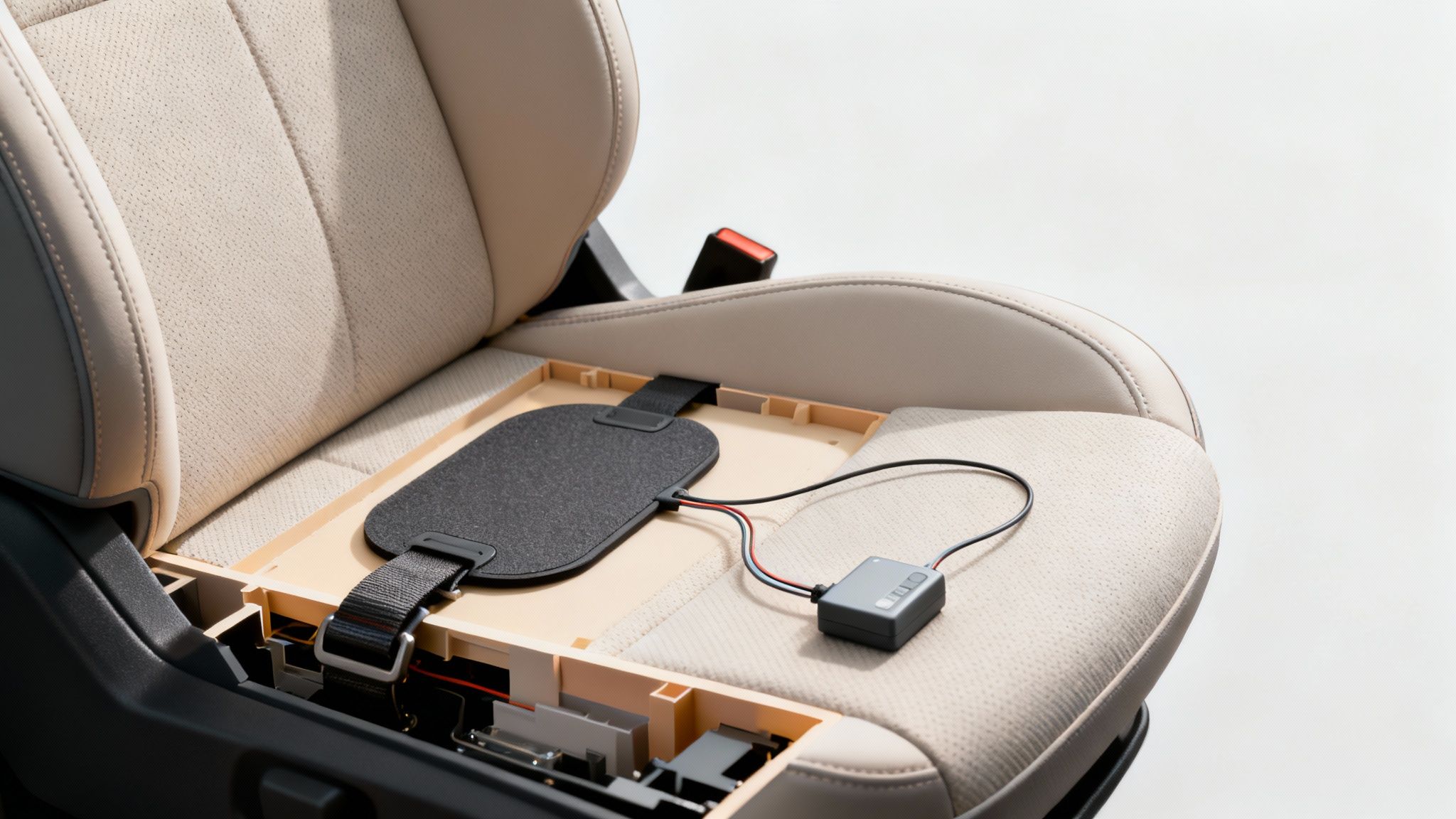
The system is actually pretty straightforward. One sensor, usually a pressure pad embedded in the seat cushion, tells the ECU if someone is sitting down. A second sensor, located right inside the seat belt buckle, works like a simple switch. It sends an "all clear" signal to the ECU the moment you latch the belt's metal tongue.
The Two Core Functions of Seat Belt Sensors
These sensors do a lot more than just trigger that nagging chime when you forget to buckle up. Their main jobs are deeply tied into your car's life-saving technology.
- Occupant Detection: First, the system has to know if a passenger is even there. This is smart because it prevents the car from deploying an airbag for an empty seat, saving you from a costly and pointless repair after an accident.
- Buckle Status Monitoring: Once the car knows someone is in the seat, it needs to confirm they're buckled in. This data tells the airbag system how to deploy, as the force needed for a buckled passenger is different than for an unbuckled one.
This constant feedback loop allows the entire safety system to operate with incredible precision. It controls the warning lights on your dashboard and feeds the complex calculations made in the fraction of a second during an impact. It also helps manage the correct seat belt tension, ensuring the whole restraint system is primed and ready.
The signal from a seat belt sensor isn't just a friendly reminder; it's a direct command to the airbag control module. A bad sensor could cause an airbag to deploy with the wrong force—or not deploy at all.
This technology is now a cornerstone of modern vehicle safety. The global market for these sensors was valued at $3.69 billion and is expected to climb to $6.54 billion, largely because of strict safety regulations around the world.
How Seat Belt Sensors Protect You at a Glance
To put it all together, here’s a quick summary of what these sensors are doing behind the scenes to keep you safe.
| Sensor Function | What It Does | Your Safety Benefit |
|---|---|---|
| Occupant Detection | Uses a pressure sensor in the seat to tell the ECU if someone is sitting there. | Prevents unnecessary airbag deployment for empty seats, saving on repair costs. |
| Buckle Confirmation | A switch in the buckle signals the ECU when the seat belt is latched. | Ensures the airbag deploys with the appropriate force for a restrained passenger. |
| Warning System Activation | Triggers dashboard lights and audible chimes if an occupied seat is unbuckled. | Reminds you and your passengers to buckle up, the first and most critical step in safety. |
| Pre-Tensioner Control | Informs the pre-tensioner system to prepare for an impact when the belt is buckled. | The pre-tensioner tightens the belt instantly in a crash, holding you securely in your seat. |
Ultimately, these small sensors make massive decisions, turning simple actions into a sophisticated, life-saving response.
A Look Inside How Seat Belt Sensors Operate
To really get a handle on why seat belt sensors are so important, we need to peel back the layers and see how they work. The best way to think about your car's safety system is like an orchestra. The main computer, or Electronic Control Unit (ECU), is the conductor. The airbags are the loud, powerful brass section, ready to make a big impact. And the sensors? They're the string section—precise, responsive, and feeding the conductor the critical information needed to create a life-saving performance.
This whole system hinges on two different types of sensors working together seamlessly. Each one answers a distinct but equally vital question for the ECU, which has to make life-or-death decisions in a fraction of a second. One sensor checks if a person is actually there, while the other confirms if they're buckled in.
Buckle Sensors: The Simple Safety Switch
First up is the most common type: the buckle sensor. Its design is brilliant in its simplicity. Think of a standard light switch—flip it on, the circuit connects, and the light comes on. A buckle sensor works on almost the exact same principle.
Tucked inside the seat belt receptacle (the part you click the belt into) is a small switch, which can be either mechanical or magnetic. When you buckle up, the metal tongue of the belt pushes in and physically completes an electrical circuit. That's it. This simple action sends a "buckled" signal to the car's ECU. When you unbuckle, the circuit breaks, sending an "unbuckled" signal.
This straightforward on/off mechanism is incredibly reliable for confirming that the belt is latched. It's the main reason your dashboard warning light turns off and that annoying chime finally goes silent. It might seem basic, but its signal is one of the most fundamental pieces of data the entire Supplemental Restraint System (SRS) relies on.
Occupant Detection Sensors: The Smart Cushion
The second key player is the occupant detection sensor, often called an Occupant Classification System (OCS). If the buckle sensor is just a simple on/off switch, the OCS is more like a smart scale built right into your seat. Its job is to answer a more nuanced question: "Is someone sitting here, and about how much do they weigh?"
This system uses a grid of pressure-sensitive pads buried deep within the seat's foam cushion. When you sit down, these pads register not just your weight but also how it's distributed. This gives the ECU a much more detailed picture to work with, allowing it to make smarter, safer decisions.
For instance, the OCS can tell the difference between a 180-pound adult, a 50-pound child, or a heavy backpack you tossed on the passenger seat. Using this weight data, the ECU can decide whether to enable the passenger-side airbag at all. This crucial feature prevents the airbag from deploying and seriously injuring a small child, or from firing needlessly for an inanimate object, which would result in a very expensive and unnecessary repair.
A vehicle's ECU combines data from both the buckle sensor and the occupant detection sensor to build a complete picture. It needs to know not just that someone is in the seat, but also if they are properly restrained, before it can calculate the correct airbag deployment force.
The Complete Communication Pathway
All of this happens in the blink of an eye. The moment you sit down and click your seat belt, the sensors fire off their electrical signals through the car's wiring, straight to the ECU. The ECU instantly processes this information and takes action.
- Warning Systems: If the occupant sensor feels weight but the buckle sensor says the circuit is open (unbuckled), the ECU immediately triggers the dashboard warning light and that familiar chime.
- Airbag Readiness: If both sensors confirm a buckled adult is in the seat, the ECU arms the corresponding airbags, setting them to deploy with the appropriate force in a crash.
- System Diagnostics: The ECU is always listening. If a signal from a sensor suddenly disappears or seems illogical (like getting a "buckled" signal with no one in the seat), it will light up the airbag warning light on your dash to let you know there’s a fault in the system.
This constant, high-speed conversation is why every little component is so critical. Understanding this pathway also helps explain why seemingly minor details in your car, like the design of a seat belt's fabric loop, are engineered with such care. If you've ever wondered about those small features, you can learn more about the purpose of the extra loop on a seat belt in our detailed guide.
How to Troubleshoot Common Sensor Problems
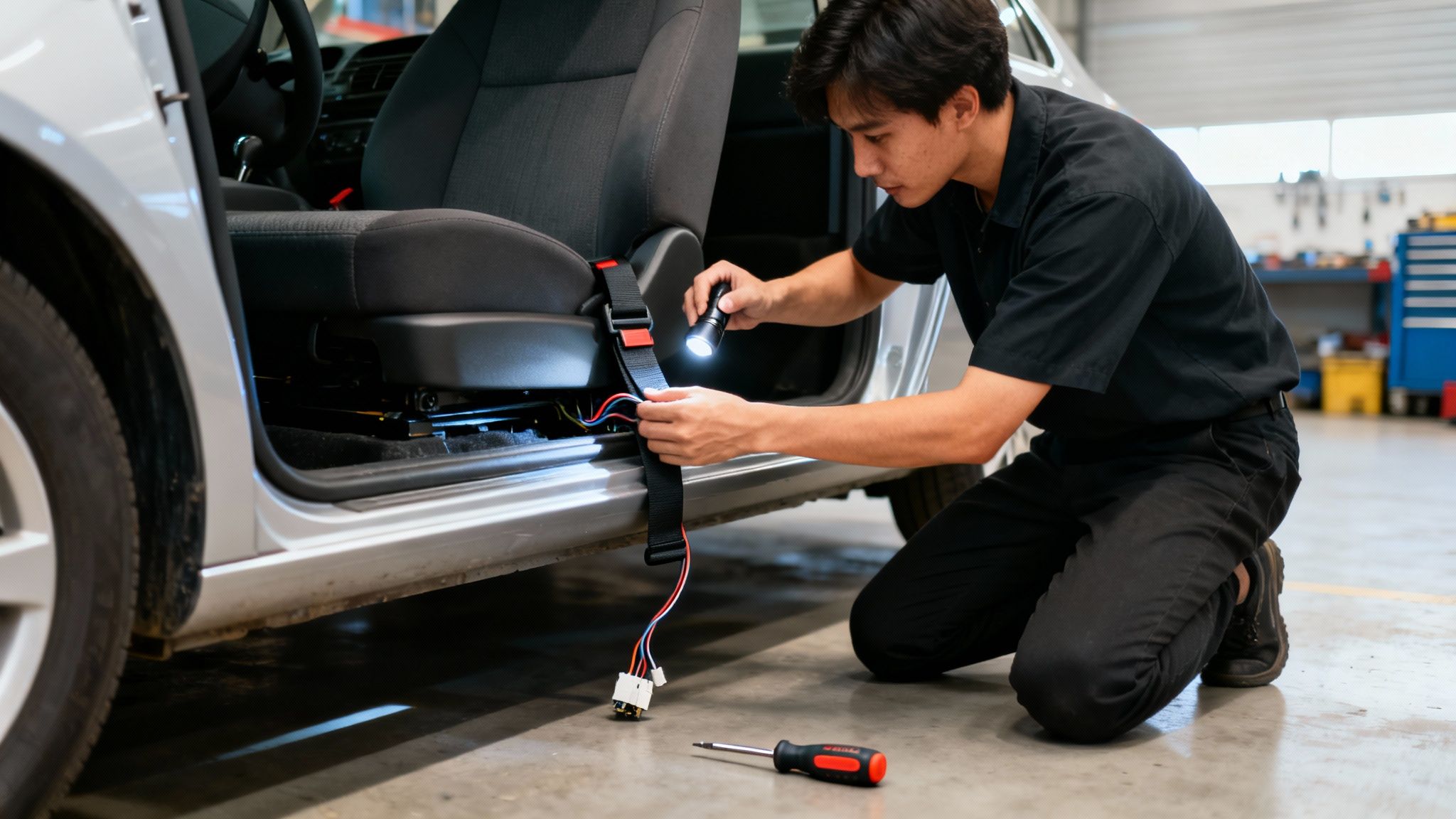
When your dashboard suddenly lights up with that stubborn seat belt warning, or an alarm starts chiming even when you're buckled up, it's more than just a minor annoyance. That little light is your car's way of telling you something's not quite right with a critical safety system.
The good news? Not every sensor issue means an expensive trip to the mechanic. With a little methodical detective work, you can often pinpoint the problem yourself. Let's walk through the most common culprits, starting with the easy stuff first.
Step 1: Start with the Basics
Before you start worrying about faulty wiring or complex electronics, always check the simplest things first. You’d be surprised how often the fix is quick and easy. These initial checks focus on things that can physically block the sensor from working correctly.
Your first move should be a close-up inspection of the seat belt buckle itself. Think of all the things that can fall into that small opening over the years.
- Check for Debris: Grab a flashlight and peer inside the buckle. Look for anything that doesn't belong—coins, food crumbs, and tiny bits of plastic are common offenders.
- Use Compressed Air: A can of compressed air is your best friend here. A few quick blasts can dislodge dust and other gunk you can't see.
- Cycle the Buckle: Once you've cleaned it out, click the seat belt in and out firmly a few times. Sometimes, this is all it takes to reset the sensor's connection.
While you're at it, take a peek under the seat. The sensor's wiring often runs beneath the driver and passenger seats, making it vulnerable. Moving the seat back and forth or storing items underneath can easily jiggle a connector loose. Gently make sure all the visible wiring plugs are pushed in securely.
Step 2: Address False Occupant Alerts
Ever have the passenger seat belt light come on when no one is there? The problem might not be the buckle sensor at all but the occupant detection sensor in the seat cushion. This system is just a fancy scale, and sometimes it gets confused.
If you see a passenger-side warning with an empty seat, check what you’ve placed on it. A heavy backpack, your groceries, or even a small pet can be just enough weight to trigger the sensor. This is the system working as designed. Removing the item should make the light go off, confirming everything is fine.
If that pesky alarm just won't quit, the problem might be more than a simple obstruction. For a deeper dive into the system, you can learn more about how to disengage a seat belt alarm and what it might mean.
When to Seek Professional Help
If you've cleaned the buckle and checked the wiring and the light is still on, the problem likely lies deeper within the vehicle’s Supplemental Restraint System (SRS). A warning light that appears after even a minor fender bender, for instance, could mean the airbag control module has locked a crash code and needs a professional reset.
Knowing when to call it quits and head to a trusted mechanic is key. This simple table can help you figure out your next steps.
Common Seat Belt Sensor Issues and First Steps
Sometimes it's tough to know if you're dealing with a simple fix or a serious problem. Here’s a quick diagnostic guide to point you in the right direction.
| Symptom | Potential Cause | What You Can Do |
|---|---|---|
| Light stays on after cleaning buckle | Faulty buckle switch, damaged wiring, or a bad sensor. | Double-check under-seat wiring. If the issue persists, professional diagnosis is needed. |
| Airbag light is also on | A system-wide fault in the SRS, potentially a locked control module. | This is not a DIY fix. Have a qualified technician scan the vehicle for error codes immediately. |
| Light flickers intermittently | A loose electrical connection or a failing sensor. | Inspect visible connections under the seat. If they're secure, a mechanic should test the circuit. |
| Problem started after battery change | The SRS may need to be recalibrated. | This sometimes resolves on its own after a few drives. If not, a technician can perform a system reset. |
While it's empowering to fix things yourself, the SRS is one area where you don't want to guess. Attempting to repair complex components without the right tools can be dangerous, potentially leading to accidental airbag deployment or even more damage. Once you've tried the basics, scheduling a diagnostic is the safest bet.
The Link Between Sensors and Seat Belt Extenders
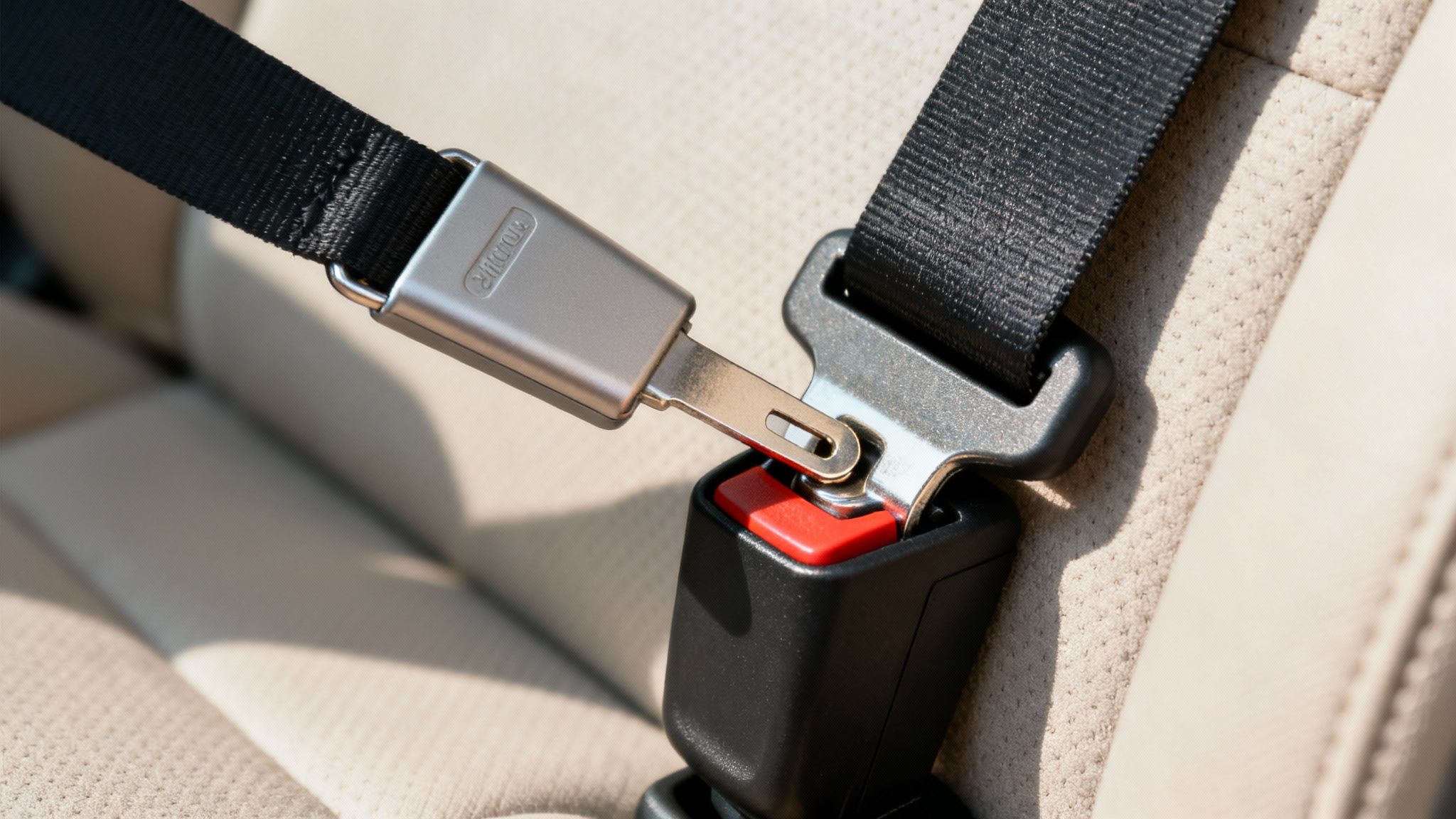
When you add a seat belt extender to your car, you’re doing more than just adding a few inches of strap. You're plugging a new component into your vehicle's complex safety network, and it has to play nice with the existing seat belt sensors. It’s easy to think of an extender as a simple, passive piece of metal and webbing, but a high-quality, certified extender is an engineered tool designed to work in perfect harmony with your car.
The secret is in the precision. A properly designed extender acts as a flawless bridge, connecting your seat belt's metal tongue to the car's original buckle. It’s built to mimic the exact dimensions and locking mechanism of the factory parts. So when you click it into place, it engages the buckle sensor just like your standard seat belt would. That's what completes the electrical circuit and tells your car’s computer, "We're secure."
A certified extender doesn't trick the system—it works with it. The dashboard warning light goes off, the annoying chime stops, and most importantly, the Supplemental Restraint System (SRS) gets the all-clear signal that a passenger is safely buckled in.
Why a Proper Fit Is Non-Negotiable
Your car’s entire safety ecosystem relies on getting accurate data. This includes the massive USD 2.34 billion seat belt retractor sensor market, which is responsible for the tech that locks your belt solid during a sudden stop. For drivers of over 65 vehicle makes, a mismatched or poorly made extender can easily disrupt this vital feedback loop and cause sensor errors.
That’s why certified seat belt extenders are engineered in the USA to install instantly. They preserve the crucial link between the retractor and the sensor systems without needing any modifications. You can dig deeper into this technology by exploring the research on seat belt retractor sensors.
This precise fit is what keeps the safety chain from breaking. A correctly functioning extender makes sure your car's brain knows you're buckled, which is critical for making those split-second, life-or-death calculations in an accident.
A certified extender is not just about comfort; it's about maintaining the integrity of your car's safety logic. It ensures the seat belt sensor gets the "buckled" signal it needs to arm the airbag system correctly.
The real danger comes from using uncertified, generic, or "one-size-fits-all" extenders. These products almost never meet the strict manufacturing tolerances required for modern vehicles.
The Risks of Uncertified Extenders
An ill-fitting extender can set off a chain reaction of safety failures. If the extender's tongue isn't a perfect match for your car's buckle, it might not properly engage the sensor switch inside, even if it feels like it clicked into place. This single point of failure can lead to serious consequences.
There are three big risks that come with using generic or uncertified extenders:
- False Warnings: The most obvious sign of a problem is a seat belt warning light that won't turn off or a chime that keeps dinging, even when you're buckled through the extender. This is your car telling you the sensor hasn't registered a secure connection.
- Failure to Latch Securely: This is the scariest one. A poorly made extender might feel snug, but it could pop right out under the immense forces of a crash. This makes the entire seat belt system useless right when you need it most.
- Compromised Airbag Deployment: This is the silent risk. If the sensor doesn't confirm you're buckled, the SRS computer might default to an "unbuckled passenger" mode. In an accident, this could cause the airbag to deploy with the wrong amount of force—or in some cars, not deploy at all.
Choosing an extender specifically designed and certified for your vehicle's make and model is the only way to guarantee your seat belt sensors will work as they should. For a closer look at this important topic, check out our detailed article on the fundamentals of seat belt extender safety.
Ultimately, you have to think of a seat belt extender as an extension of your car's original safety equipment, not a bypass. By picking a vehicle-specific, certified product, you ensure that the complex conversation between your actions and your car's safety systems continues without a single missed word.
Why Your Seat Belt Warning Is More Than Just an Annoying Chime
We've all been there. You get in the car, turn the key, and that familiar ding, ding, ding starts, paired with a glowing icon on the dashboard. It’s easy to write it off as just another automotive annoyance, but that warning system is one of the most important safety features in your vehicle.
Powered by a network of seat belt sensors, this isn't just a friendly reminder—it's a critical, legally-required safety system. Regulatory bodies like the National Highway Traffic Safety Administration (NHTSA) in the U.S. mandate these systems for a simple reason: they save lives. Time and time again, data shows that these audio and visual alerts are incredibly effective at getting people to buckle up, which directly reduces crash-related deaths and injuries.
The Simple Nudge That Saves Lives
The idea behind it is brilliant in its simplicity. By creating a persistent and hard-to-ignore reminder, the system breaks through our daily routines and forces us to perform the single most effective safety action before we even start driving. It bridges that crucial gap between knowing you should wear a seat belt and actually clicking it in place.
This nudge is more important than you might think. Even after decades of public safety campaigns, a surprising number of people still don't buckle up. In many major countries, as many as 15-20% of drivers and passengers regularly fail to use their seat belts. This is where the sensor-driven warning shifts from a passive feature to an active one. It doesn't just wait for a collision to happen; it works to prevent a tragedy before the car even pulls out of the driveway.
A seat belt warning system is your vehicle's first line of defense. It's a proactive safety measure that has proven to be more effective at changing behavior than passive signage or warnings alone.
Global Impact and Safety Regulations
Seat belt reminder systems use visual and audible alerts to encourage occupants to buckle up. In December 2024, NHTSA announced a rule adding rear-seat warnings and strengthening front-seat warnings. The agency estimated that, once fully implemented, the rule would save about 50 lives and prevent more than 500 injuries each year. Read NHTSA’s explanation of the seat belt reminder rule for the details.
This direct link between warnings and lives saved has led to tough international standards:
- In Europe: Regulations now require seat belt reminders for every single seat in the car, not just the front ones.
- In the U.S.: The NHTSA is continuously pushing for more advanced and persistent warning systems.
- In Asia-Pacific: This region accounts for over a 34% revenue share in the market, thanks to huge vehicle production in countries like China, India, and Japan, which are all adopting similar safety rules.
While these alerts are undeniably critical, sometimes a faulty sensor can cause the alarm to go off unnecessarily. Some people might be tempted to silence it, but it's vital to understand the risks first. You can learn more in our guide about how to deactivate a seat belt alarm and see why it’s almost always a bad idea.
At the end of the day, these regulations mean your car's warning system isn't a nuisance—it's a non-negotiable safety feature. Keeping your sensors in good working order is just as important as maintaining your brakes or airbags. To get a better sense of how crucial sensor-based warnings are, our guide on RV propane detector replacement provides another great example of a simple alert system designed to prevent disaster. Whether you're using a standard belt or a certified extender, a properly functioning sensor is your key to staying safe on the road.
Common Questions We Hear About Seat Belt Sensors
After digging into how these sensors work, their common pitfalls, and how they interact with extenders, you probably still have a few practical questions. Let's tackle some of the most common concerns drivers have about these vital safety components.
Can a Faulty Seat Belt Sensor Really Affect My Airbags?
Absolutely. This is probably the most compelling reason to never ignore a sensor issue. A bad seat belt sensor can seriously compromise how your airbags deploy, and not in a good way.
Think of the sensor as a critical informant for your car's Supplemental Restraint System (SRS) module—the computer that controls the airbags. This module needs to know if you're buckled in to make a split-second, life-or-death decision during a crash.
If the sensor wrongly tells the SRS you're unbuckled, the airbag might deploy with less force, a setting designed to prevent injury to an unbelted person. On the flip side, if it reports you're buckled when you're not, the airbag could deploy with full force, which is incredibly dangerous for an unrestrained passenger. For the whole system to work as designed, the sensor has to be telling the truth.
Will a Seat Belt Extender Make My Warning Light Stay On?
It shouldn't, as long as you're using a high-quality extender made for your specific vehicle. Properly engineered, safety-certified extenders are designed to be a perfect go-between, mimicking the exact dimensions and latching system of your car's original parts.
When you click a certified extender into your car’s buckle and then click your belt into the extender, it completes both the mechanical and electrical circuits. This is what tells the seat belt sensor that everything is secure, which in turn switches off the dashboard warning light and that annoying chime.
The real culprits are often the cheap, generic "one-size-fits-all" extenders. They might click, but they often fail to properly engage the internal sensor switch, leaving you with a constant warning and, more importantly, a compromised safety system.
How Much Does It Cost to Replace a Seat Belt Sensor?
This one is tough to pin down because the cost can swing wildly based on your car's make and model. The final price tag really depends on whether the sensor is a simple, standalone part or if it's baked into a much larger, more complicated component.
Here’s a rough idea of what you might expect:
- Simple Buckle Sensor: If the sensor is inside the buckle and can be swapped out on its own, you're in luck. This is the most straightforward fix, and you're likely looking at a cost between $100 to $300 for parts and labor.
- Integrated Sensor Assembly: On many newer cars, the sensor is part of a bigger system. For instance, it might be built into the seat belt retractor mechanism or the Occupant Classification System (the pressure pad in your seat). In these cases, the entire assembly has to be replaced, which can push the cost up to $400 to over $800.
Because the price range is so broad, your best bet is always to get a quote from a trusted mechanic after they’ve properly diagnosed the problem.
Is My Sensor Actually Broken, or Is the Buckle Just Dirty?
Before you book a service appointment, always check the simple stuff first. You'd be surprised how often a persistent warning light is caused by nothing more than some gunk jamming up the buckle's internal switch.
Your first line of defense should always be a good cleaning.
- Take a Look: Grab a flashlight and peer down into the seat belt receptacle. It’s a magnet for crumbs, loose change, and lint.
- Blast It Out: A can of compressed air works wonders here. A few short, powerful bursts can dislodge dust and debris you can't even see.
- Gently Clear Obstructions: If you spot a larger object, use a plastic toothpick or a small non-metallic tool to gently fish it out. Steer clear of metal tools that could damage the sensitive electronics inside.
- Work the Mechanism: Once it’s clean, click the seat belt in and out firmly a dozen times. This can help reset the connection and knock loose any stubborn particles.
If a good cleaning makes the warning light go away, you just saved yourself a trip to the shop. If the light and chime stick around, then you're likely dealing with a bad sensor, faulty wiring, or an issue with the SRS module itself, and it’s time to call in a professional.
At Seat Belt Extenders, we believe safety and comfort should never be a compromise. Our E4/E8 safety-certified extenders are engineered in the USA to seamlessly integrate with your vehicle's specific seat belt system, ensuring your sensors work exactly as intended. Find your perfect fit today and drive with confidence. Click here to shop for your vehicle at seatbeltextenders.com.