
If you've ever felt that the seatbelt on one flight seemed shorter than on another, you weren't imagining it. The standard airline seatbelt size can vary quite a bit, typically falling somewhere between 33 and 51 inches. That’s a huge range, and it’s why a little preparation can make a world of difference for a comfortable and stress-free flight.
Understanding the Basics of Airline Seatbelt Size
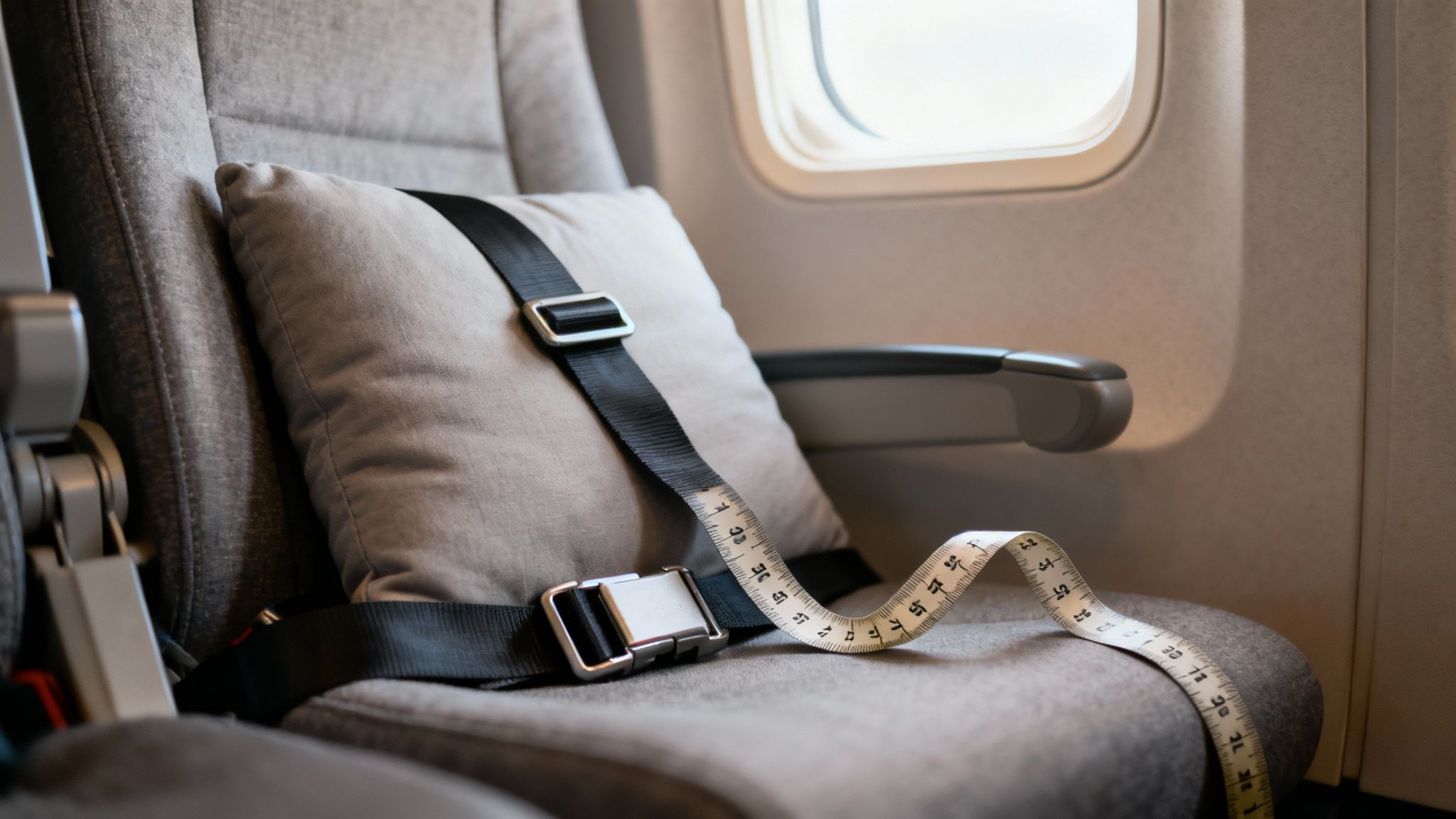
One of the most common unknowns when you step onto a plane is whether the seatbelt will fit comfortably. Since there isn't a single, universal standard for seatbelt length, it's easy to feel anxious. But once you understand the typical ranges and variations, you can board with confidence.
The simple truth is that seatbelt lengths aren't consistent from one airline to the next. They often change depending on the aircraft model (a Boeing 737 is different from an Airbus A380), the age of the plane, and even your seating class. This is exactly why you might feel fine on one flight and need a bit of extra room on another.
For a deeper dive into specific airline data, you can explore our complete guide on airplane seatbelt lengths.
Why This Matters for Passengers
For many travelers, especially passengers of size, knowing the potential seatbelt length isn't just about comfort—it's about safety, dignity, and peace of mind. The Federal Aviation Administration (FAA) requires every passenger to be securely buckled during taxi, takeoff, landing, and turbulence. If the belt doesn't fit, a seatbelt extender is the only way to comply.
A seatbelt extender is a simple, safe device provided by airlines to ensure every passenger can meet safety requirements. Don't hesitate to ask for one; flight attendants handle these requests discreetly and professionally every single day.
Airlines have their own standards, which adds to the variability. We've compiled a quick reference table to give you a clearer picture of what to expect from major U.S. carriers.
Typical Economy Seatbelt Lengths on Major US Airlines
| Airline | Approximate Seatbelt Length (Inches) | Standard Extender Length (Inches) |
|---|---|---|
| Alaska Airlines | 46 | 25 |
| Allegiant Air | 33.7 | 25 |
| American Airlines | 45 - 47 | 25 |
| Delta Air Lines | 40 - 45 | 25 |
| Frontier Airlines | 39 | 25 |
| Hawaiian Airlines | 51 | 24 |
| JetBlue | 45 | 25 |
| Southwest Airlines | 45 | 24 |
| Spirit Airlines | 42 | 25 |
| United Airlines | 39 - 43 | 25 |
As you can see, the length can swing from a tighter 33.7 inches on Allegiant to a more generous 51 inches on Hawaiian Airlines. Most extenders add a standard 24 to 25 inches of length. Knowing these ranges ahead of time helps you anticipate whether you might need to ask for an extender when you board.
Ever buckled your seatbelt with ease on one flight, only to find yourself struggling to make it click on the next? It’s a frustratingly common experience, and it's not just you. The truth is, there's no such thing as a "standard" airline seatbelt length.
This inconsistency boils down to a few key things. An airline's fleet is usually a mixed bag of aircraft from different makers like Boeing and Airbus. Each plane model often comes with its own unique seat specs right off the assembly line, and that includes the length of the seatbelts.
On top of that, airlines configure the same plane model differently. A jet flying short domestic hops might have a completely different seating arrangement and hardware than one crossing an ocean. These choices can directly impact how much belt you have to work with.
The Role of Regulations and Reality
You might assume the Federal Aviation Administration (FAA) dictates a minimum length for seatbelts, but they don't. Their rules are laser-focused on performance—things like withstanding incredible force and staying latched in an emergency. The actual length? That's left up to the airlines and manufacturers.
This creates a major gap between what's technically safe and what's practical for today's passengers. People have changed a lot over the years, but the equipment hasn't always kept up.
Believe it or not, the Human Factors and Ergonomics Society points out that core FAA recommendations for seat space and belt design haven't really been updated since 1994. That’s despite huge shifts in average passenger size. You can dive into the details in the research behind airline seating standards.
So, while the belts pass all the necessary engineering tests for safety, their dimensions often fall short for a growing number of travelers.
Key Factors Causing Variation
So, what are the main culprits behind the ever-changing airline seatbelt size? Here’s a quick rundown to help you know what to expect.
- Aircraft Manufacturer and Model: A seatbelt on a Boeing 737 can feel totally different from one on an Airbus A320 or a smaller Embraer regional jet.
- Airline Customization: When an airline orders a new plane, they pick and choose the seats and cabin layout. This includes the specific seatbelt hardware they want to install.
- Seat Age and Maintenance: Belts wear out and get replaced. A replacement part might not be the exact same length as the original, creating inconsistencies even within the same plane.
- Seating Class: It’s a safe bet that belts in Business or First Class are longer to go with the wider seats, but even these can differ from airline to airline.
At the end of the day, you can't assume the belt on your next flight will be anything like the last one. That's why being prepared—whether it’s by measuring at home or knowing how to ask for an extender—is the key to a stress-free and safe flight.
How to Measure for a Seatbelt at Home
Worrying about whether an airline seatbelt will fit can put a damper on the excitement of an upcoming trip. But you can get rid of that uncertainty before you even start packing. A quick measurement at home gives you a clear answer, so you know exactly what to expect and can prepare with confidence.

All you need is a flexible measuring tape. The idea is to mimic how you’ll be sitting on the plane to get a real-world number. This isn't about guessing; it's about gathering the data you need to travel comfortably.
Your Step-by-Step Measurement Guide
Ready? This little routine takes less than a minute but gives you incredible peace of mind.
-
Sit Down Comfortably: Grab a firm, flat chair where you can plant your feet on the floor, much like an airplane seat. Sit naturally—don't slouch, but don't sit ramrod straight either. Just a normal, relaxed posture will do.
-
Measure Across Your Lap: Run the measuring tape across the widest part of your lap while you're seated. Trace the path a seatbelt would take, from one side of your hips to the other. You want the tape to be snug, but not digging in.
-
Record and Adjust Your Number: Jot down the measurement in inches. Now for the most important part: add a little extra. We recommend adding 3-5 extra inches to whatever number you got. This buffer accounts for bulky clothing like jeans or a sweater and gives you some wiggle room for different seat designs.
By measuring at home, you take control. Your final number is your key. If it’s over 40 inches, that’s a strong signal you may need an extender on some flights, and you can plan ahead.
Putting Your Measurement to Use
With your final number in hand, you can compare it to the standard airline seatbelt lengths we talked about earlier. If your measurement is getting close to or goes beyond that average range of 39-45 inches, it’s a safe bet you’ll want to ask for an extender.
This simple bit of prep work takes all the guesswork out of the equation. Instead of feeling anxious when you get to your seat, you can board the plane feeling prepared. You’ll know exactly what you need and can discreetly ask a flight attendant for an extender, starting your journey off right—safely and comfortably.
Getting and Using an Airline Seatbelt Extender
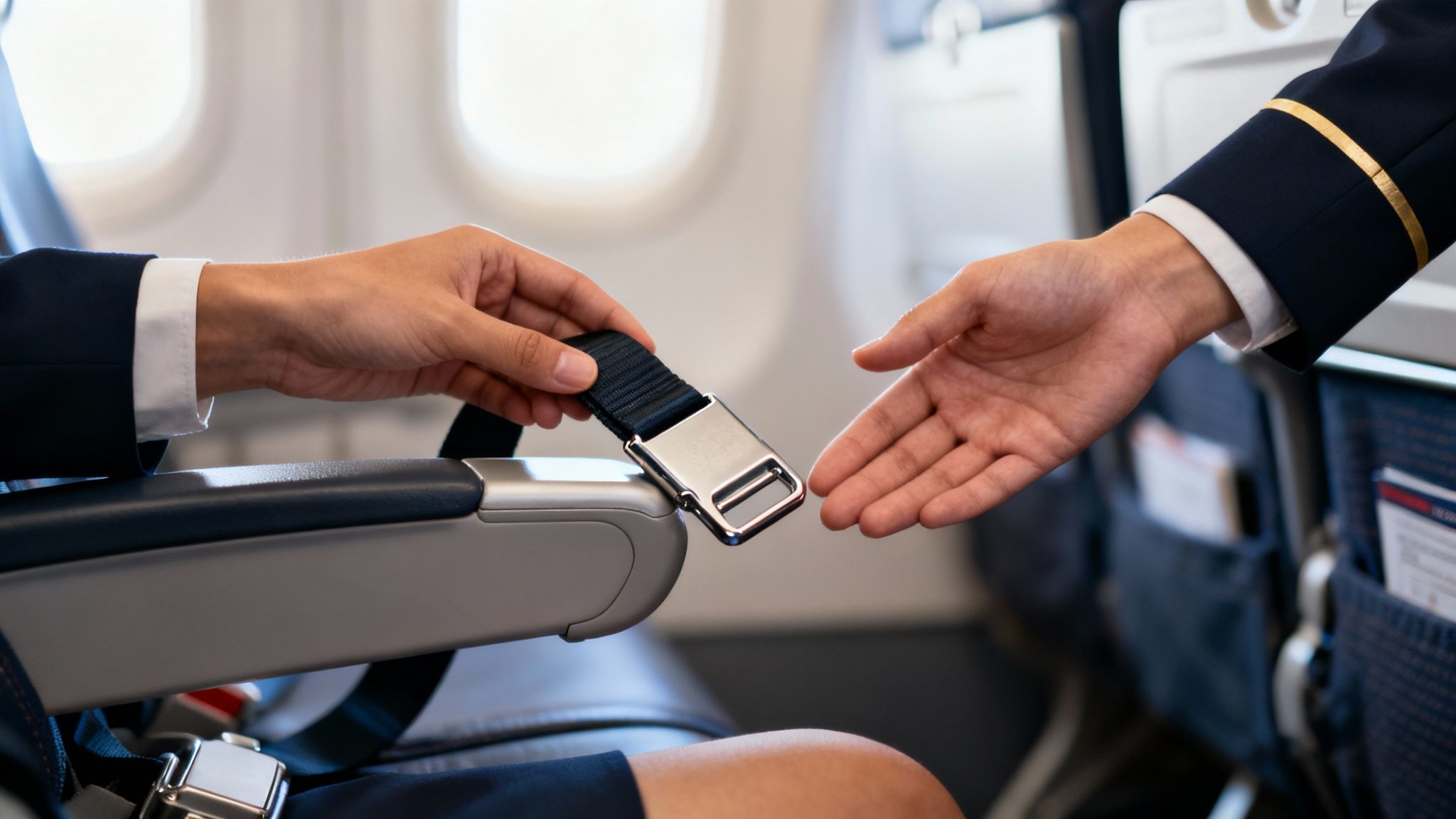
So, your home measurement shows you might need a little extra slack. What's next? This part is actually the easiest. While asking for an extender might feel a bit awkward, for the flight crew, it’s as routine as the safety demonstration. They’re available on every flight, completely free, and are there to make sure every single passenger is buckled in safely.
The trick is to ask early. The absolute best time is as you’re boarding—just a quick, quiet word with the flight attendant greeting you at the door is perfect. This gives them a heads-up before things get hectic. If you forget then, no worries. Just catch the eye of a crew member once you get to your seat.
How to Ask for an Extender
You really don't need to overthink this. A simple, direct request is all it takes. Flight attendants are pros who handle these things with complete discretion. Their number one priority is safety, and ensuring your airline seatbelt size is correct is a huge part of that.
Here are a few easy, low-key ways to ask:
- "Hi, could I please have a seatbelt extender for 14A?"
- "Excuse me, I'll need a seatbelt extender when you have a moment."
- "May I have an extender, please?"
That's it. The crew member will likely give you a quick nod, make a mental note of your seat, and bring one over without making a big deal of it. It’s a task they perform on almost every flight.
Your safety is non-negotiable. Asking for an extender isn’t an inconvenience; it’s you taking a responsible step to comply with FAA regulations and ensure you’re secure for the journey. It's a standard and necessary part of air travel for many.
Why You Must Use the Airline's Extender
This is a big one, and it's all about safety: you have to use the extender provided by the airline. You might see "TSA-approved" or "FAA-compliant" extenders for sale online, but personal devices are strictly prohibited on aircraft by the FAA. There are some very good reasons for this rule.
First and foremost, airlines are legally on the hook for every single piece of equipment on their plane, right down to the belts and extenders. The ones they carry are certified and have a full maintenance and inspection history. An extender you buy online has none of that, so the airline can't possibly vouch for its condition, strength, or even if it's compatible with their seats. You can find a more detailed look into the official rules for seat belt extenders for airplanes here.
Ultimately, this rule is purely for your protection. Using the airline's equipment takes all the guesswork out of safety and liability. It guarantees the device you're using has been tested, inspected, and approved for that specific aircraft.
Why You Can't Bring Your Own Seatbelt Extender
It seems like a no-brainer, right? If you know you'll need a seatbelt extender, why not just buy one online and pop it in your carry-on? It feels proactive and simple. But this is one of those times where the most obvious solution is actually the one you absolutely can't use.
Airlines and the Federal Aviation Administration (FAA) have a strict, non-negotiable rule against passengers using their own extenders. This isn't about inconvenience—it's entirely about safety and accountability.
Think of it this way: every single part on an airplane, down to the last screw, is tracked, tested, and certified. The airline knows the full history of the seatbelt installed at your seat and the extenders they carry on board. They can trace its manufacturer, its age, and its maintenance record.
Your personal extender? To them, it's a complete mystery. Even if a website claims it's "FAA-compliant," the airline has no way to verify its manufacturing quality, its structural integrity, or if it's been damaged. It's an unknown quantity in a system that leaves nothing to chance.
The Critical Role of Certification
For any piece of equipment to be approved for flight, it has to meet incredibly specific technical standards. You might see ratings like E-4 or E-8 on aviation parts—these aren't just random numbers. They are official certifications that prove the device has passed rigorous safety and quality tests.
The extenders an airline provides are certified to be 100% compatible with the buckle mechanisms on their seats, ensuring a secure lock that will hold under immense force.
An uncertified extender from an online seller could pop open during severe turbulence or, worse, fail in an emergency. It's a risk no airline can take. Because the carrier is legally responsible for your safety, they simply cannot permit unverified hardware on the plane. To get a better handle on the official regulations, you can read more about what makes an FAA-approved seat belt extender fundamentally different from one you can buy yourself.
This intense focus on certified parts is a cornerstone of aviation safety. It’s a big reason why the global market for aviation seat belts, valued at USD 238.49 million in 2022, is expected to keep growing. Safety standards drive everything. You can discover more insights about the growth of the aviation safety market.
Your Safest Option Is Always Provided by the Airline
The rule isn't there to make your life harder; it's a vital safety protocol. When a flight attendant brings you an extender, you're getting a piece of equipment that is:
- Certified: It meets all required FAA and manufacturer safety standards.
- Inspected: It's part of the airline's regular maintenance and inspection schedule.
- Compatible: It’s guaranteed to work perfectly with the specific seatbelts on that aircraft.
By prohibiting personal extenders, airlines eliminate all the guesswork. They ensure every passenger is secured by equipment with a known history that is designed to perform flawlessly when it matters most.
At the end of the day, this policy is for your own protection. The few seconds it takes to politely ask a crew member for an extender ensures your airline seatbelt size is not only comfortable but, more importantly, completely safe and secure.
Your Pre-Flight Comfort and Safety Checklist
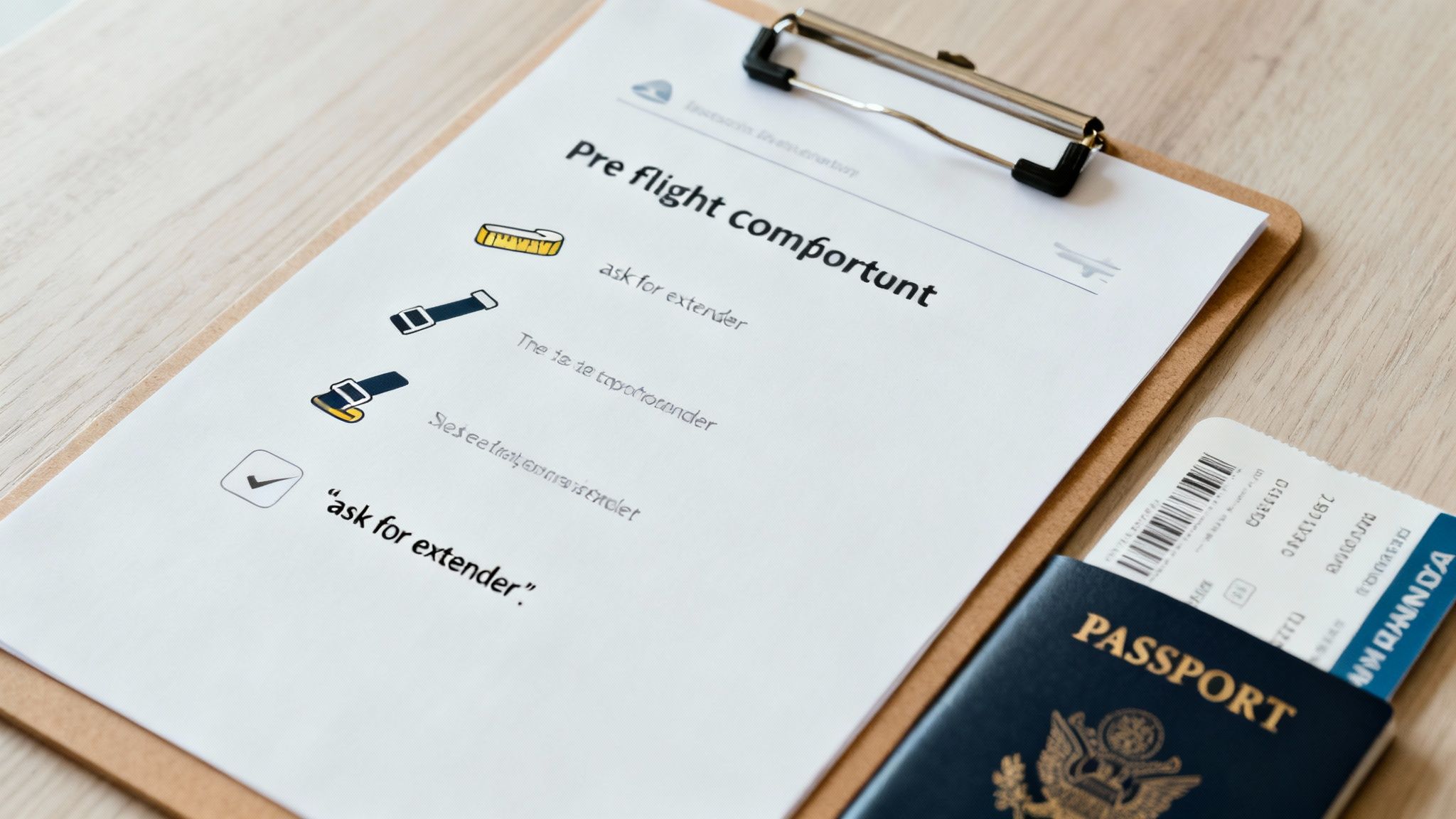
Alright, you've got the knowledge. Now let's turn it into a simple, actionable plan that makes every flight a stress-free experience. This isn't just a list; it's your personal routine for ensuring comfort and safety are handled long before you even get to the airport.
Good preparation is the best way to eliminate that last-minute travel anxiety. When you know exactly what to do, you can ask for what you need with total confidence. That way, you can focus on where you're going, not on worrying about your seat.
Your Action Plan for a Confident Flight
Think of this as your pre-packing ritual. Running through these steps will make sure you’ve covered all the bases for a comfortable flight.
- Measure at Home: Grab a soft measuring tape and get your seated lap measurement. Be sure to add an extra 3 to 5 inches to account for clothing and a little wiggle room.
- Know When to Ask: Is your measurement coming in around 40 inches or more? That's your cue to plan on asking for a seatbelt extender. No more guessing games.
- Request Early and Discreetly: The ideal time to ask is as you're boarding. A quick, quiet word with a flight attendant at the entrance to the plane is the easiest and most private way to do it.
- Use the Airline's Extender Only: This is a big one. For safety and liability reasons, you can only use the extender provided by the airline. Personal extenders aren't allowed.
- Consider Pre-Boarding: Many airlines allow passengers who need a bit more time or assistance to board first. This is a perfect, low-stress window to get seated and sort out your extender before the cabin fills up.
Your journey to understanding airline seatbelt size and extenders is complete. By preparing ahead of time, you are ensuring your flight is not only safe but also comfortable and dignified from start to finish.
To make your arrival even smoother, you might find these effective strategies to beat jet lag really helpful. You can also dive deeper into the topic on our page covering all things about plane seat belts.
Your Questions Answered: Navigating Airline Seatbelts
Let's tackle some of the most common—and often unspoken—questions travelers have about airplane seatbelts. Getting clear, straightforward answers can make all the difference in feeling prepared and confident for your flight.
Will I Be Embarrassed if I Ask for a Seatbelt Extender?
Absolutely not. For flight attendants, this is just another part of their routine safety check. They field these requests on almost every flight and are trained professionals focused on one thing: making sure every passenger is safely secured.
The best approach is to just ask quietly as you're boarding or after you find your seat. It's a completely normal request, and your safety is their number one priority. Think of it like asking for a blanket—it's just a tool to make the flight safer and more comfortable.
Can an Airline Force Me to Buy a Second Seat Just for Needing an Extender?
No, the need for a seatbelt extender is completely separate from "customer of size" policies. An airline won't require you to buy another seat simply because the lap belt doesn't fit.
Those policies are almost always about physical space—specifically, whether a passenger can lower both armrests and not significantly encroach on the adjacent seat. While the two issues can sometimes overlap for the same traveler, they are handled independently.
The sole purpose of a seatbelt is to keep you firmly in your seat during takeoff, landing, and any unexpected turbulence. An extender is just a simple, effective tool to make sure the belt can do its job, no matter your size.
If you want to dive deeper into the regulations and safety aspects, we break it all down in our guide on seat belt extender safety.
Are Seatbelts Longer in Business or First Class?
Yes, generally speaking, they are. Seats in premium cabins like Business and First Class are wider, and the seatbelts that come with them are usually longer than what you'll find back in Economy.
However, there's no universal standard. The exact length can still differ depending on the airline and the specific aircraft model you're on. So, if you know you're borderline in an economy seat, it's still wise to be prepared, even when flying up front. The difference in airline seatbelt size can be a nice bonus, but it's not something you can always count on.
What Happens if the Airline Runs Out of Extenders?
It’s extremely rare, but on a completely full flight, it’s a possibility. If you find yourself in this situation, don't panic. Just calmly let a flight crew member know.
Legally, a plane cannot depart with a passenger who isn't buckled in. The crew is required to solve the problem. This might mean reseating you if there’s an open spot with a longer belt (like a bulkhead seat) or, in the worst-case scenario, booking you on the next flight at no cost to you. Asking for an extender as you board is the best way to avoid this situation entirely.
At Seat Belt Extenders, we believe every journey should be safe and comfortable. We provide certified, vehicle-specific extenders to ensure a perfect fit for your car, so you can drive with the same peace of mind we advocate for in the air. Find your perfect match and travel with confidence.