
Yes, you can absolutely use a seat belt extender on an airplane. There's just one crucial rule to remember: you can only use the extender provided by the flight crew. While you might see extenders for sale online claiming to be "FAA-approved," personal extenders are strictly prohibited on commercial flights for safety reasons. The good news? Every major airline will provide a certified extender for free to any passenger who needs one.
Your Guide to Flying with a Seat Belt Extender

Getting ready for a flight should be exciting, not a source of worry about whether you'll be safe and comfortable in your seat. For many travelers, the standard airplane seat belt just doesn't offer enough length for a secure fit. This is precisely why airlines have seat belt extenders on hand—they are essential safety devices that ensure every single passenger can buckle up properly.
Knowing the rules and procedures for seat belt extenders on airplanes can take all the stress out of the situation. Airlines are not only prepared but are required to accommodate passengers who need them. Think of it less as a special request and more as a routine part of the airline's non-negotiable safety protocol.
Why You Can Only Use the Airline's Extender
So, why can't you bring your own? It all comes down to safety, liability, and federal regulations. The Federal Aviation Administration (FAA) is crystal clear on this: personal seat belt extenders are not permitted. Airlines must provide their own equipment because it's part of the aircraft's certified safety system.
This policy isn't arbitrary; it ensures a few critical things:
- Guaranteed Compatibility: The extender you get from the flight attendant is specifically designed and tested to work perfectly with the buckle mechanisms on that particular aircraft. Not all airplane seat belts are the same!
- Verified Maintenance: Airline-owned equipment is subject to rigorous and regular inspections for any signs of wear, damage, or malfunction. A personal extender from a drawer at home doesn't have that same history of professional oversight.
- Liability and Certification: The airline is legally responsible for the integrity and function of every piece of safety equipment on board, including the belts and extenders. Using an unverified personal device would introduce a major safety risk.
How to Ask for an Extender (It’s Easy and Discreet)
Please don’t feel anxious about asking for an extender. Flight crews handle these requests every single day and are trained to be professional and discreet.
The best time to ask is usually as you're boarding or just after you've found your seat. Simply catch the eye of a flight attendant and quietly say, "Could I please have a seat belt extender?" They'll bring one to you right away, no questions asked and at no charge. If you want to learn more about typical belt lengths on various planes, check out this handy guide to airline seat belt sizes.
At the end of the day, your safety is their number one priority. Making sure you're buckled in securely is a fundamental part of that job.
Why You Can’t Bring Your Own Seat Belt Extender
It's a question I hear all the time: "I can buy a seat belt extender online, so why can't I just bring my own on the plane?" It's a fair question, but the answer comes down to one single, non-negotiable factor that governs every nut, bolt, and buckle on an aircraft: certified safety.
Think of a commercial airplane like a finely-tuned orchestra. Every single instrument—every part—has been selected, tested, and maintained to perform perfectly with the others. You wouldn't let a random person walk on stage with an un-inspected violin and join in, right? It introduces a massive, unpredictable risk. That's exactly how airlines and aviation authorities view personal equipment.
Airlines operate under incredibly strict rules from bodies like the Federal Aviation Administration (FAA). Their job is to eliminate unknowns and ensure every single piece of equipment is up to the task.
This screenshot from the FAA's own website highlights their authority over everything that happens in the air. When it comes to safety, their regulations are the final word.
This intense focus on safety is managed through a system called a Continuous Airworthiness Maintenance Program, or CAMP.
The Role of Continuous Airworthiness
You can think of a CAMP as the aircraft's lifelong medical record. It's a comprehensive program that forces airlines to track, inspect, and document every single component on their planes. That includes the seat belts and, you guessed it, the extenders they provide.
This system guarantees that every extender the airline hands you is:
- Traceable: They know its entire history, from the manufacturer to the specific plane it's on, ensuring it meets all technical standards.
- Inspected: It's regularly examined by trained mechanics for any signs of wear, damage, or tiny stress fractures that you'd never see with the naked eye.
- Compatible: It has been certified to work perfectly and securely with the specific seat belt buckles used on that aircraft model.
A personal extender you buy online, no matter how well-made it seems, is a complete unknown in this tightly controlled system. The flight crew has no idea what materials it's made from, its manufacturing quality, or if it has hidden damage. It could be a cheap counterfeit that would snap under pressure.
“Do not judge your self-worth by the length of a seatbelt. The only purpose of a seatbelt is to keep you safe. Do NOT buy your own extender online; they’re not FAA-approved and may not fit the aircraft. To ensure you have the proper and safe extender, use the ones provided on board your flight.”
At the end of the day, the airline is legally responsible for your safety. Allowing passengers to use their own seat belt extenders on airplanes introduces a liability they simply can't accept. While it might feel like an inconvenience, this rule exists for a very good reason—to make sure the equipment keeping you safe has been professionally vetted and maintained.
To get a deeper dive into the specific rules, you can learn more about the legality of seat belt extenders and see why these regulations are so critical.
How to Ask for and Use an Airline Extender
Needing a seat belt extender is incredibly common, and asking for one should feel as routine as stowing your carry-on. Flight crews are seasoned professionals who handle these requests all day, every day. For them, it's just another part of their safety checklist—your comfort and security are their job.
The real trick is knowing the best time to ask so it’s easy for you and convenient for the crew. A few key moments work perfectly for a discreet and quick request.
When and How to Ask
You really have two great windows of opportunity. The first is with the gate agent before you even get on the plane. If you like having everything sorted out ahead of time, this is a great option. Just walk up to the desk and mention you'll need one for your flight.
The more common approach is to simply ask a flight attendant as you're boarding or right after you find your seat. A quiet, polite request is all it takes.
"Excuse me, could I please have a seat belt extender when you have a moment?"
That’s it. A simple phrase like this works every time. The crew member will bring one to you, usually before the plane has even finished boarding. While the process is pretty standard across the board, individual airline policies can have slight variations. For a concrete example, you can see how a major carrier handles it by reading the Delta seat belt extender policy.
Using the Extender Correctly
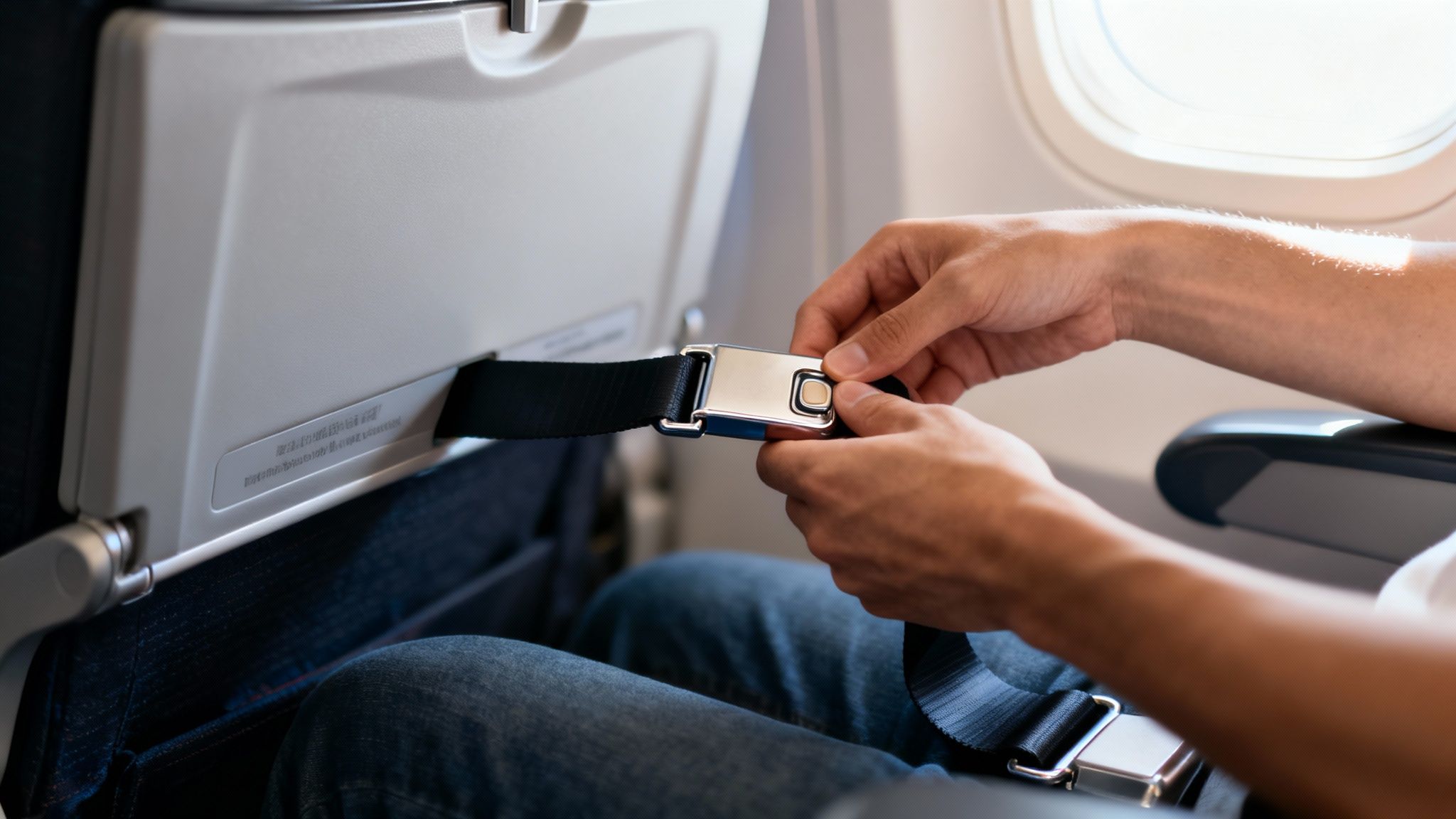
Once the extender is in your hands, using it is a breeze. It's designed to work exactly like the seat belt already on your seat, just giving you that extra length for a safe and comfortable fit.
- Connect the Extender: Take the extender's metal tongue and click it into one of the buckles on your seat. You'll hear that firm "click" letting you know it's locked in place.
- Buckle Up: Now, take the metal tongue from the other seat belt strap and insert it into the buckle on the extender. Listen for that same solid click.
- Adjust for a Snug Fit: Pull the loose strap to tighten the belt across your lap and hips. The goal is a snug fit—not painfully tight, but secure with no slack.
After the Flight
Your job is done once the plane is safely at the gate. When the pilot turns off the seat belt sign, just unbuckle the extender and leave it right there on your seat.
The cabin crew will collect it while they're prepping the plane for its next journey. It’s important to remember not to take it with you. It’s airline property and another passenger on the next flight might need it.
Understanding Different Airplane Seat Belt Types
It’s a common mistake to think that every airplane seat belt is the same. After all, they look pretty similar, right? But just like car manufacturers use different parts, airlines have various seat belt mechanisms across their fleets.
This is the main reason you can't bring your own seat belt extenders on airplanes. There's simply no way a single, universal extender can be certified as safe for every different type of latch system out there. Think of it this way: the key for a Boeing 737 won't unlock an Airbus A320. The same logic applies to their safety equipment. The airline has to provide an extender that's a perfect match for the specific seat you’re sitting in.
The Most Common Latch Systems
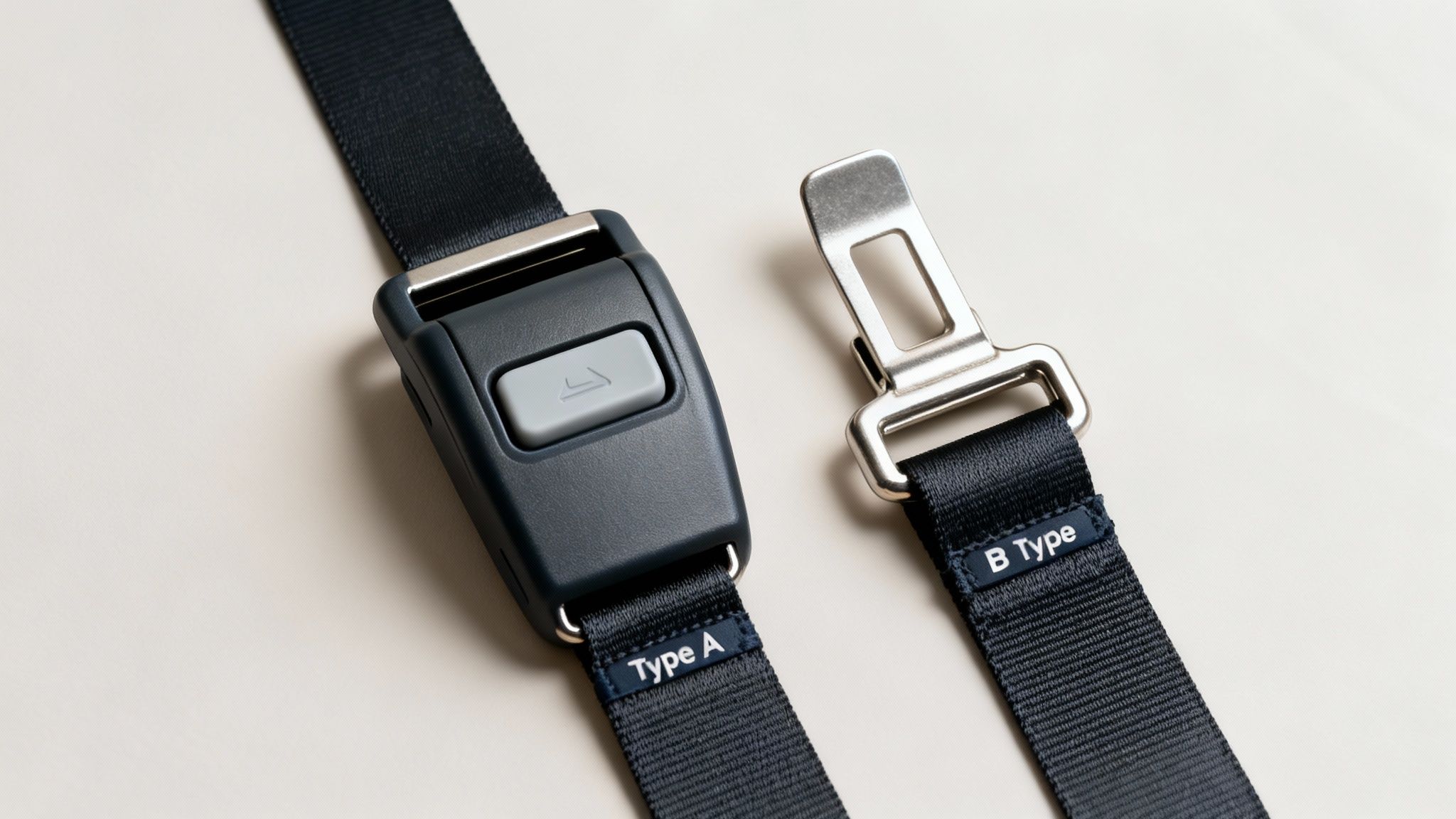
You don't need a degree in aviation engineering to fly, but a little background knowledge can clear up why compatibility is so important. In the air, you'll generally come across two main designs: Type A and Type B.
- Type A Buckles: You’ll often see these on Airbus planes. The key feature is a rigid buckle housing, and the release flap lifts away from you.
- Type B Buckles: These are more common on Boeing aircraft. They have a flexible webbing strap attached to the buckle, and the release flap usually lifts up toward you.
Even though these differences seem minor, they are huge from an engineering standpoint. A Type A extender will not click safely into a Type B buckle. It might feel like it fits, but it won't hold under pressure—creating a massive safety risk. If you want to dive deeper into the mechanics, check out this guide on seat belt extender types.
This is why precise matching is a non-negotiable part of airline safety protocol.
An airline-provided extender isn’t just a piece of webbing; it’s a serialized, inspected, and aircraft-specific part. It’s been tested to ensure it forms a flawless, secure connection with the seat's buckle, guaranteeing it will perform as designed under extreme force.
A Growing Need for Certified Solutions
The demand for reliable seat belt extenders on airplanes is on the rise, reflecting a bigger conversation about accessible and inclusive travel. The global market for these devices was valued at around USD 1.15 billion and is projected to surpass USD 2 billion by 2033.
Aviation is a key part of this market, driven by incredibly strict safety regulations and the need to accommodate every passenger safely. This data highlights why airlines must keep a good supply of certified, compatible extenders on hand. It's not just about meeting rules; it's about ensuring every person on board is safe and comfortable.
Navigating Airline Policies for Passengers of Size

While a seat belt extender on an airplane is a vital safety tool, it's often just one piece of the puzzle for a comfortable and stress-free flight. For passengers of size, getting a handle on the airline's broader policies is the real secret to avoiding any awkward surprises at the gate.
Most major airlines have what they call a “Customer of Size” or “Passenger of Size” policy. At first glance, the term can feel a bit clinical, but these rules are in place to make sure every single passenger has a safe and reasonably comfortable flight. It can feel intimidating to look these up, but trust me, a little prep work goes a long way.
Understanding Customer of Size Policies
So, what do these policies actually mean? It usually comes down to one simple checkpoint: the armrest.
The general rule is that if you can't lower the armrest and keep it down for the whole flight, the airline might require you to purchase a second seat. The same goes if your body extends significantly into the next seat. This isn't about penalizing anyone; it's a practical issue of safety and making sure everyone has access to the space they paid for.
The single best thing you can do is look up the specific "Customer of Size" policy for your airline before you even think about booking. Knowing the rules of the road puts you in the driver's seat and lets you plan a trip without anxiety.
How to Prepare for Your Flight
Instead of crossing your fingers and hoping for the best when you get to the airport, a proactive approach can guarantee a much smoother journey.
Here are a few steps I always recommend:
-
Do Your Homework: Just search for your airline’s name plus “customer of size policy.” You’ll find that the rules can be surprisingly different from one carrier to the next. For example, some airlines will actually refund the cost of your second seat if the flight doesn't sell out. A quick search can lead to great resources, like details on the Southwest seat belt extender and customer of size policy.
-
Pick Up the Phone: If the website is confusing, just call the airline. You can ask for specific seat dimensions and explain your needs to a real person. It’s so much easier to sort things out this way than under the pressure of a crowded boarding area.
-
Weigh Your Options: Sometimes, buying a first-class or business-class seat can be nearly the same price as two economy seats. These seats are wider and give you more personal space, which might just be a more comfortable and simpler solution all around.
Knowing your rights and the airline’s rules is empowering. It lets you advocate for yourself clearly and confidently. Flying should be for everyone, and a little planning ensures your trip is a positive experience from start to finish.
What Does the Future Hold for Inclusive Air Travel?
The conversation around seat belt extenders on airplanes points to something much bigger than a simple piece of equipment. It’s a clear signal that the travel industry is shifting its focus from just ticking safety boxes to truly caring about passenger dignity and accessibility.
When an airline provides an extender, it's more than just a safety measure—it’s good customer service. It’s a quiet acknowledgment that travelers come in all shapes and sizes, and everyone deserves to feel safe and comfortable in their seat. As this awareness grows, we're seeing airlines start to adapt, realizing that inclusive policies are simply good business.
A Growing Market for a Real Need
This isn't just a feeling; the numbers back it up. The global market for seat belt extenders was recently valued at around USD 1.27 billion. It’s expected to climb to USD 2.13 billion by 2033. This tells us the demand for accessible safety gear is on the rise across all forms of transportation. You can dig into the specifics in this seat belt extender market trends report.
Every time a passenger has to ask for an extender, it’s a quiet reminder that the one-size-fits-all model just doesn't cut it anymore. The future of flying depends on airlines building an environment where every single passenger feels seen, respected, and safe from the moment they book their ticket to the moment they land.
The end goal is simple: an airline industry where needing an accommodation is a normal, stress-free part of the journey. By continuing to push for more inclusive practices, we can help make the skies truly friendly for everyone. After all, travel should be for everyone, not just a select few.
Your Questions Answered
Flying with a seat belt extender can bring up a few questions, but getting the right information ahead of time makes everything a breeze. Let's walk through some of the most common things travelers ask so you can fly with confidence.
How Much Extra Length Do I Get?
An airline-provided seat belt extender will typically give you an extra 25 inches (about 63 centimeters) of length. For most people who need a little more room, this is plenty to ensure the belt fits securely and comfortably.
While that 25-inch measurement is a good rule of thumb, you might find slight differences from one airline or even one aircraft to another. If you're concerned about the fit, just have a quiet word with a flight attendant. They're there to help and will make sure you're buckled in safely.
Can I Use an Extender with My Child’s Car Seat?
This is a critical one: never use a seat belt extender to secure a child’s car seat on an airplane. Both the FAA and car seat manufacturers are crystal clear on this. An extender creates a weak point and changes how the car seat is anchored, which could be disastrous during severe turbulence or an emergency.
If the plane's seat belt is too short to route through your car seat correctly, the only safe solution is to alert the flight crew. They can often reseat you in a spot where the belts are a bit longer.
What if the Airline Runs Out of Extenders?
It’s rare, but on a packed flight, it can happen. Since being buckled in is a non-negotiable safety rule, the airline has to find a way to accommodate you.
If an extender isn't available, the flight crew is required to find a solution to get you safely buckled. This usually means moving you to a different seat—perhaps one in another class of service with longer belts—at no extra cost to you.
In the unlikely event no other seat is free, the airline may need to book you on the next available flight. It’s a safety issue mandated by the FAA, so don't be afraid to politely and firmly advocate for a solution.
Do I Have to Pay for an Airline’s Extender?
Absolutely not. There is never a fee for a seat belt extender on a flight. Airlines are required to provide them as essential safety equipment, completely free of charge. If anyone on the crew ever mentions a charge, it's almost certainly a mistake. Just politely clarify that it's a safety item and ask to speak with the lead flight attendant if needed.
At Seat Belt Extenders, we believe safety and comfort should never be a compromise. While our extenders are designed for your vehicle, we champion accessible travel everywhere. For all your on-the-ground needs, find your perfect, safety-certified extender at https://seatbeltextenders.com.